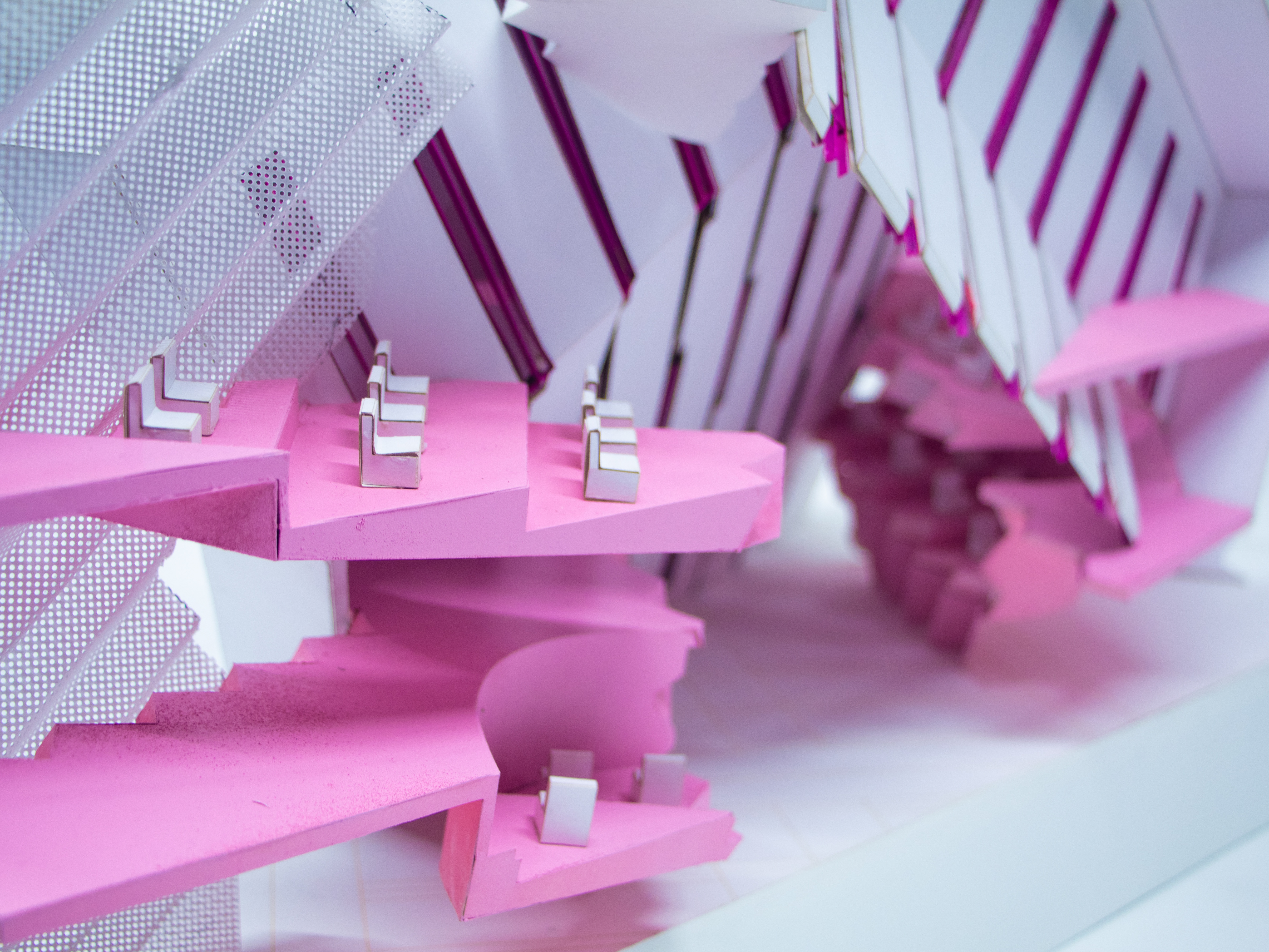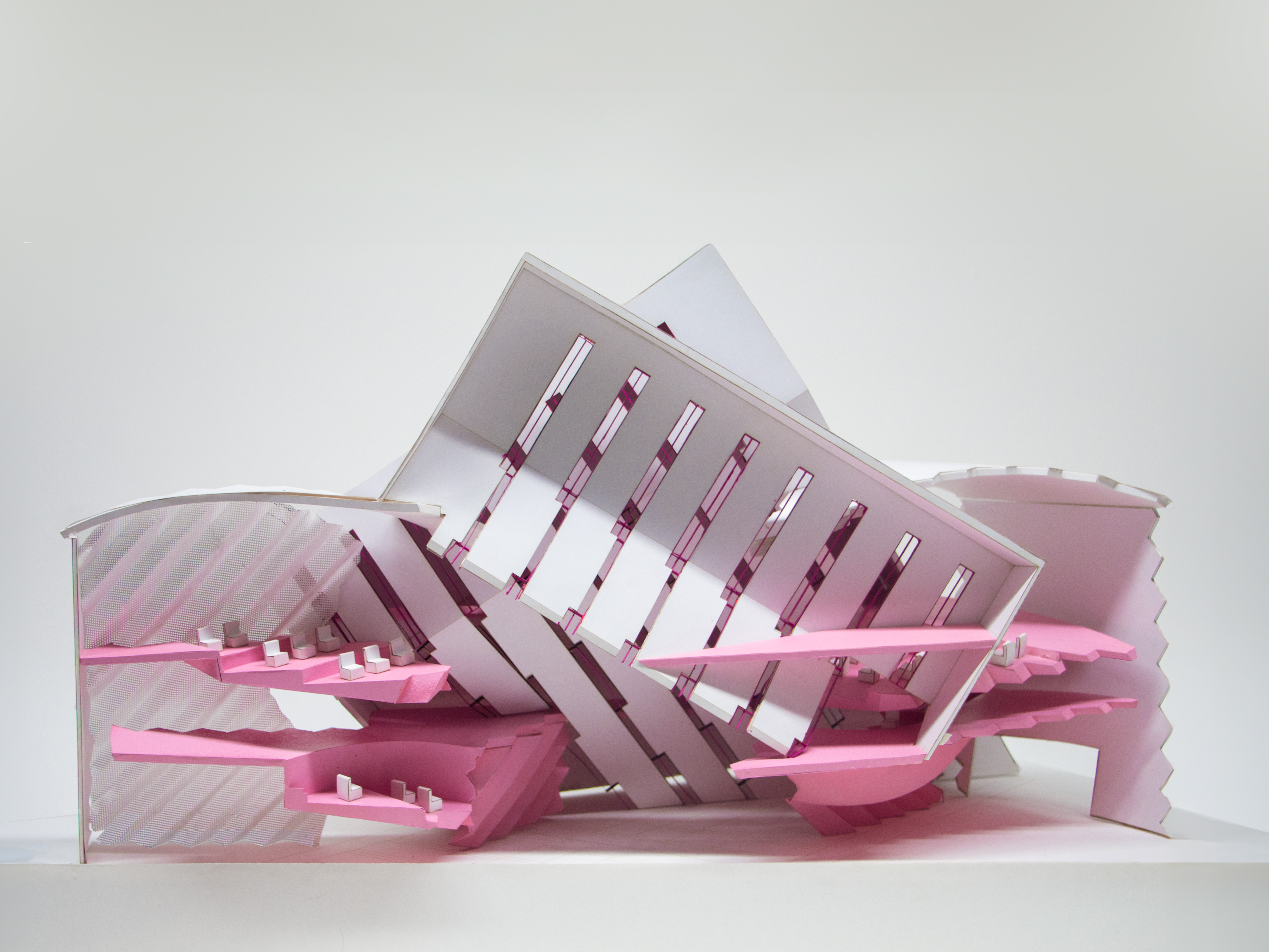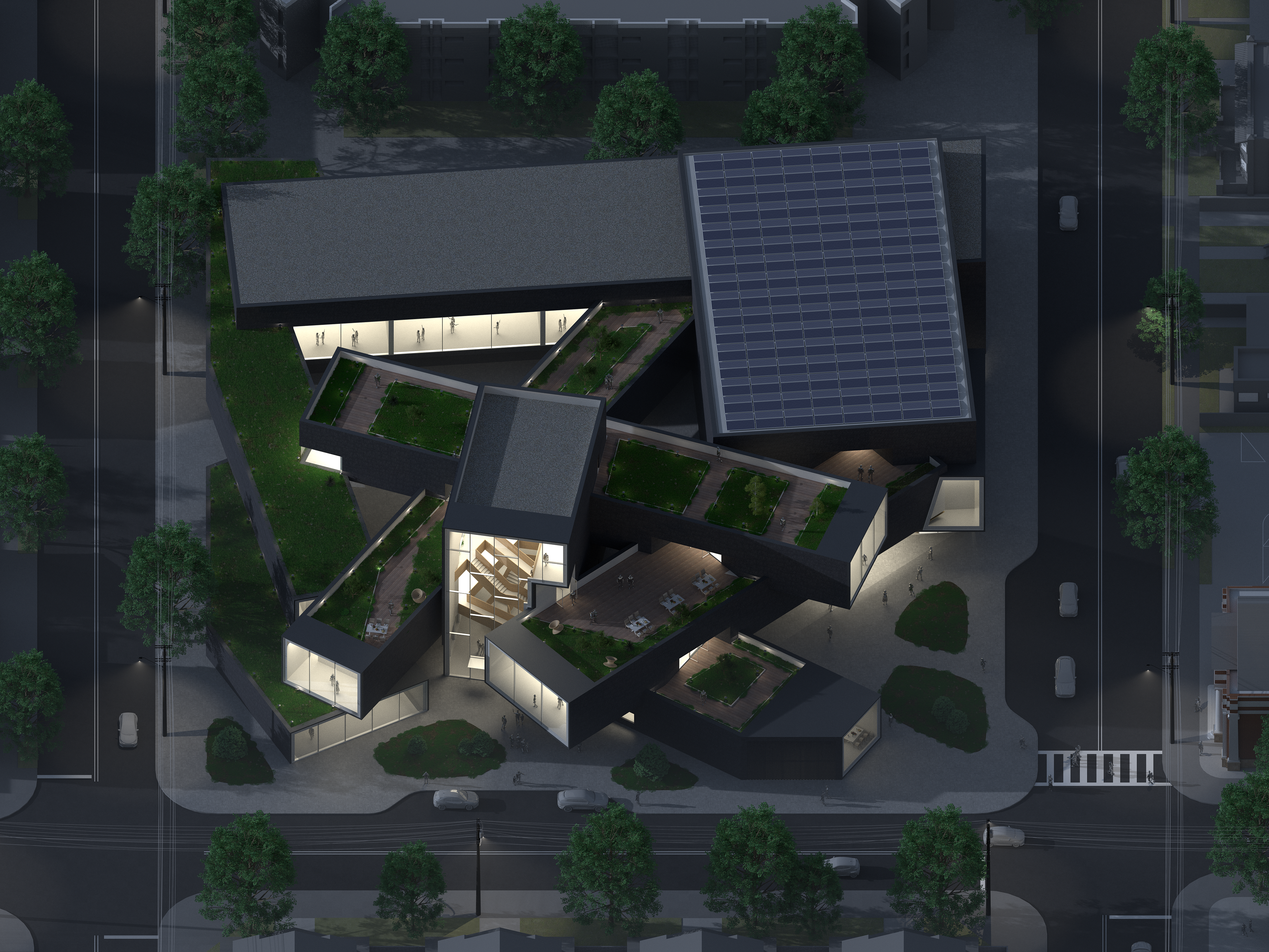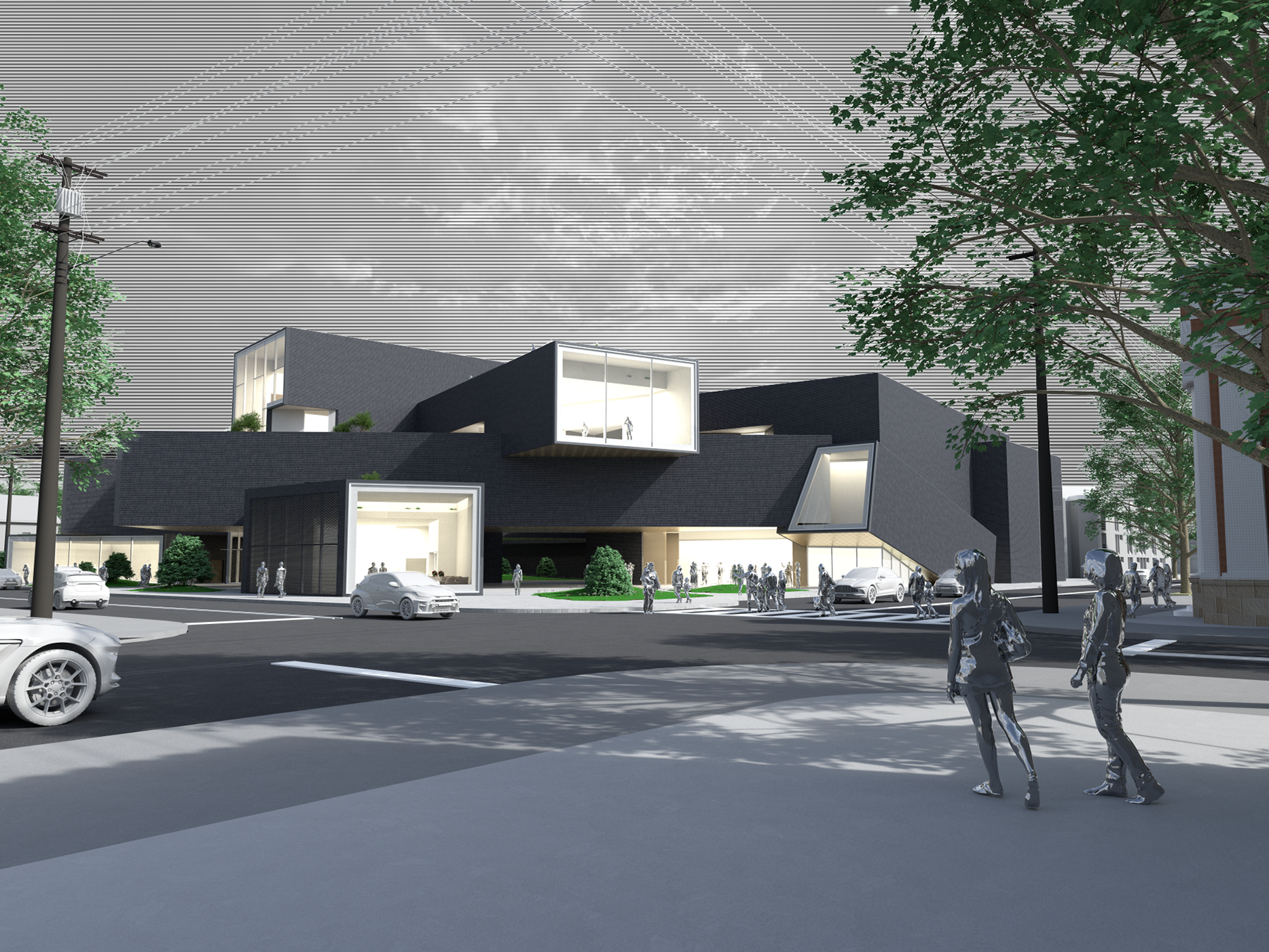
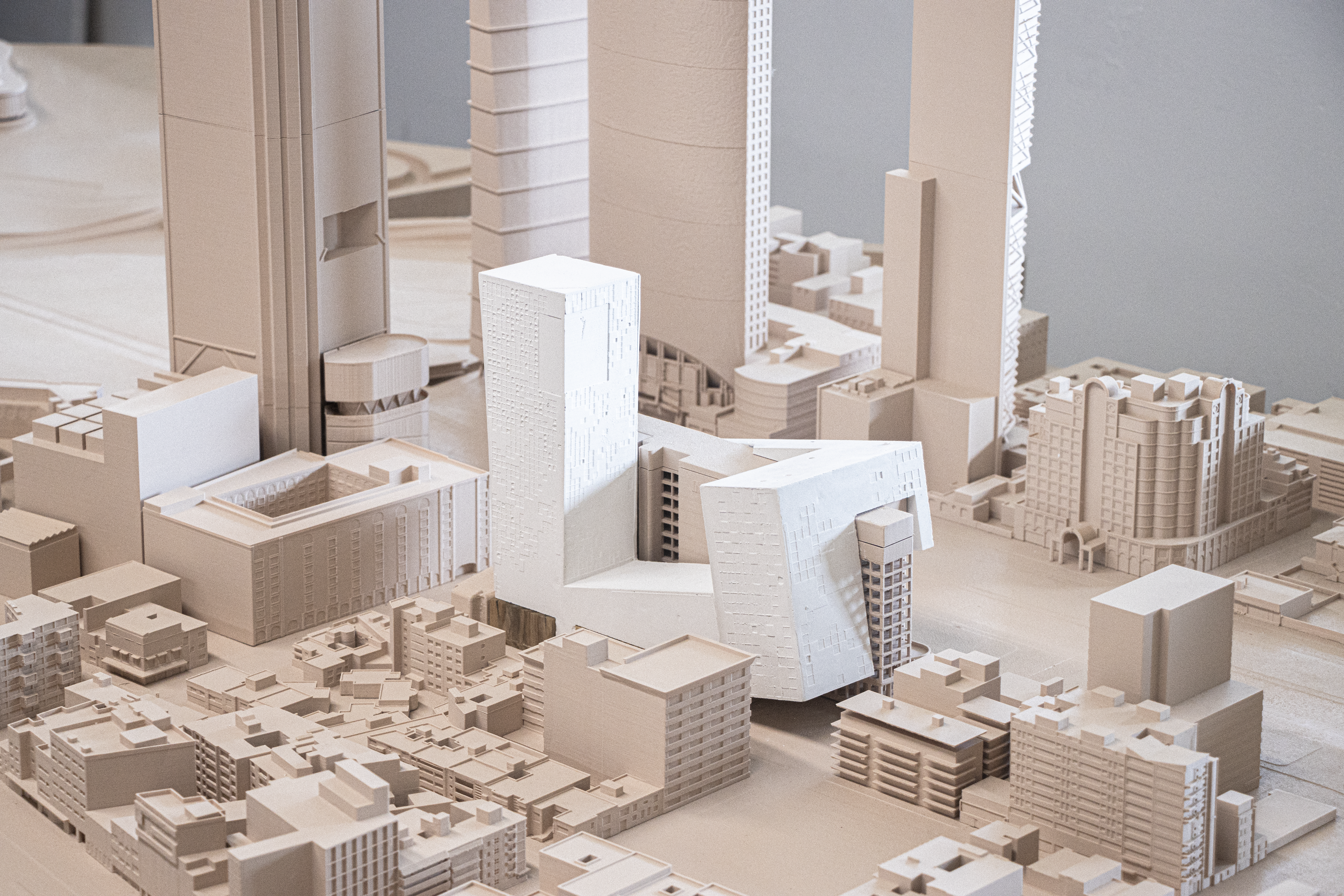
Civic Layers reimagines an existing IMSS public health building in Mexico City as a hybrid art school and civic institution. Instead of replacing the original structure, the project introduces a new architectural layer that wraps, doubles, and extends the existing building.
Through adaptive reuse, programmatic layering, and structural insertion, the project transforms a public healthcare infrastructure into a space for education, culture, and collective activity. The new art school becomes both an addition and a mediator, creating a dialogue between the old institution, the city, and new forms of public life.
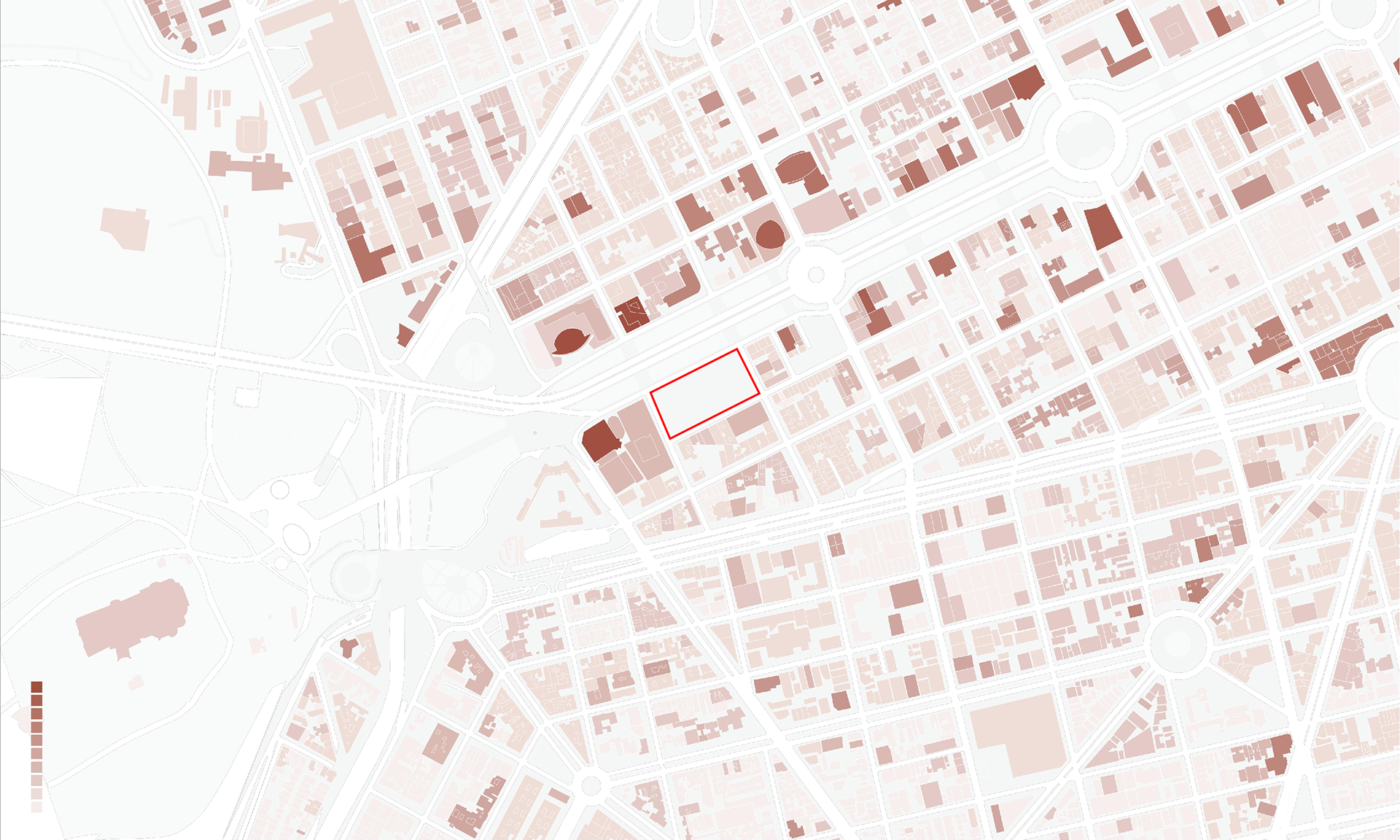
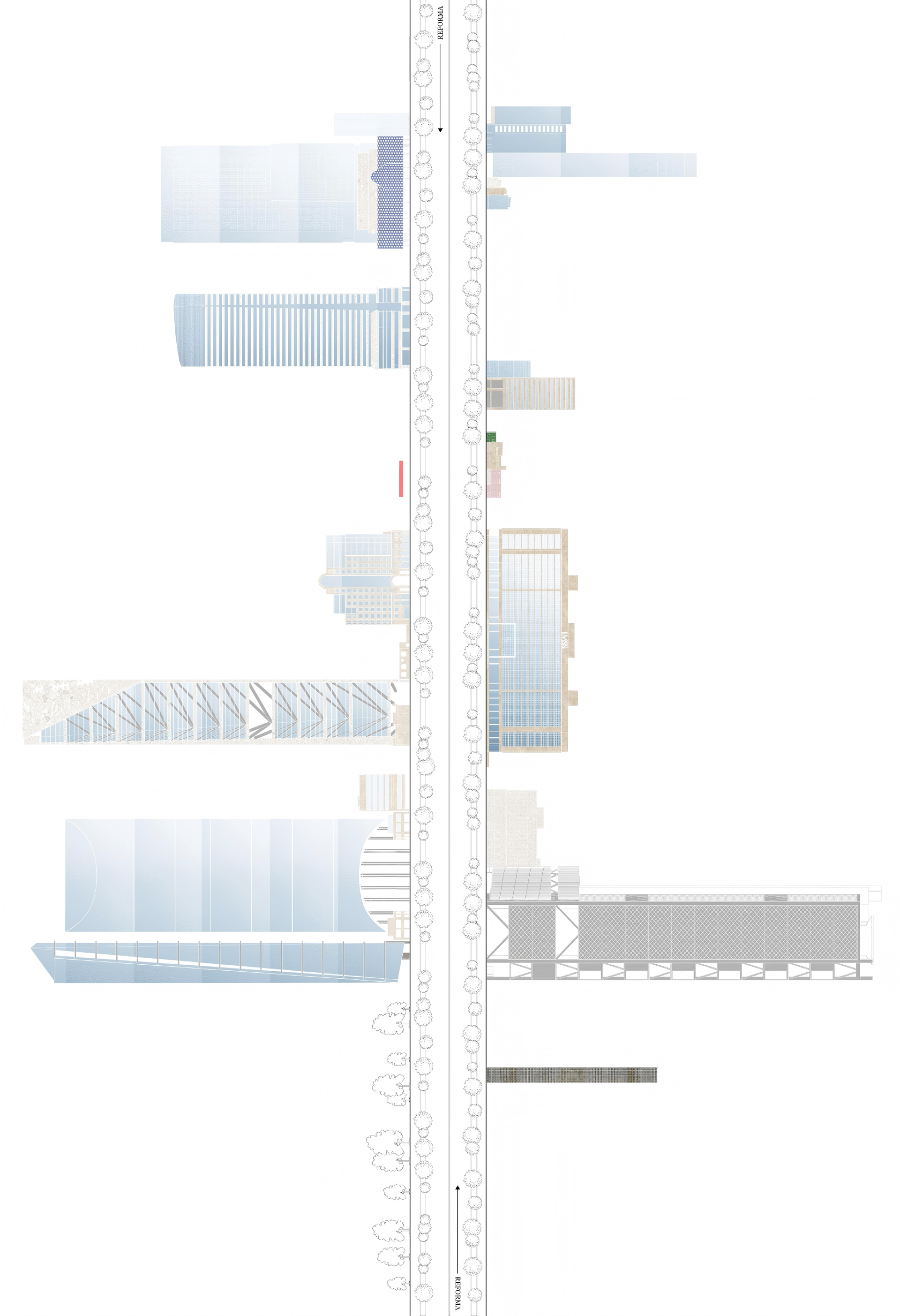
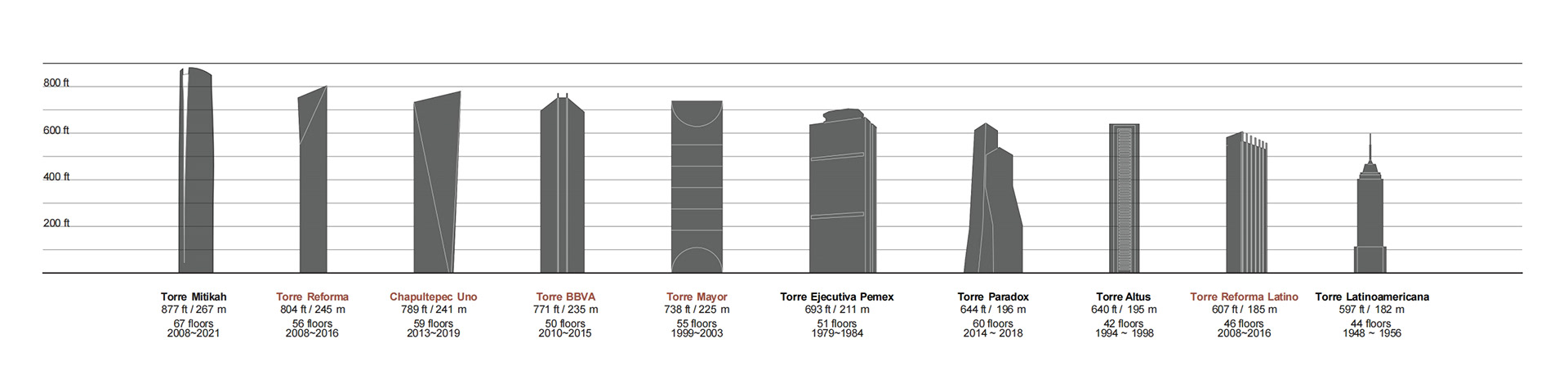
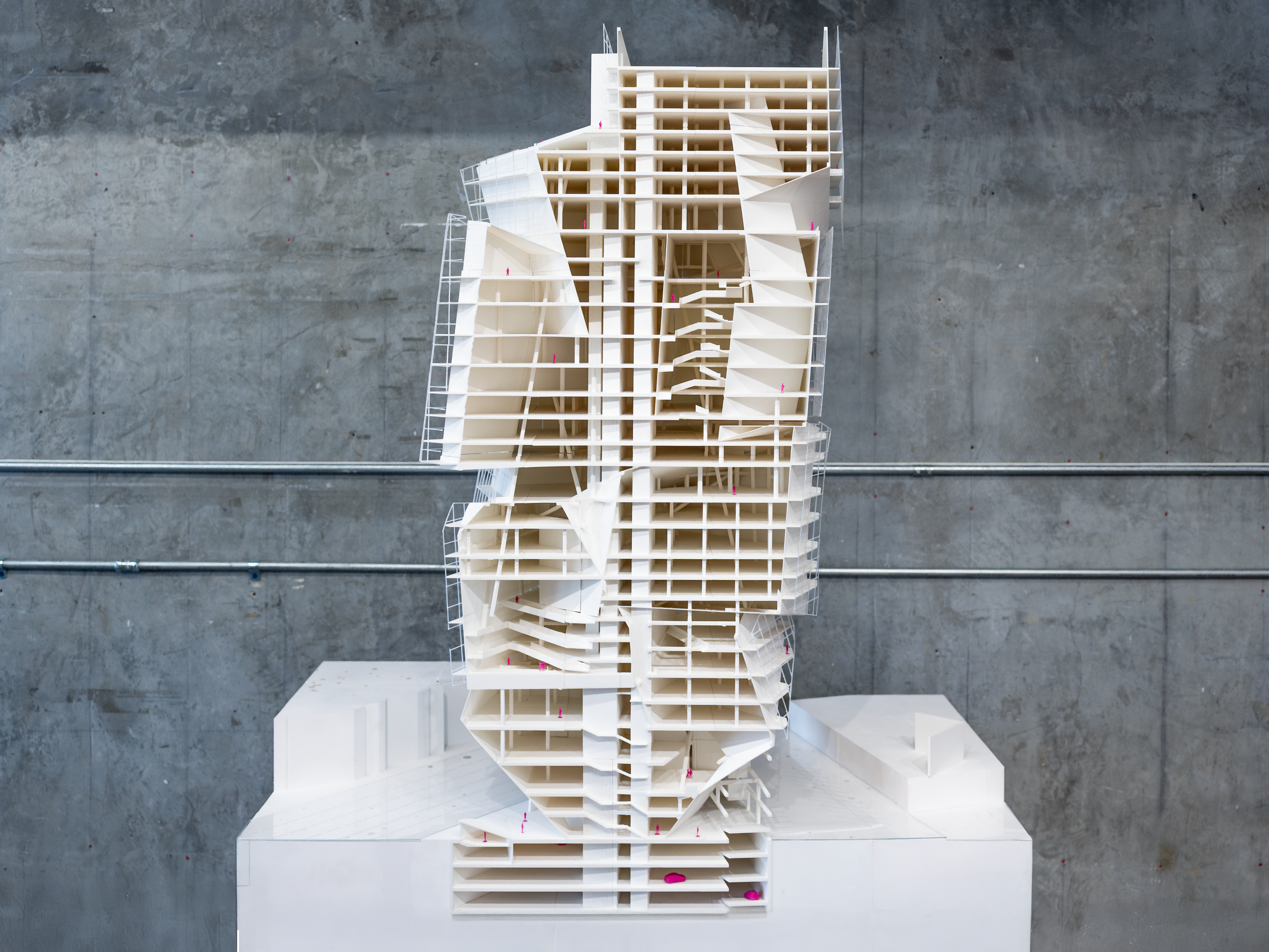
The site is located within a dense urban corridor surrounded by many high-rise towers. By comparing the heights and forms of nearby towers, the diagram shows that verticality is an important part of the site context. In response, the project adopts a tower strategy, using vertical addition as a way to connect the existing IMSS building with the surrounding skyline.
Rather than remaining as a low horizontal block, the new art school extends upward and becomes part of the city’s vertical fabric. The tower operates as a visible civic marker while also introducing new educational spaces above the existing institutional structure.
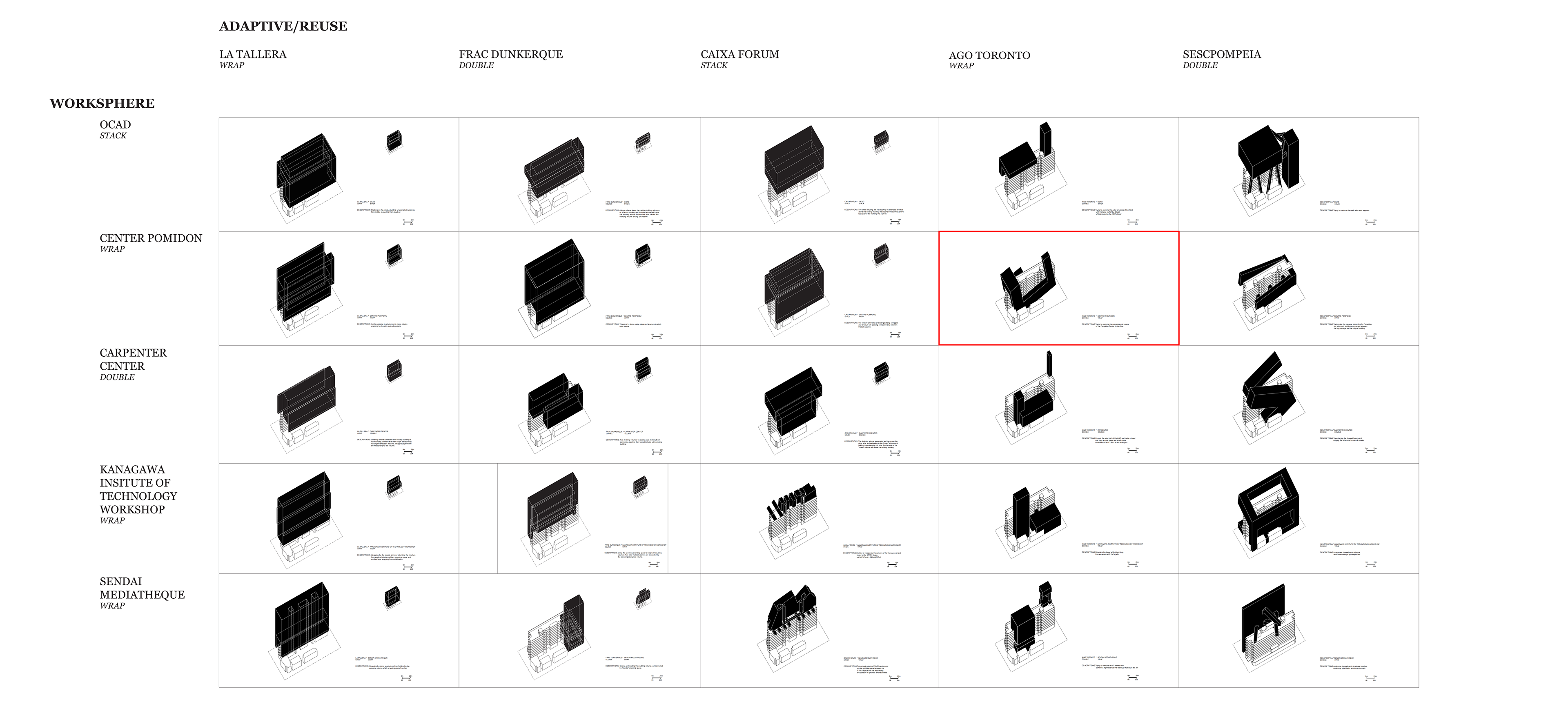
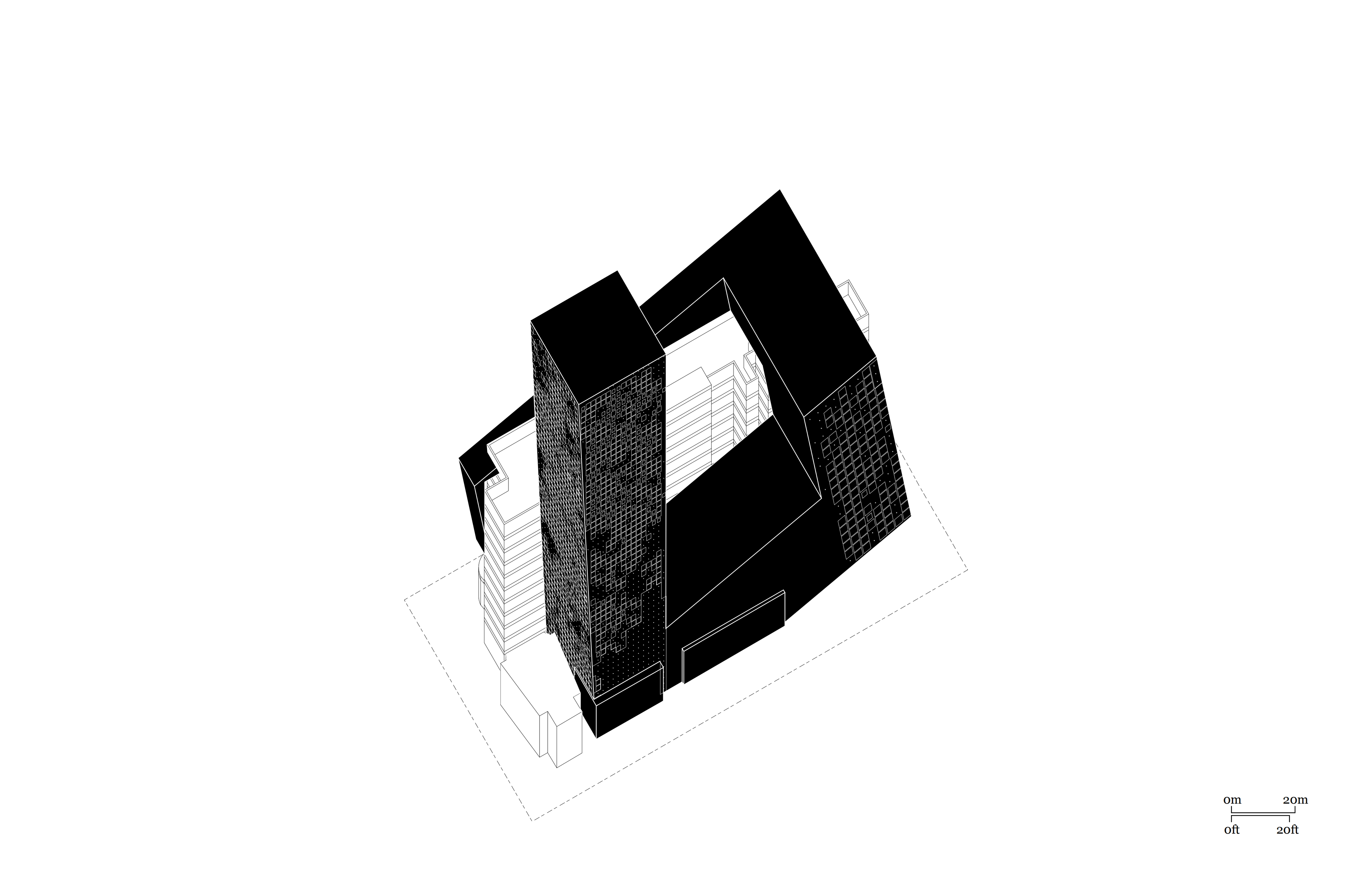
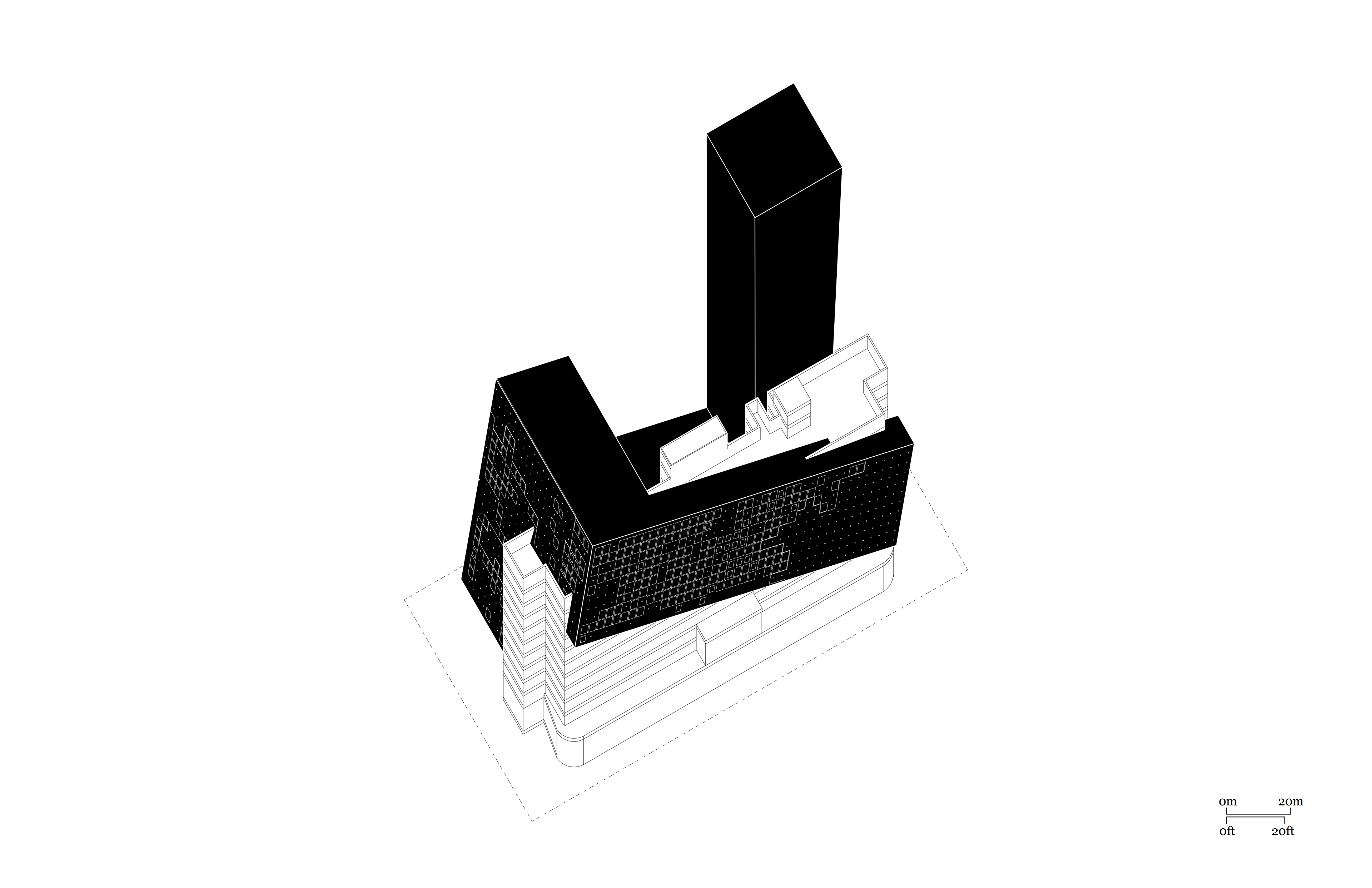
This diagram studies a series of architectural precedents and translates them into massing strategies for the adaptive reuse project. By comparing operations such as wrapping, doubling, stacking, and vertical addition, the matrix tests how a new art school can attach to, sit on top of, or operate alongside the existing IMSS building.
The selected strategy combines a layered wrap with a tower addition. The wrap reactivates the existing institutional block, while the tower responds to the vertical context of Mexico City’s surrounding skyline. Together, these operations establish a new relationship between the old public infrastructure and the added educational program.
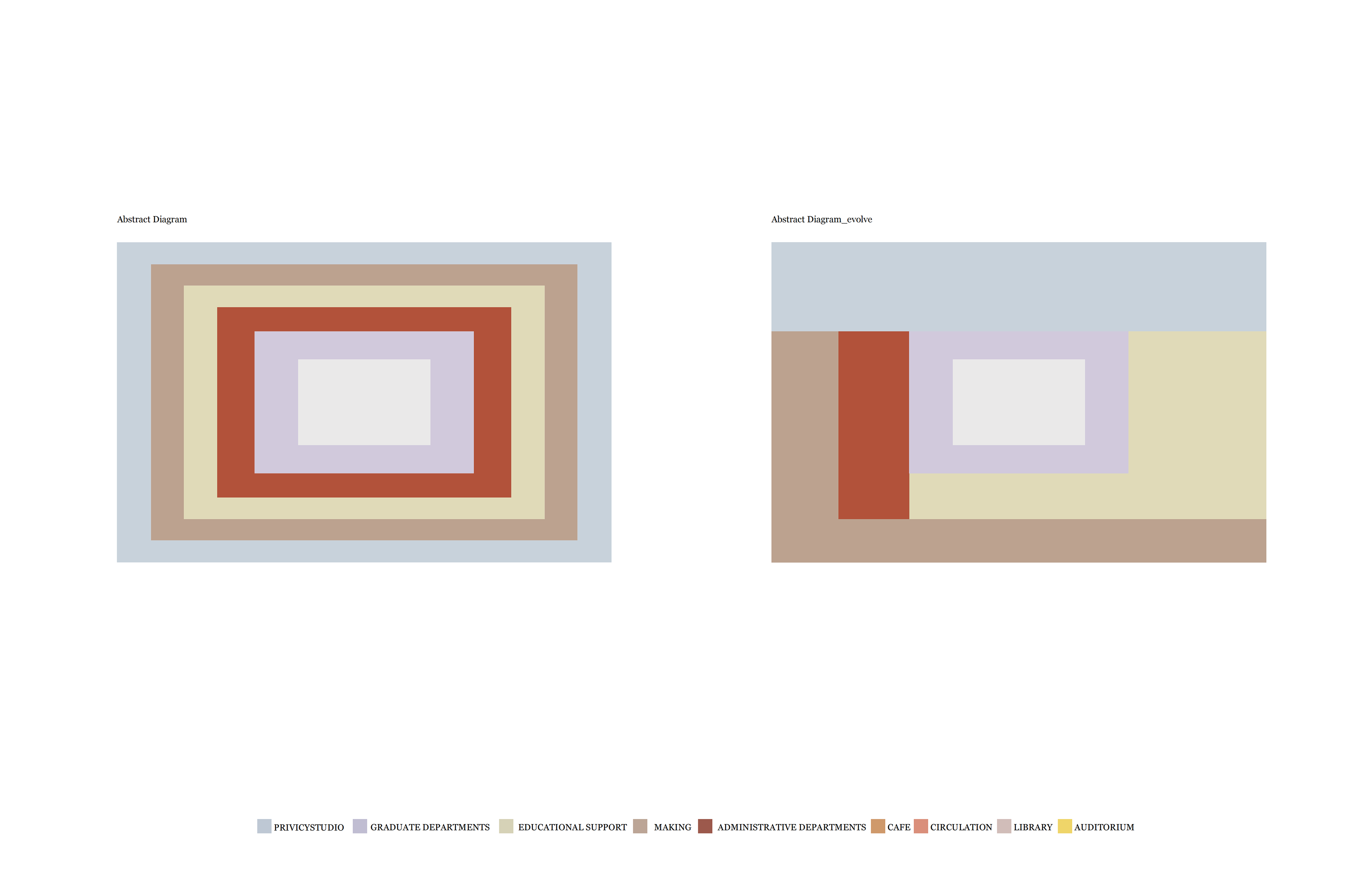
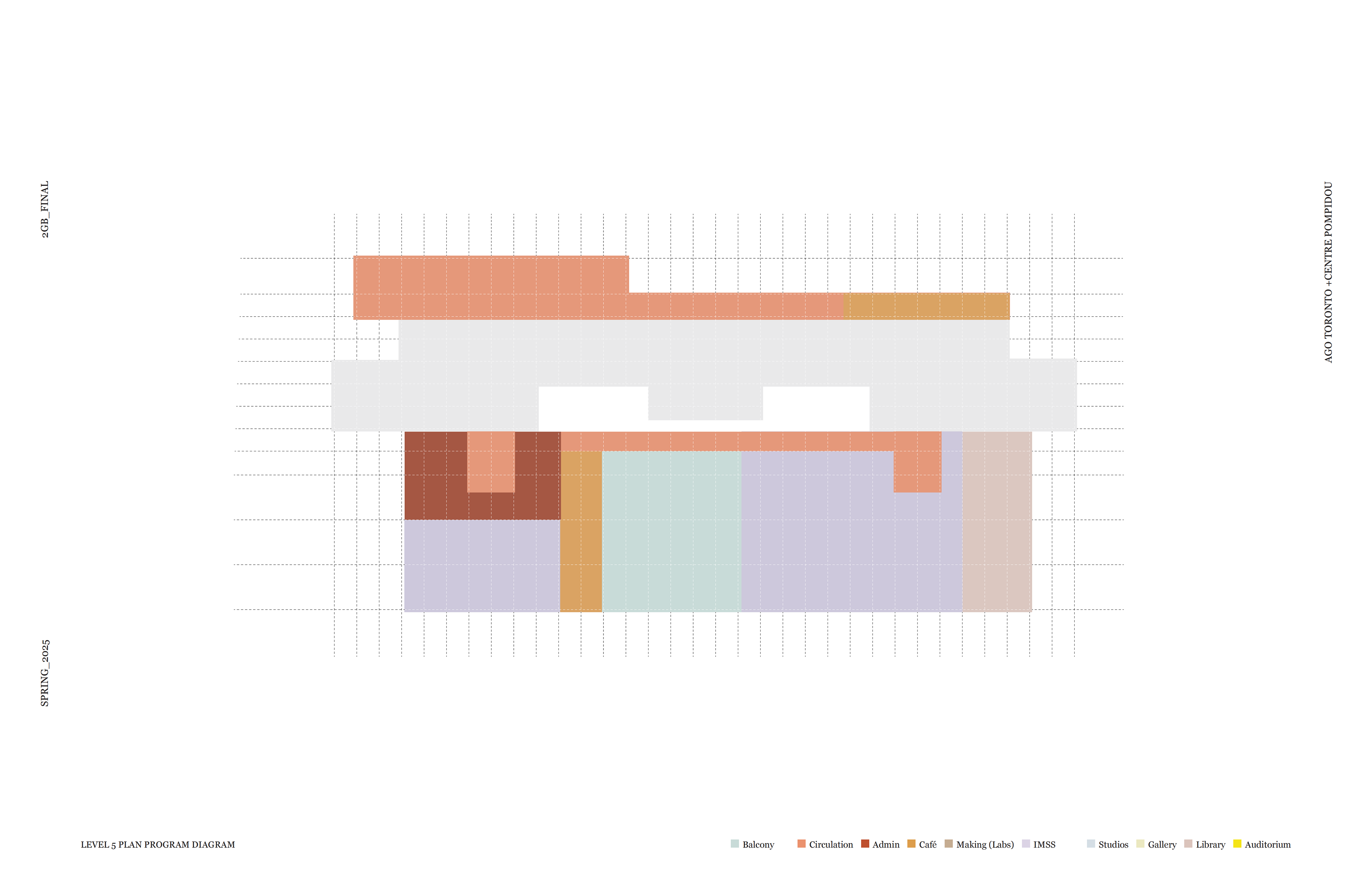
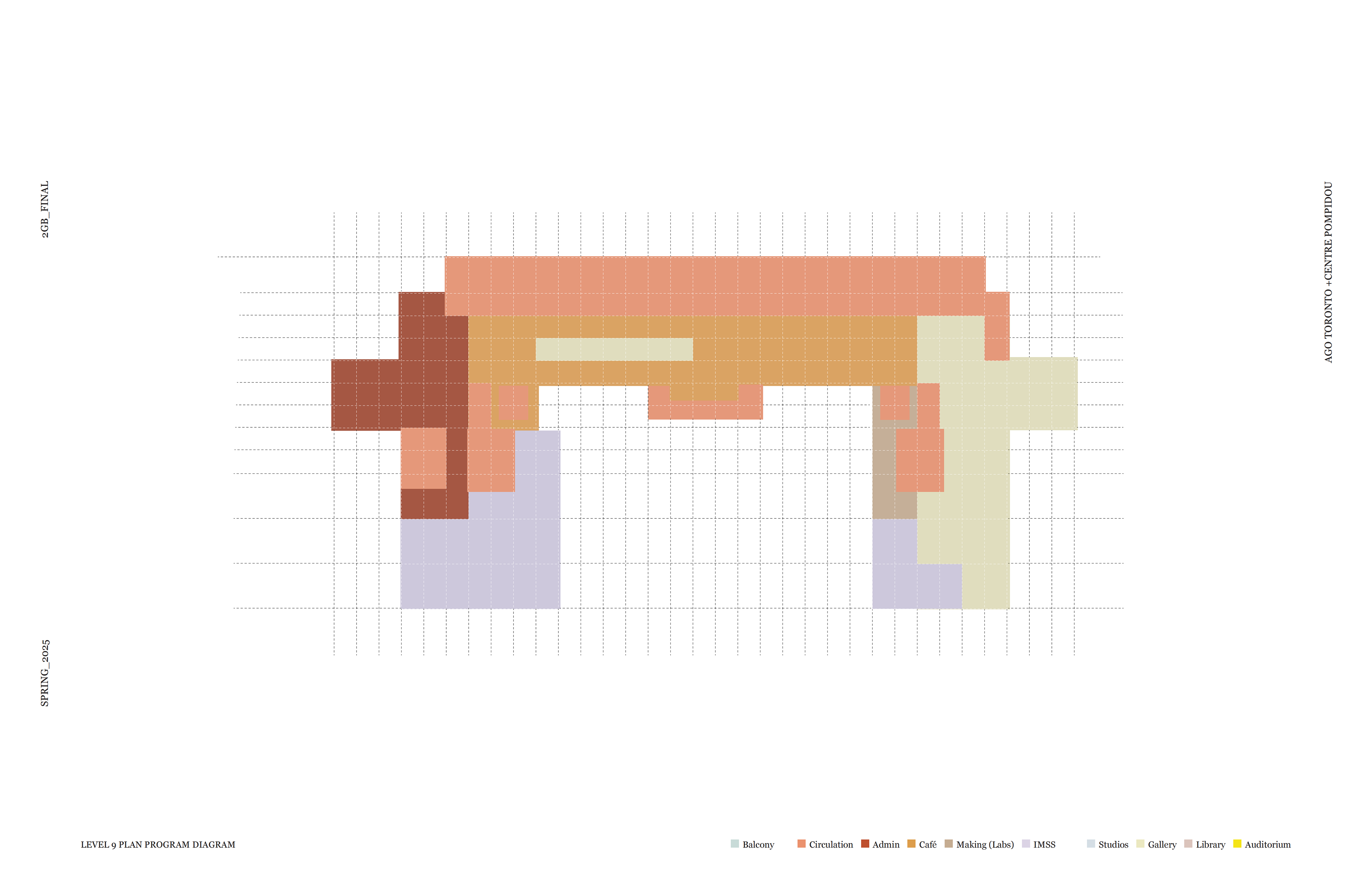
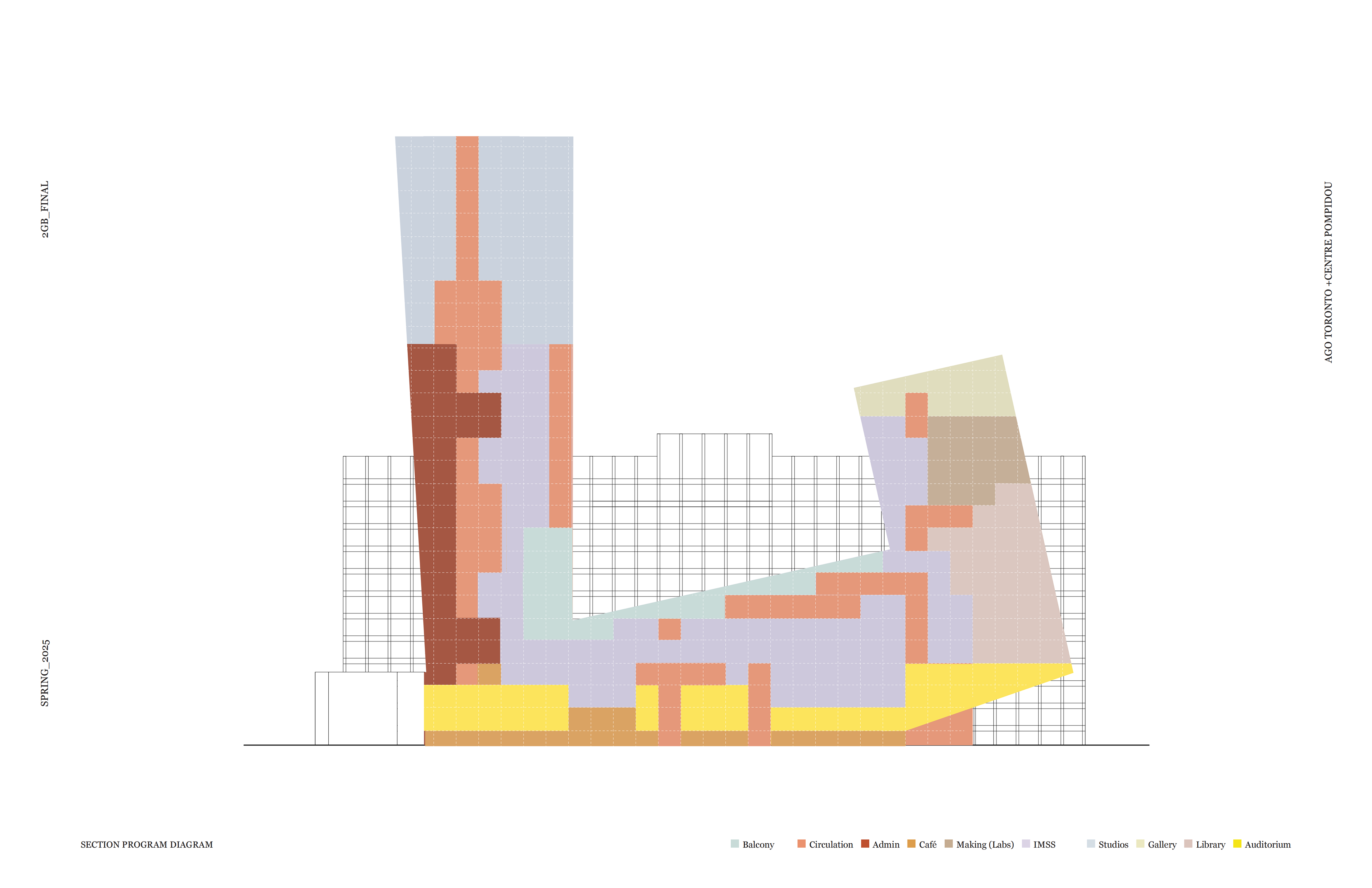
The program follows the same wrapping logic as the building form. Circulation, studios, galleries, library, and making spaces are not arranged as isolated rooms, but layered around the existing IMSS structure. Through this programmatic wrap, the old building and new intervention are connected into one continuous spatial system.
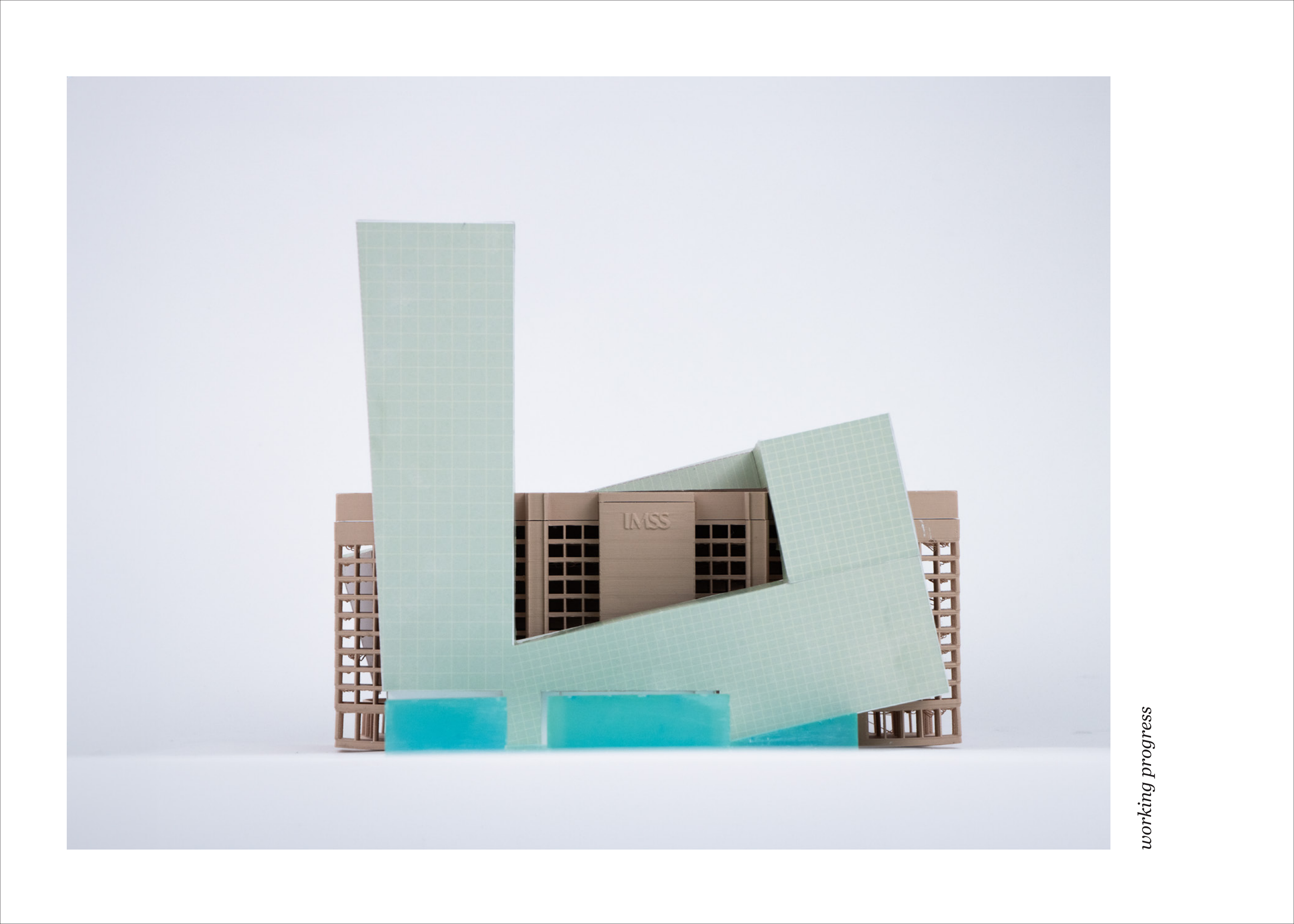
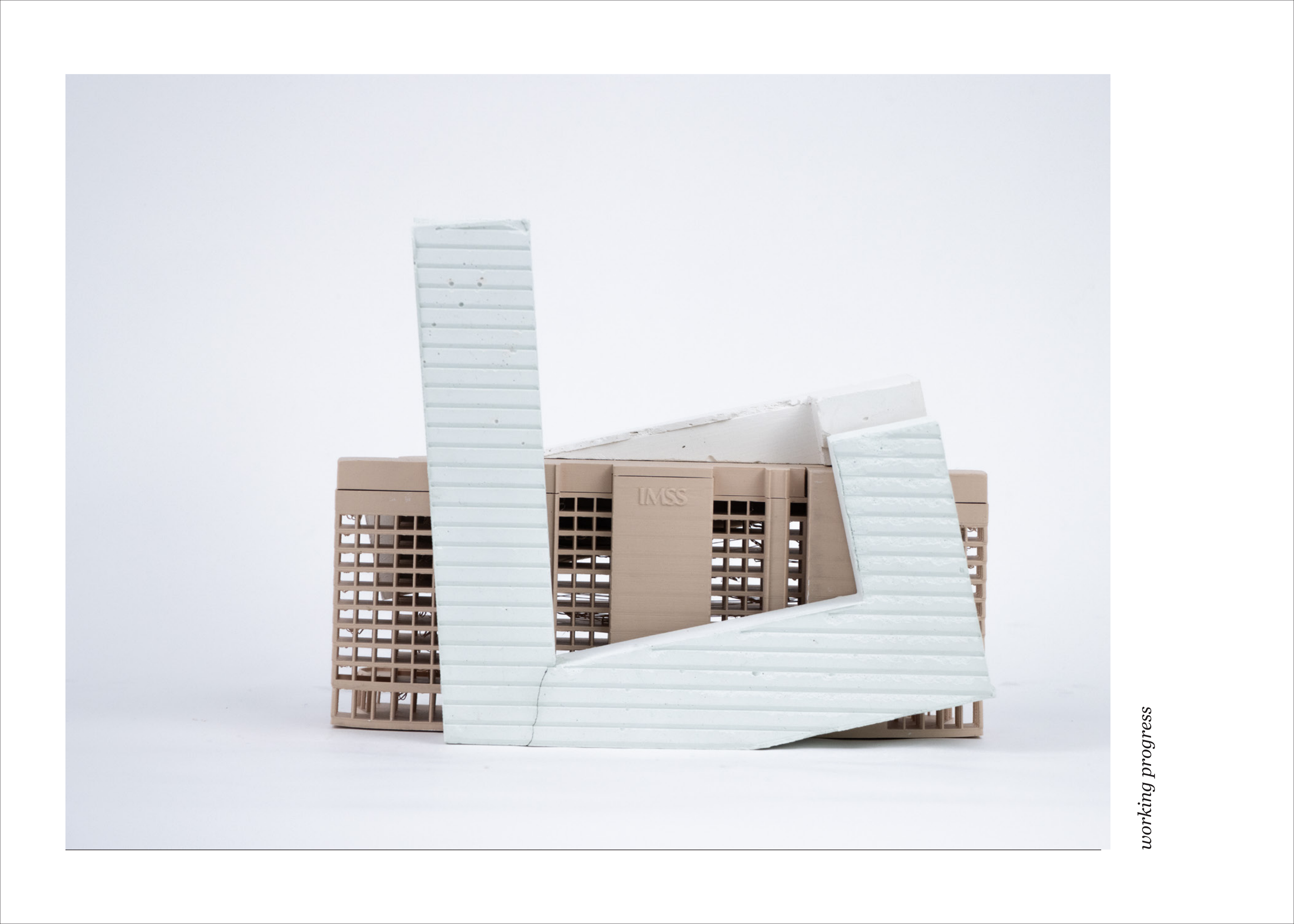
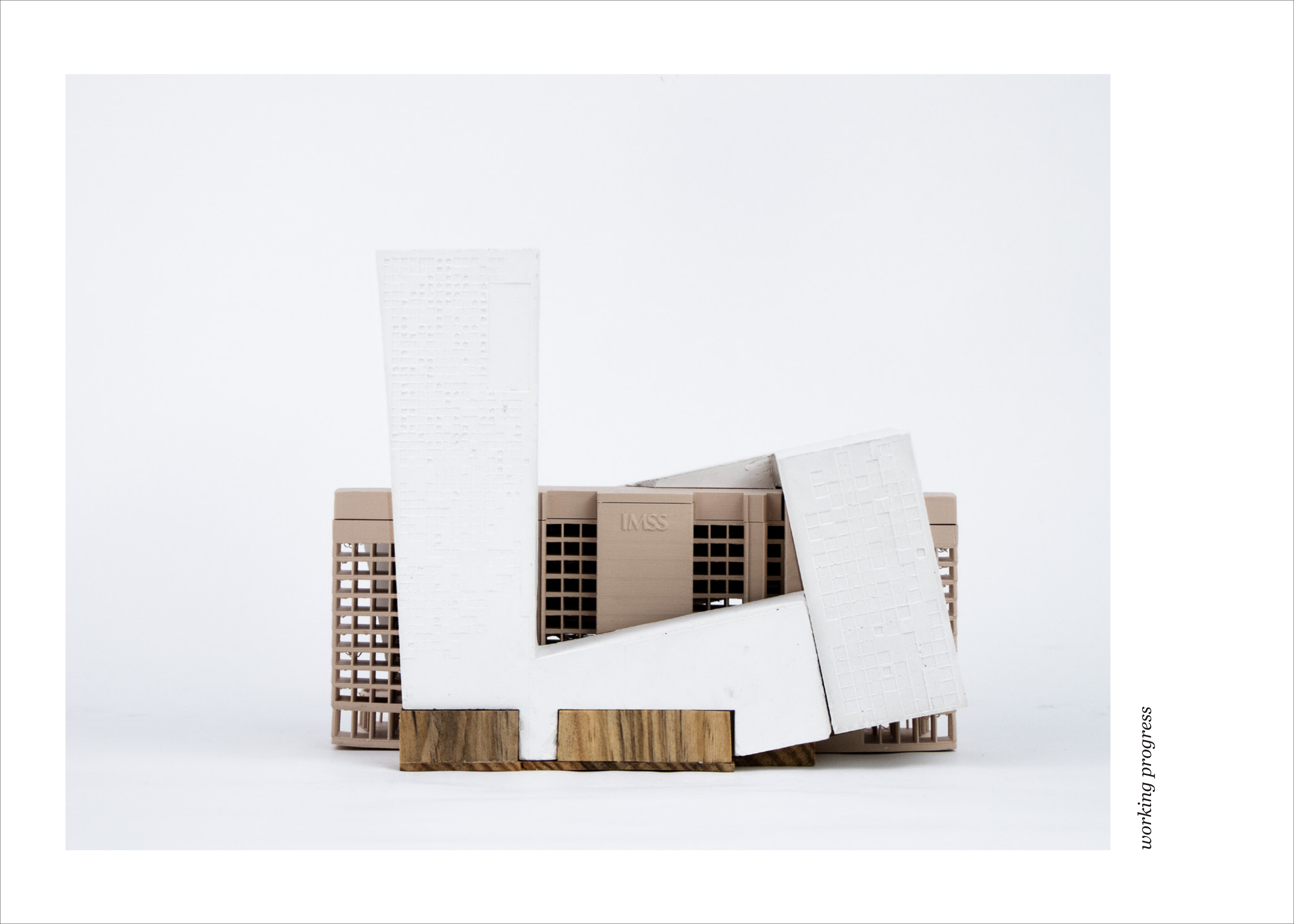
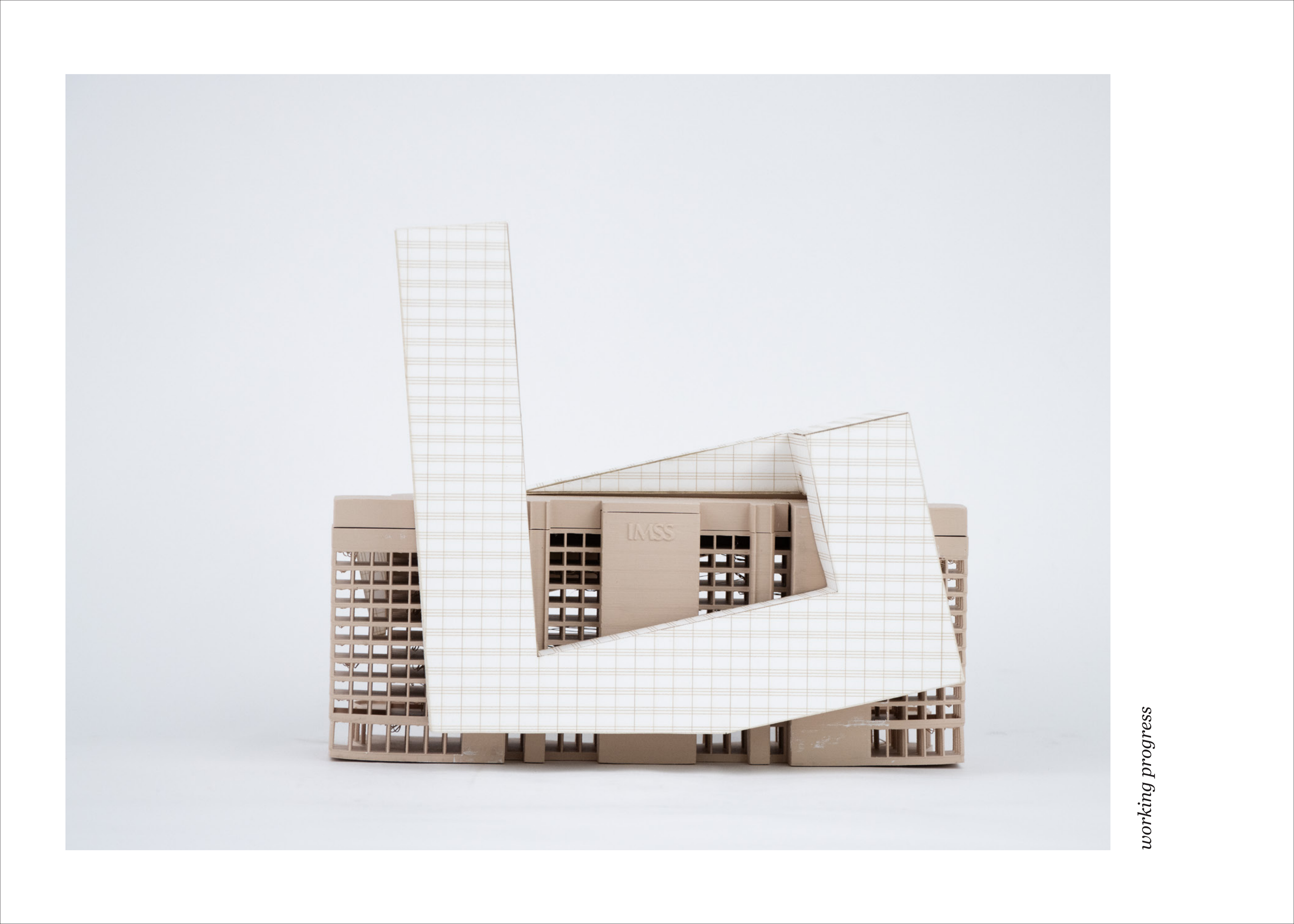
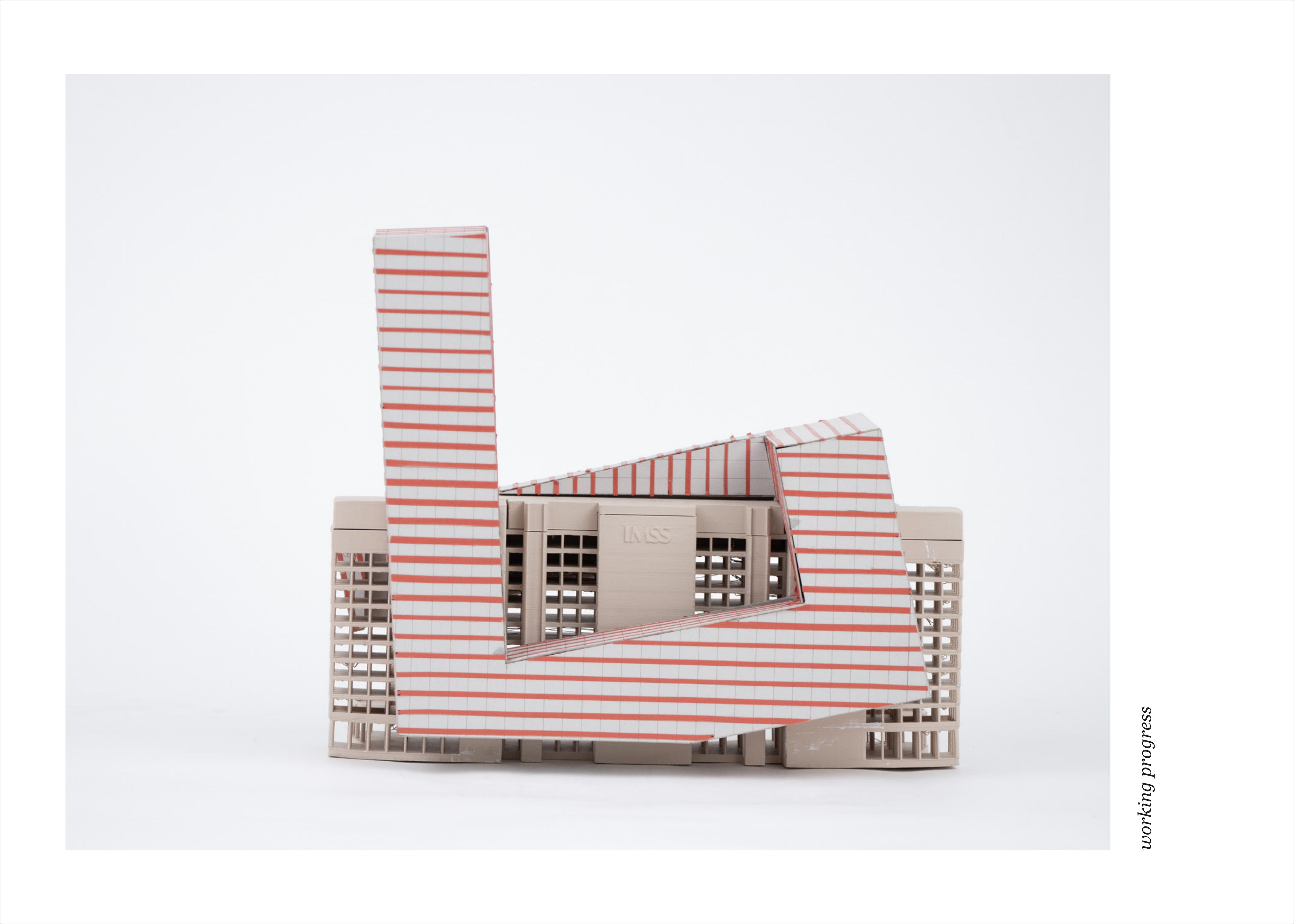
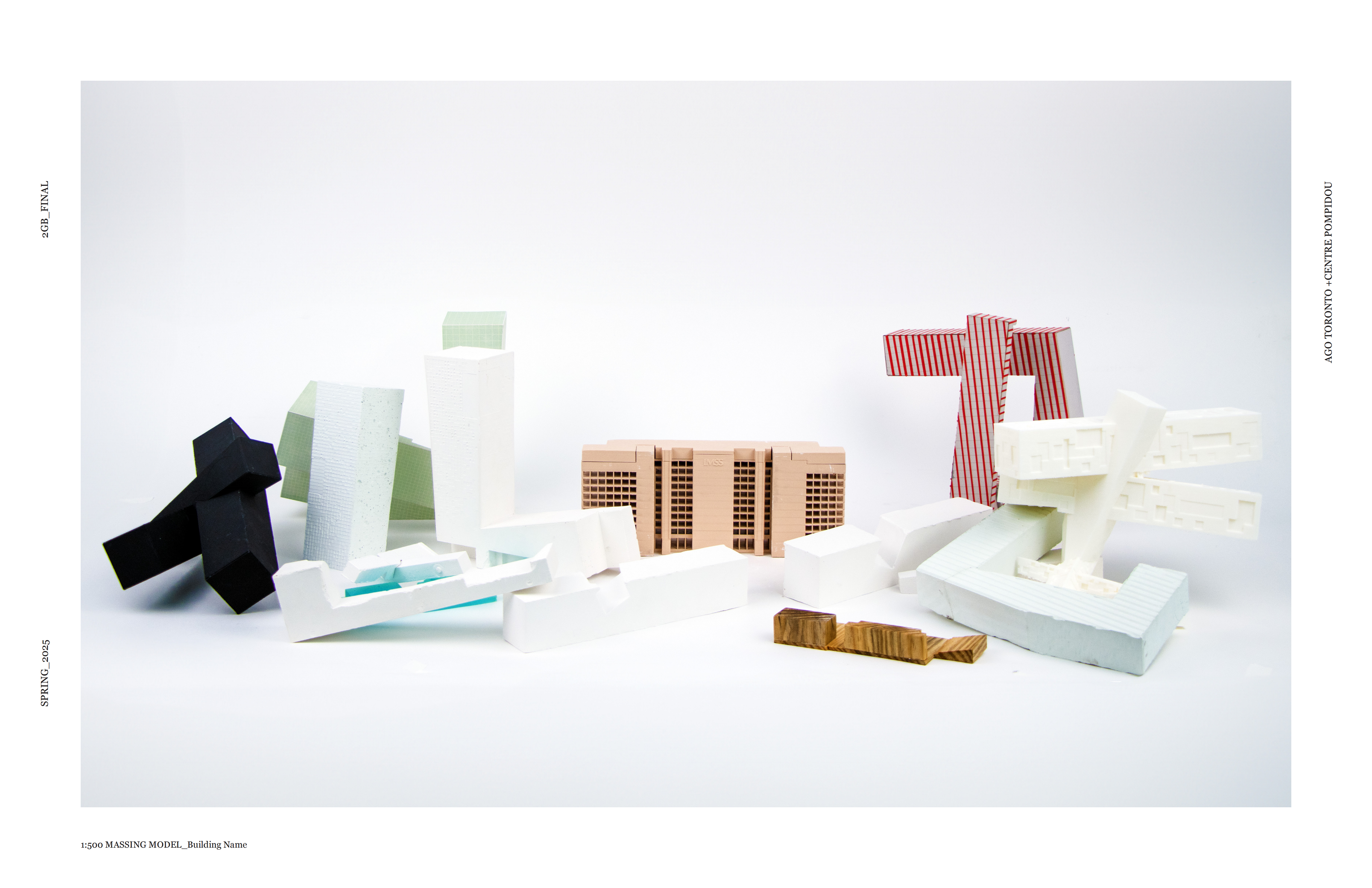
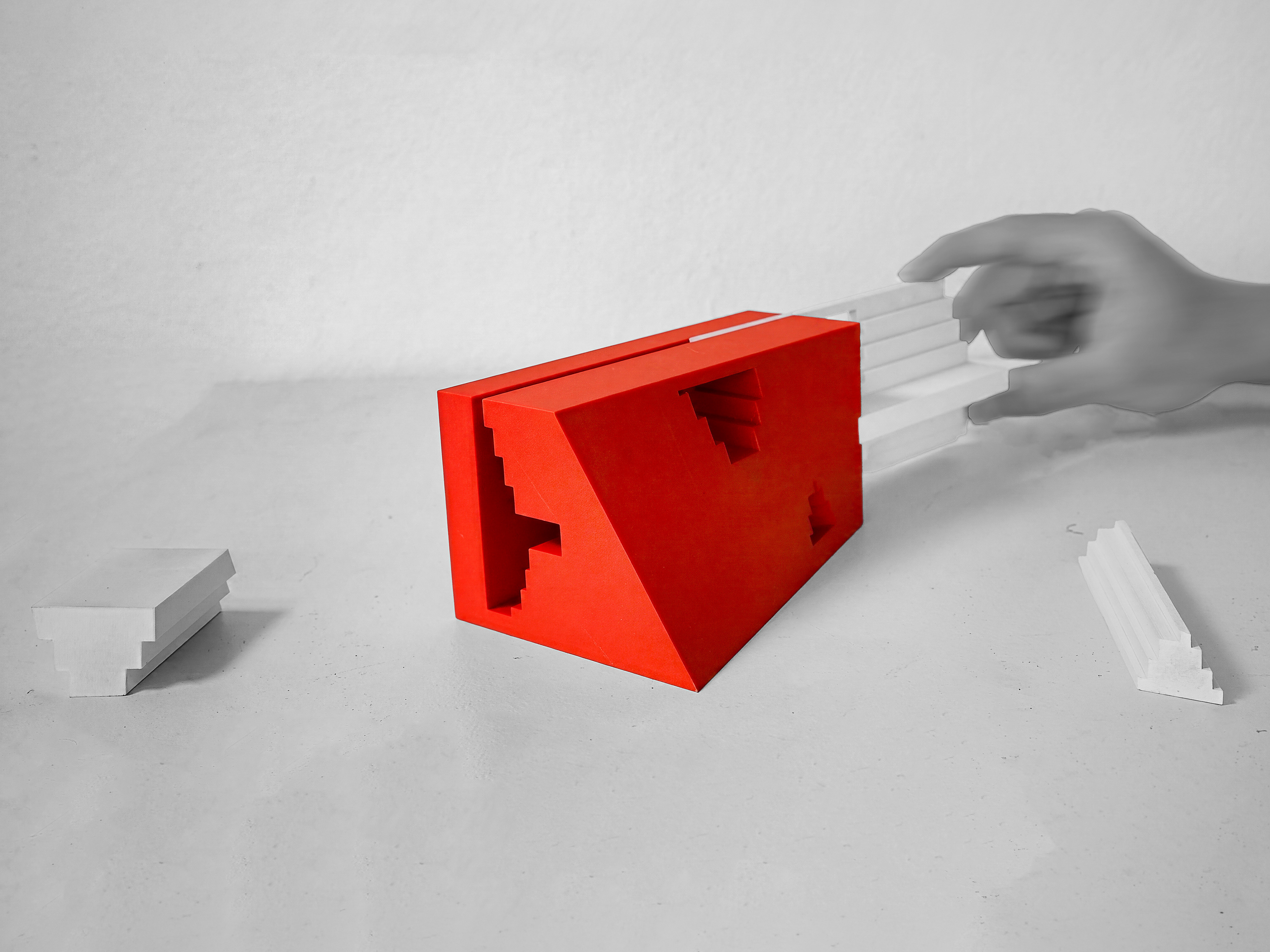
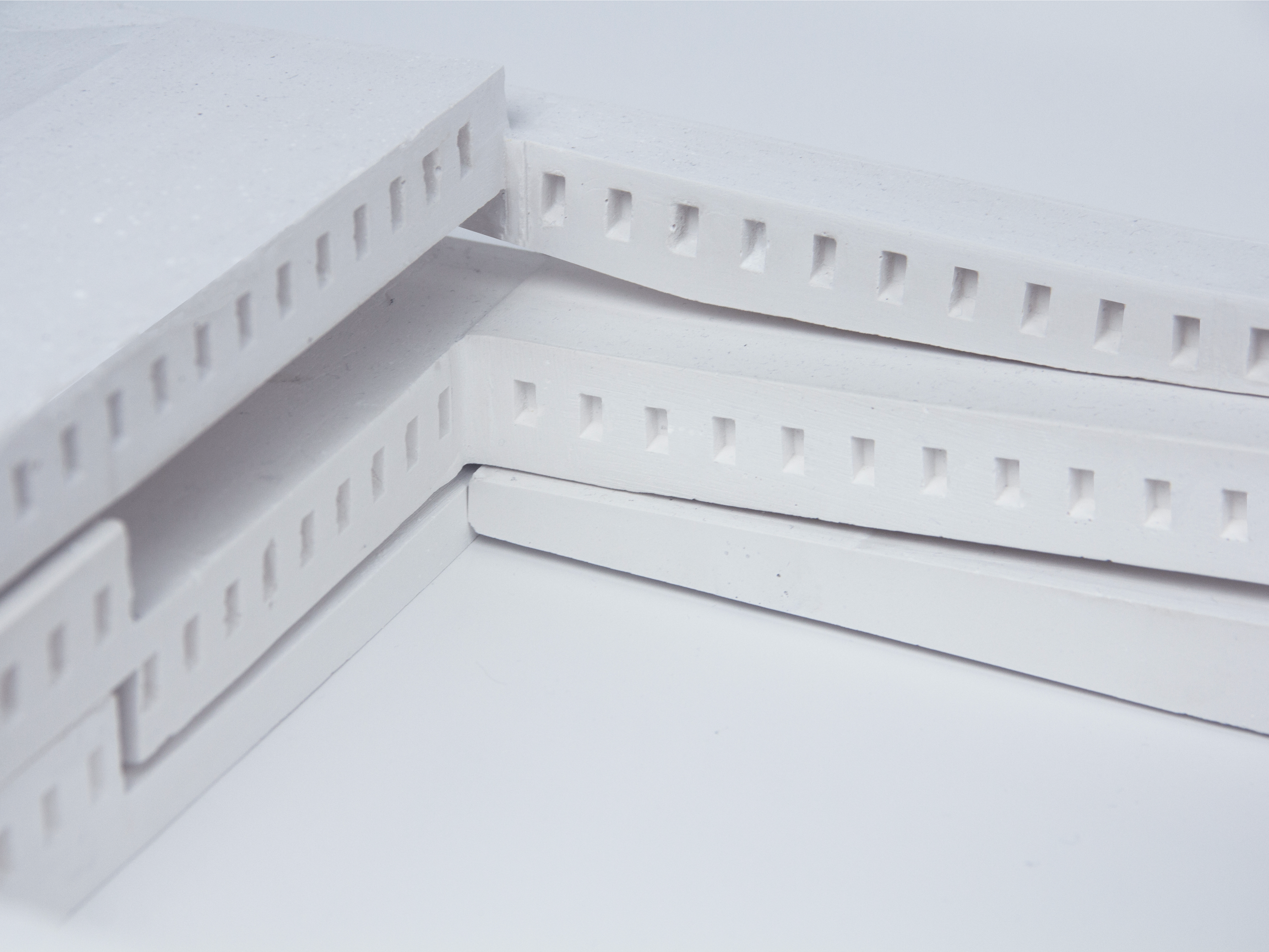
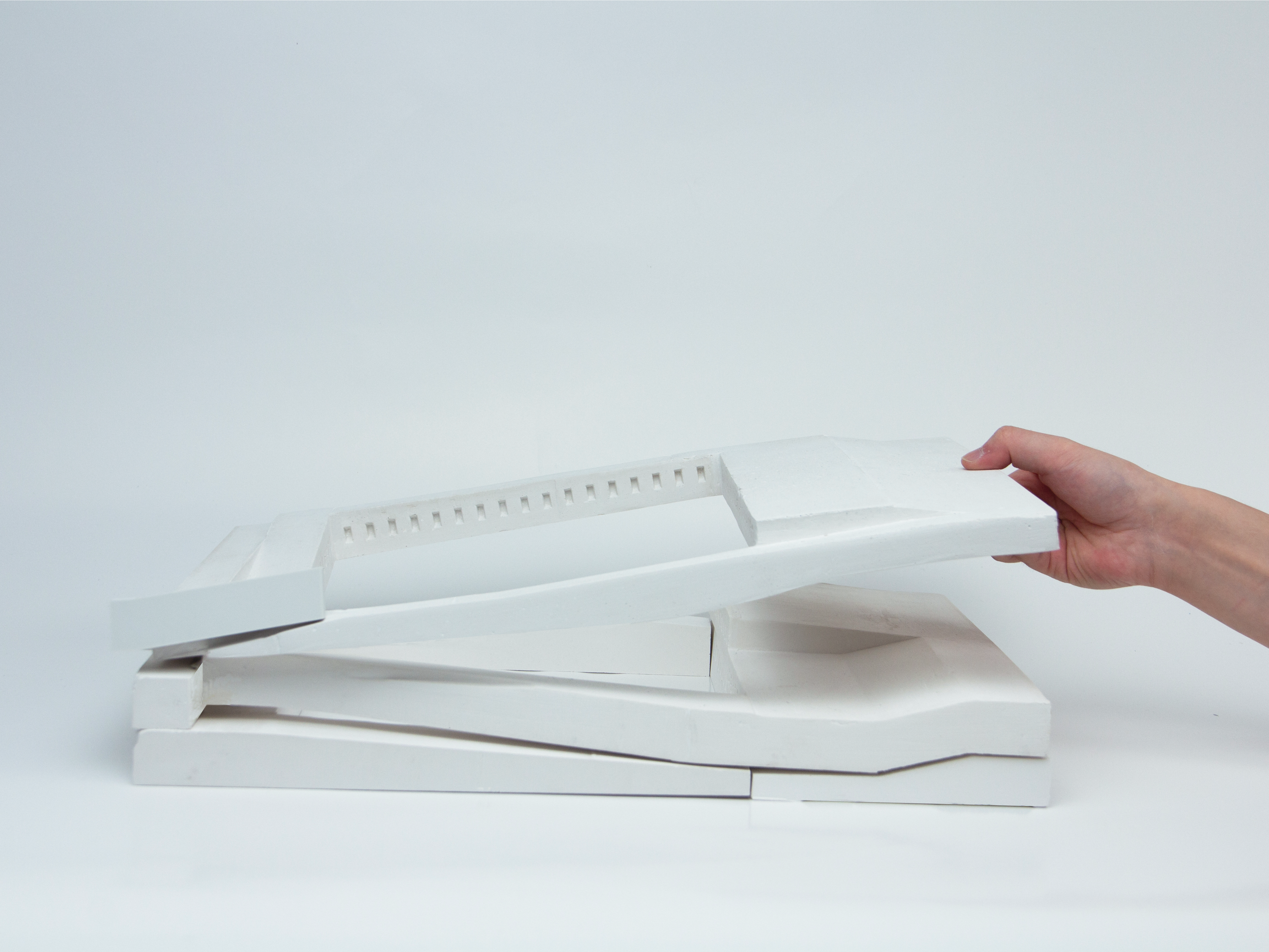
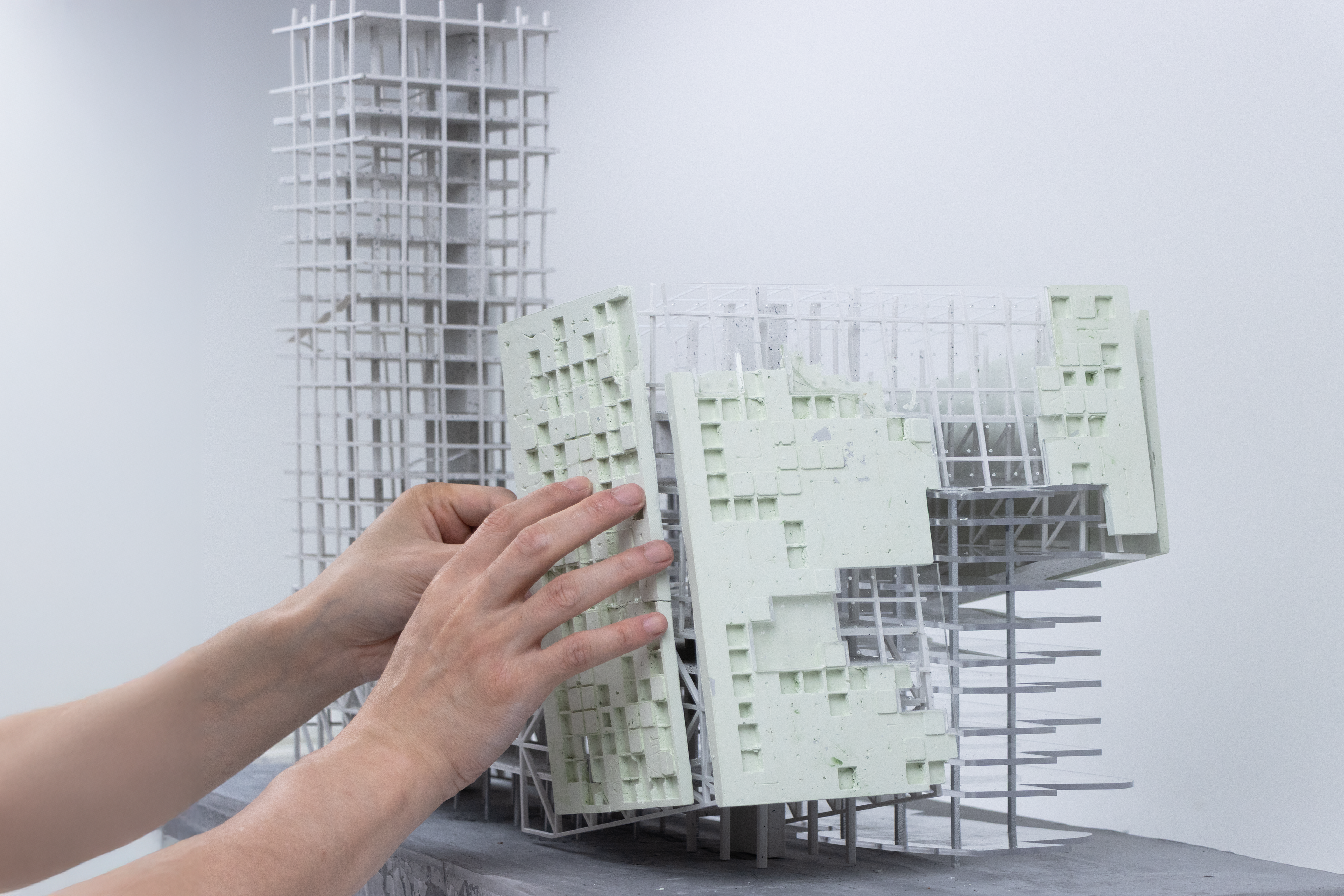
This study uses a range of materials to reinterpret the same architectural form, including plaster, wood, 3D-printed components, paper board, tape, and resin. Each material was used to test a different quality of the project, such as weight, rigidity, transparency, texture, and surface expression.
Rather than treating the model as a fixed object, this material study explores how the same form can change through different methods of making. Plaster emphasizes mass and solidity, wood introduces warmth and construction logic, 3D printing produces precision and repetition, paper board allows folding and flexibility, tape highlights line and graphic rhythm, and resin tests transparency and lightness. Together, these experiments help translate the project’s formal strategy into a material language.
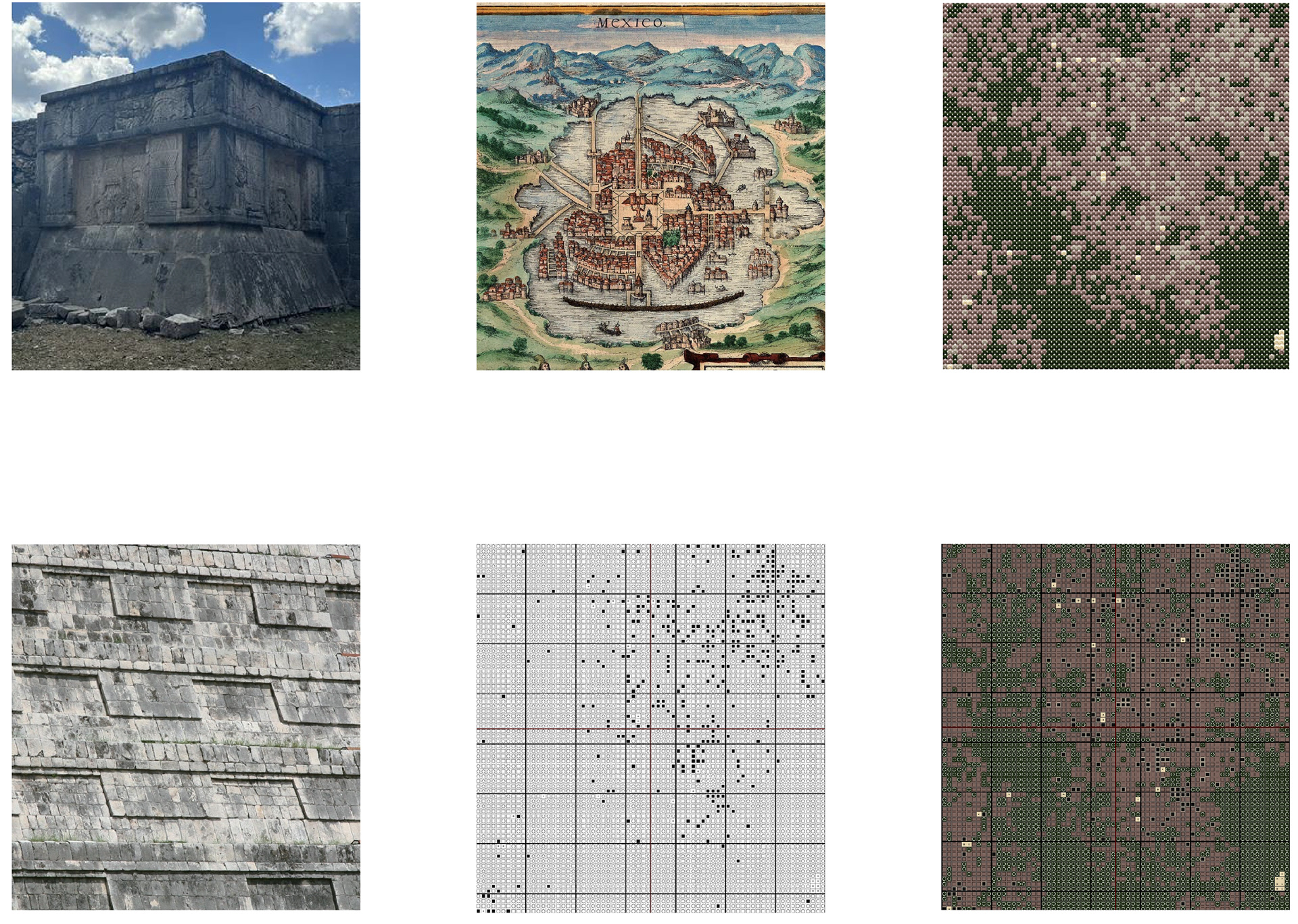
This study explores how historical patterns from Mexico can be translated into a facade system through Grasshopper. By analyzing architectural ornament, urban maps, and pixel-based pattern studies, historical textures are abstracted into a set of parameters. These parameters are then used to generate a facade logic that transforms cultural and historical references into a contemporary architectural surface.
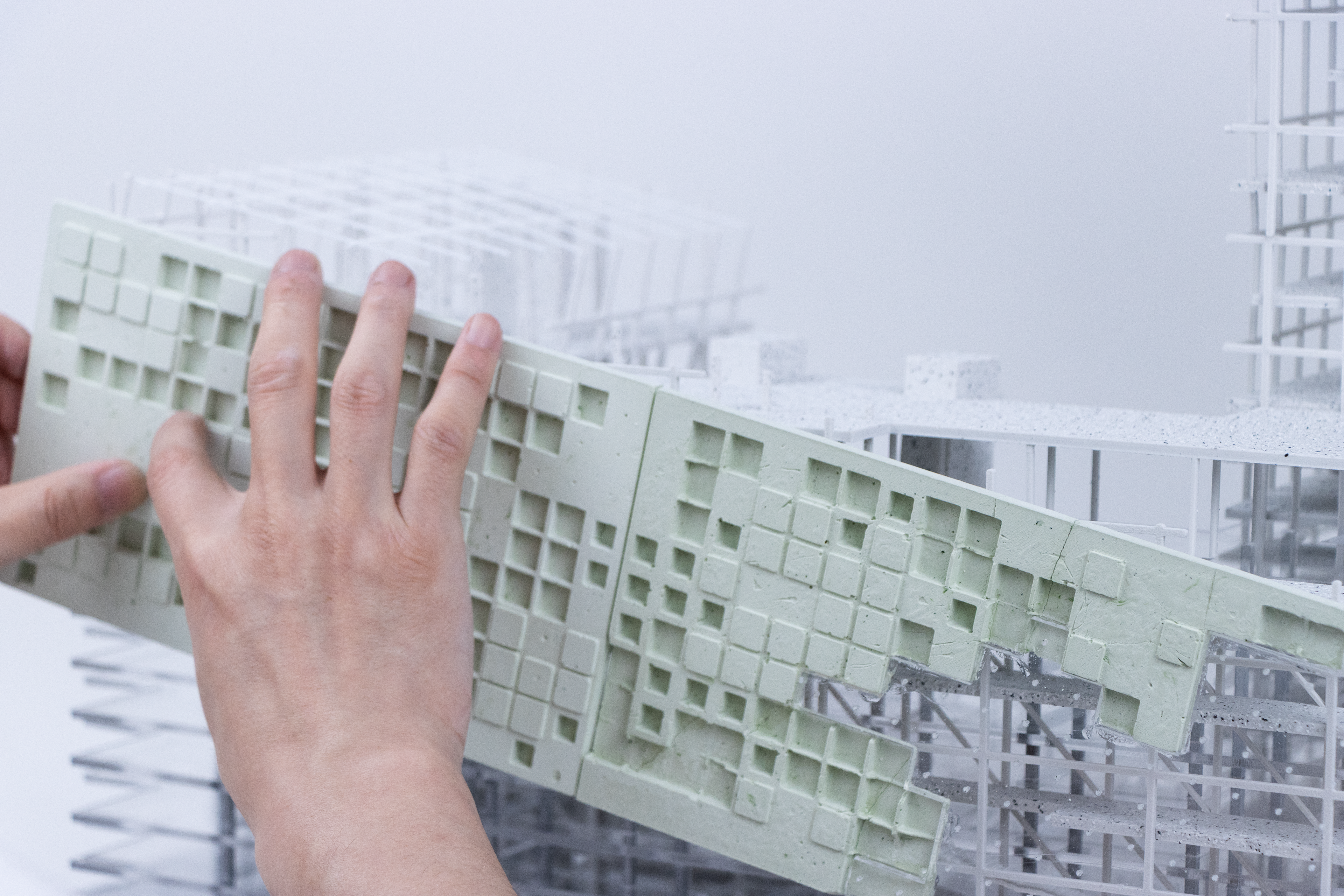
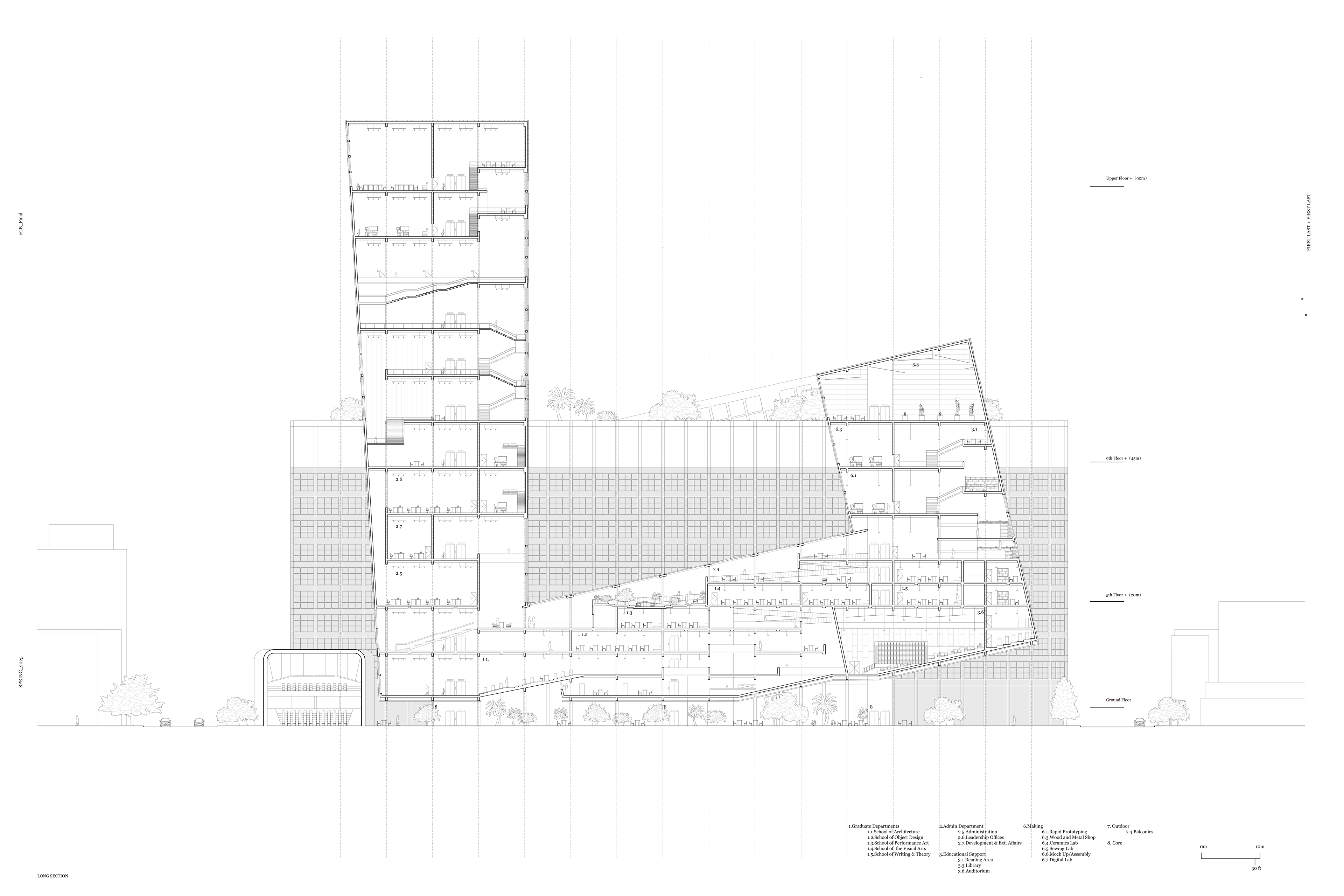
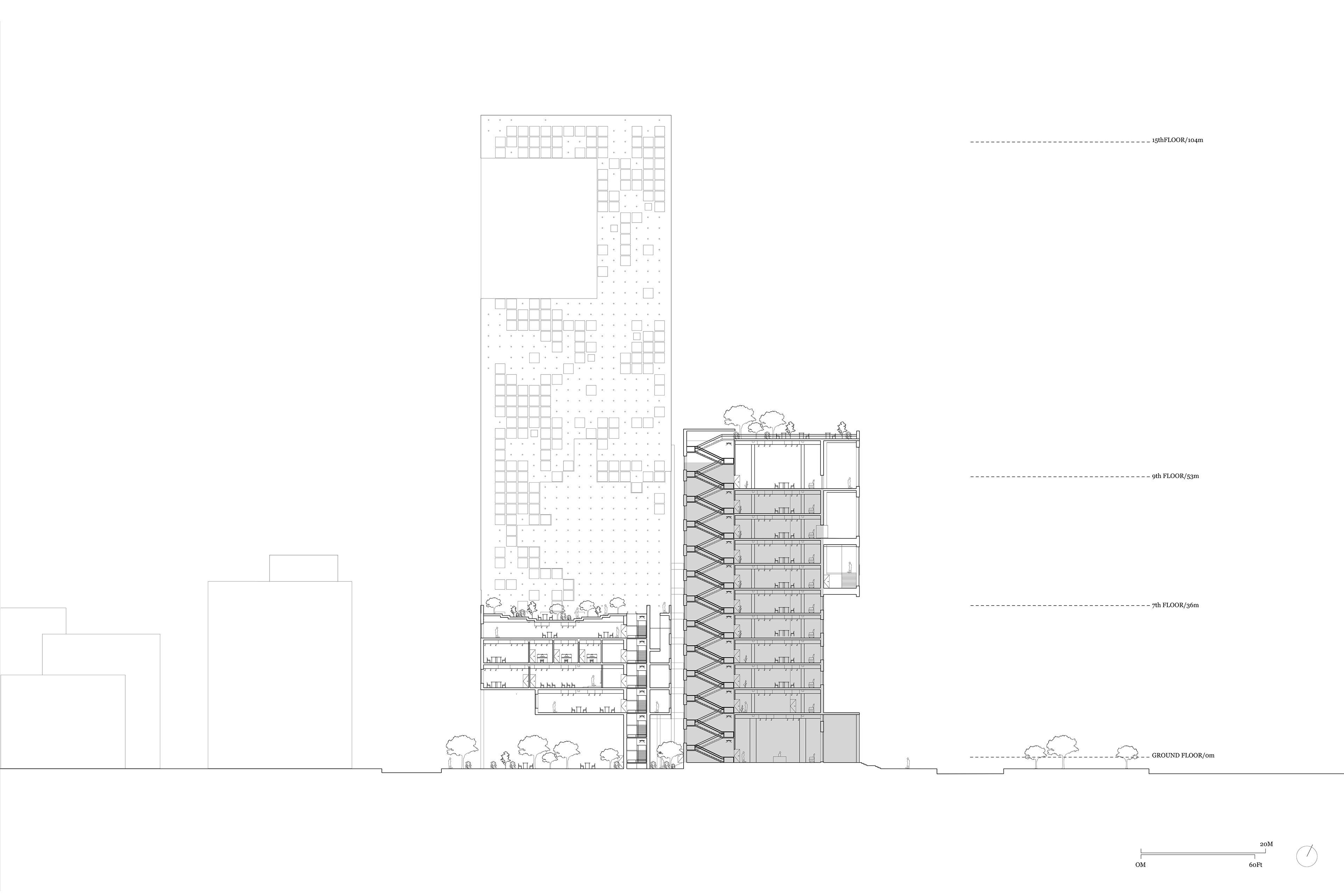
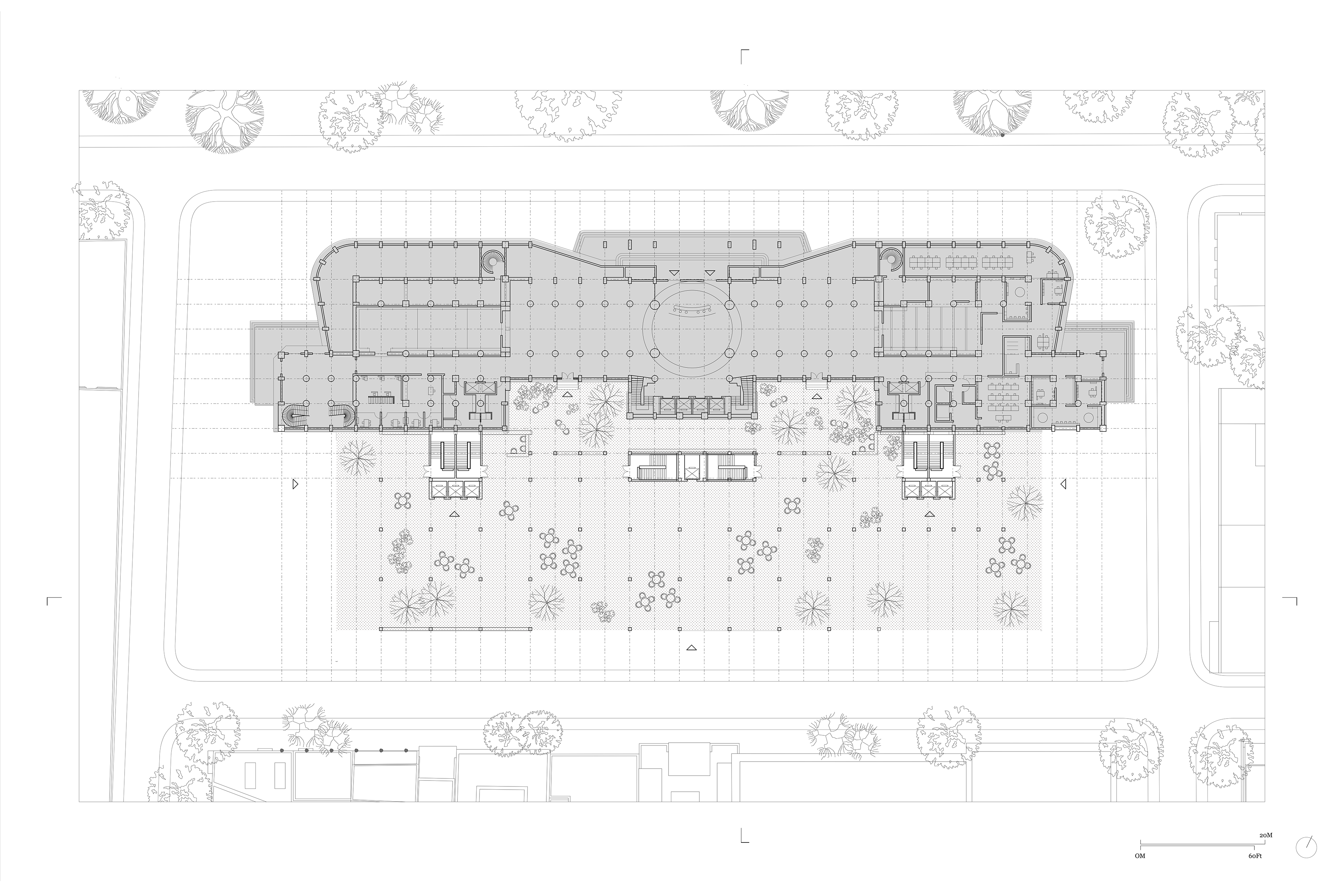
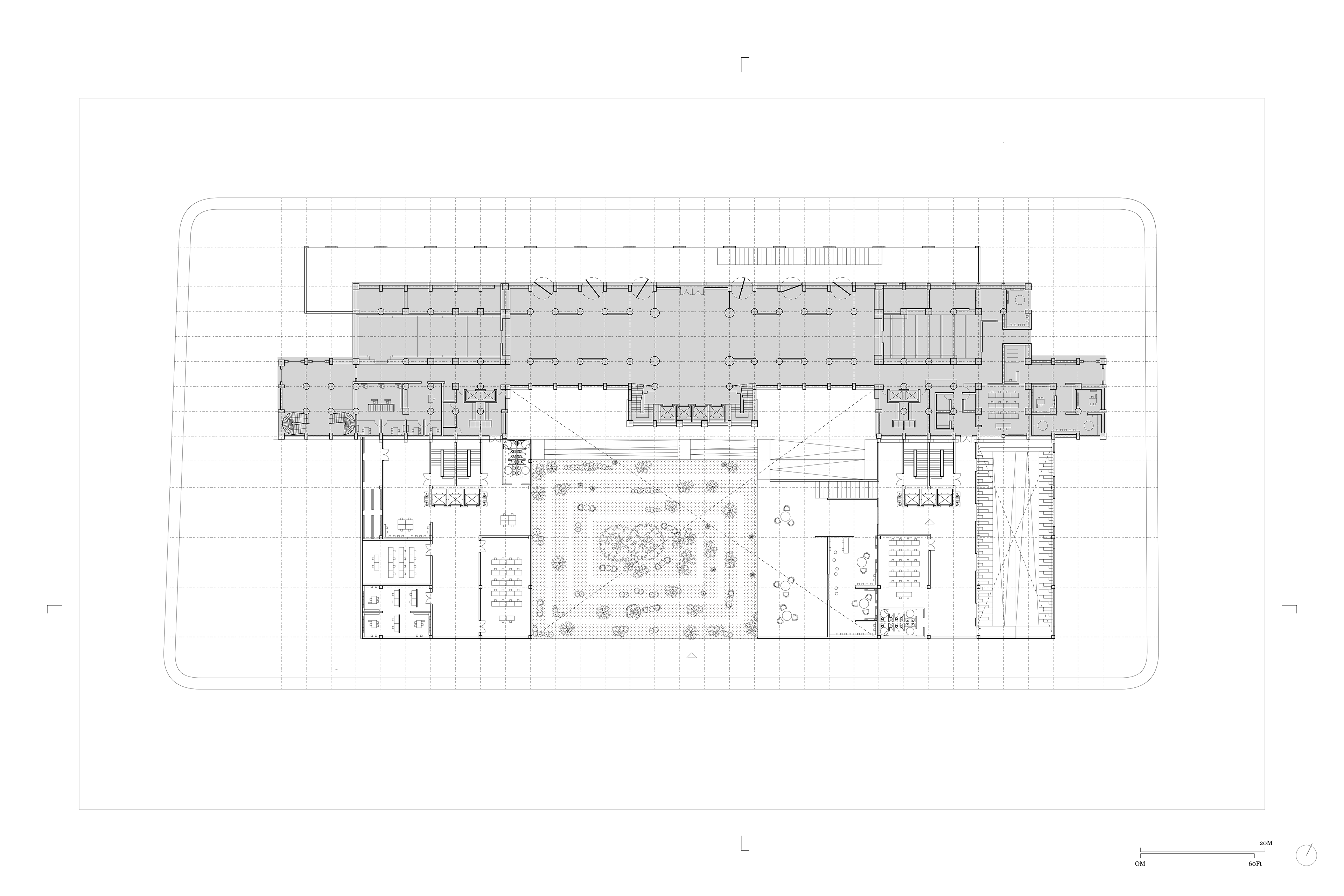
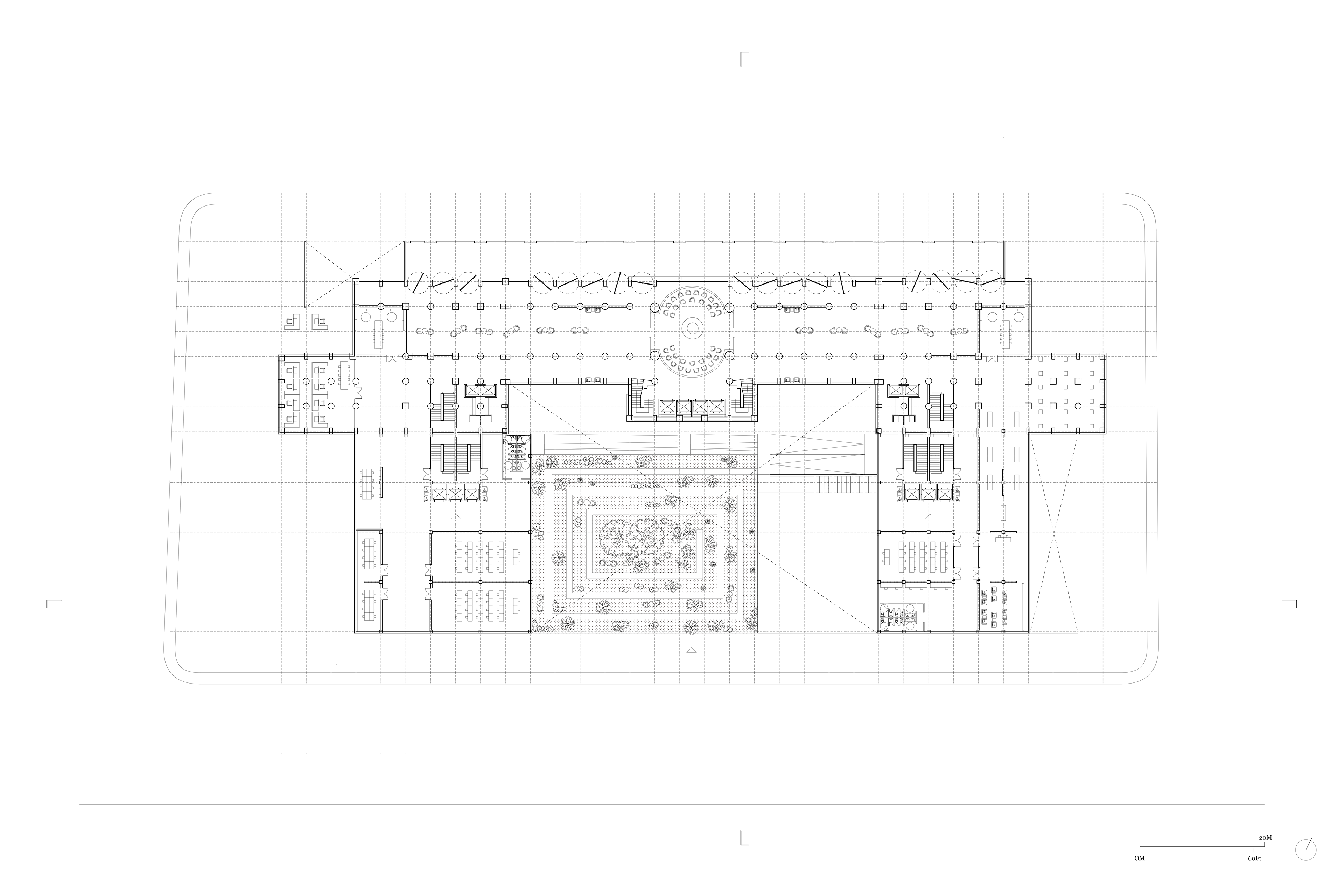
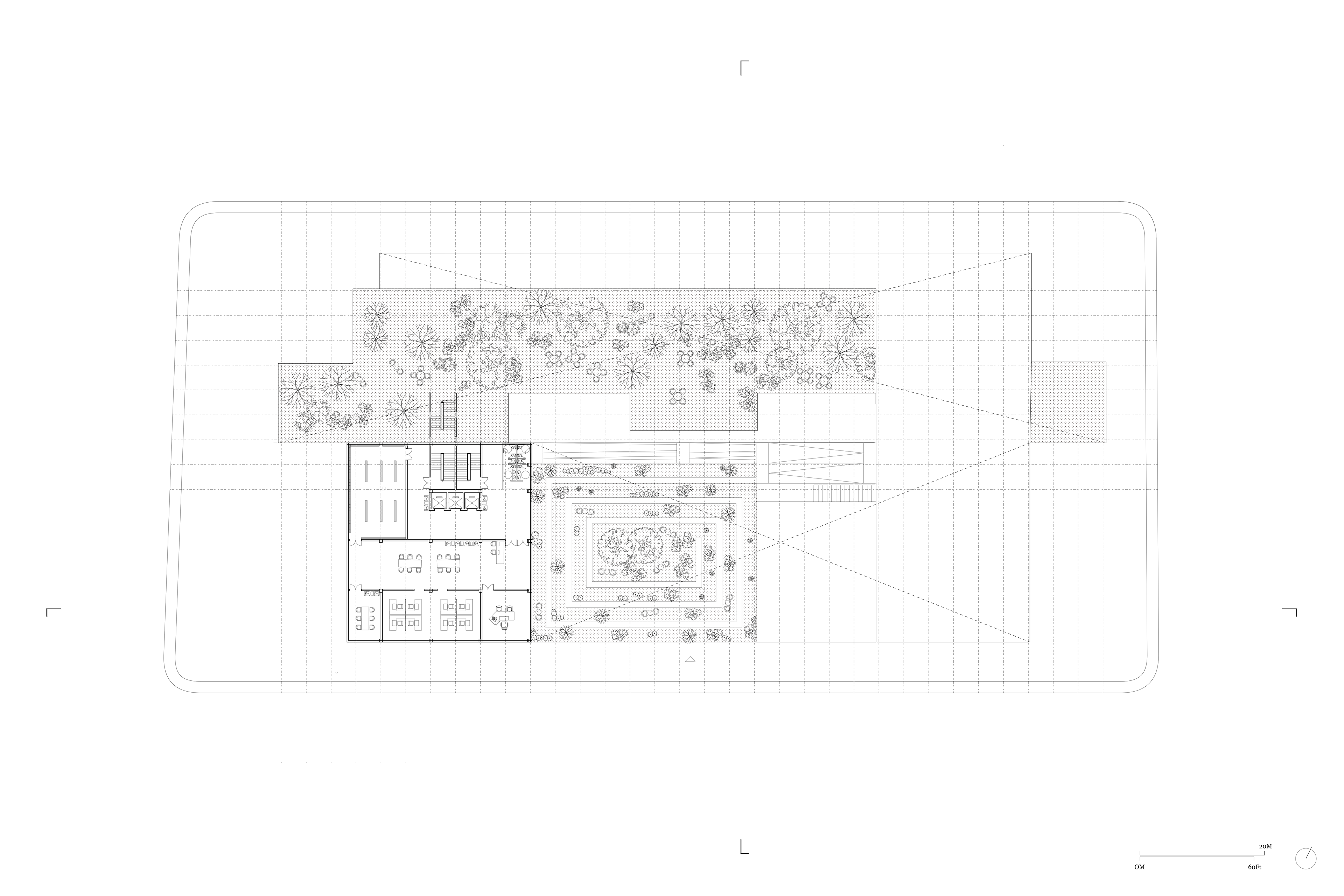
These drawings describe the project as a programmatic wrap around the existing IMSS building. Plans and sections show how circulation connects studios, galleries, making labs, library, auditorium, café, courtyards, and balconies into one continuous spatial system. The project transforms the old structure into a new cultural and educational building through layered programs, vertical connections, and a new facade skin.
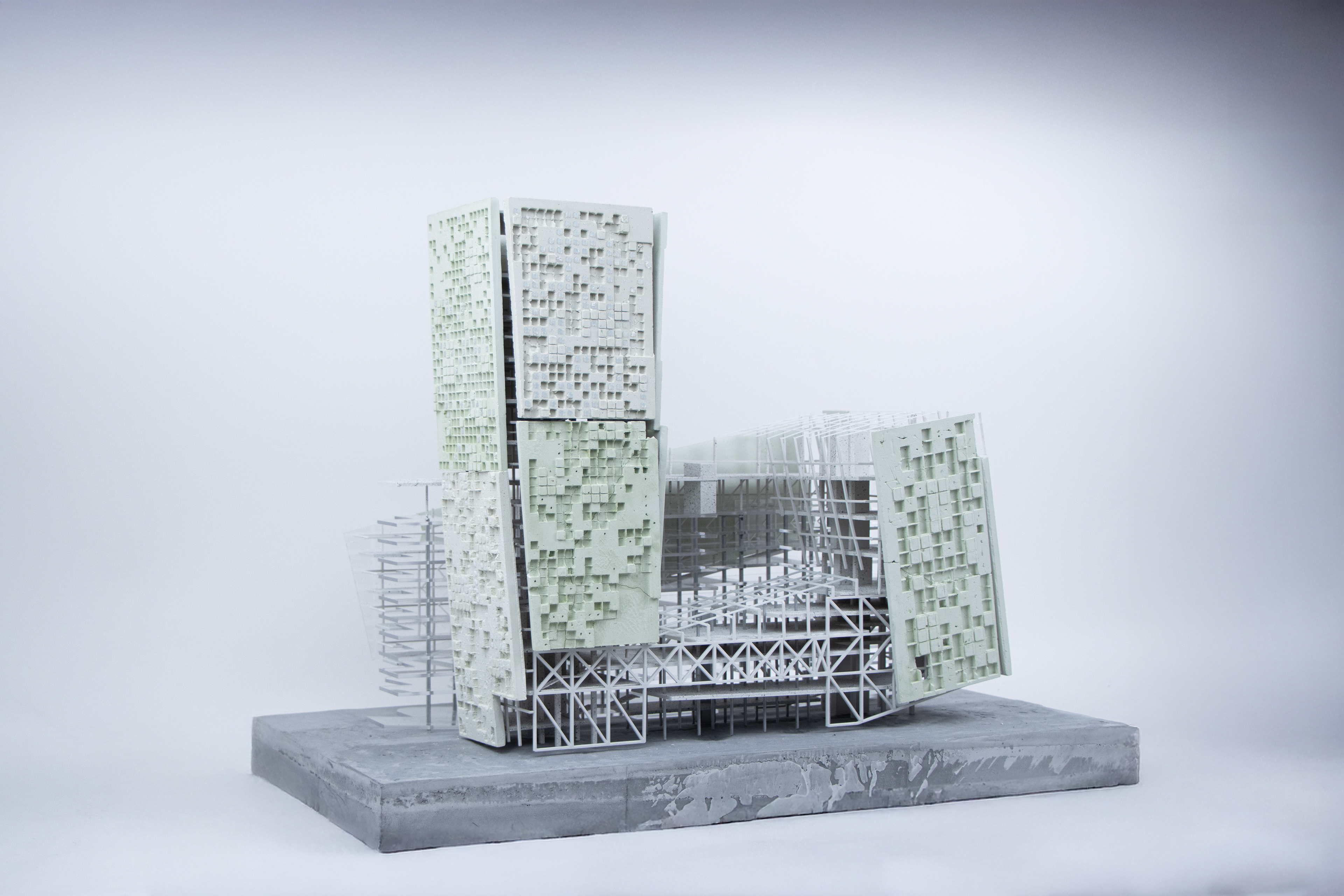
This project reinterprets Mexican historical patterns as a contemporary architectural facade system. By studying ancient stone reliefs, city maps, and pixel-like textures, the project translates cultural references into a parametric design process through Grasshopper. The facade becomes more than a surface: it acts as a cultural filter that wraps the existing IMSS building, connecting history, ornament, and digital fabrication into one architectural language. Through this process, the project transforms local memory into a new spatial and visual identity.