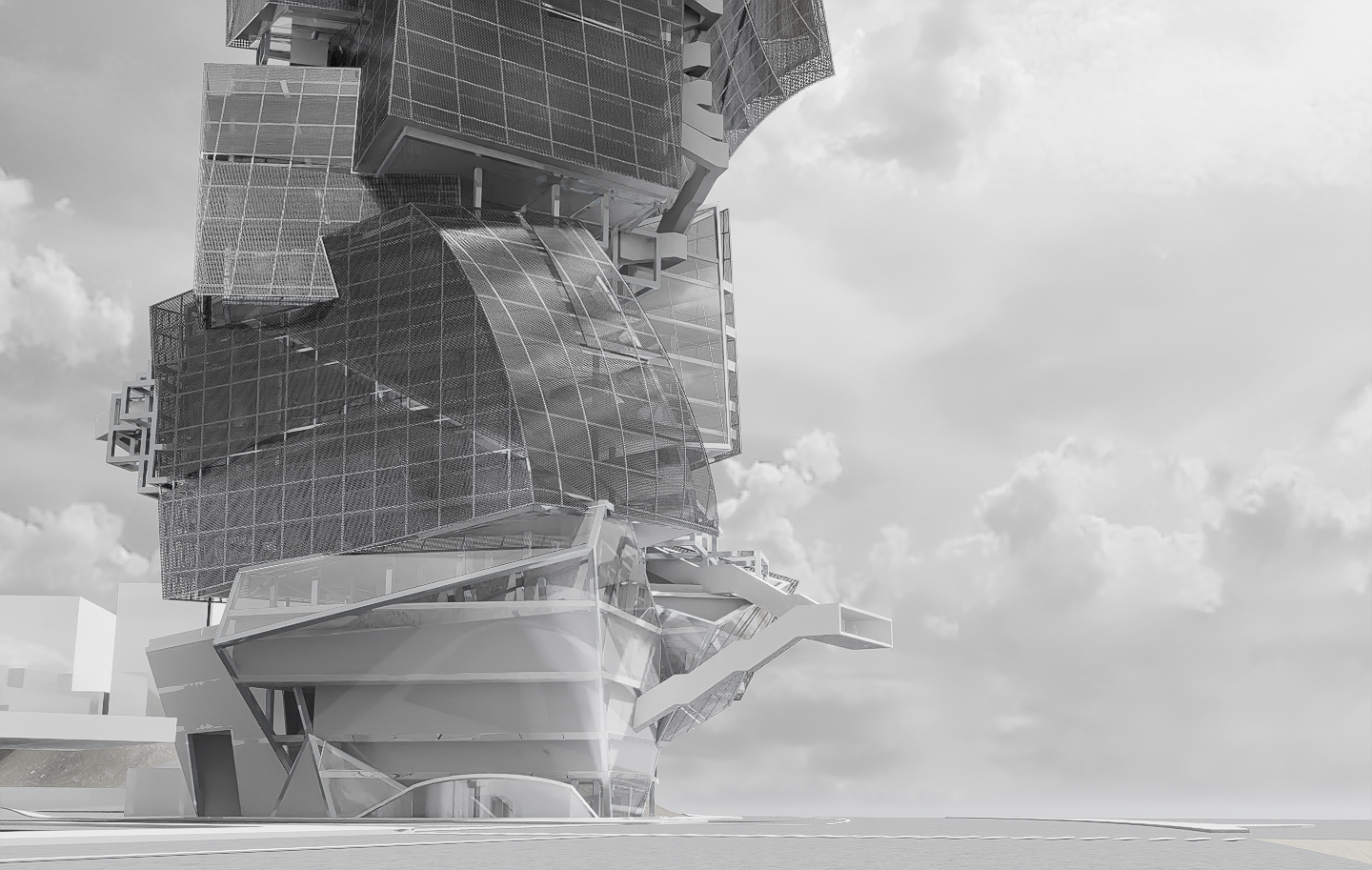
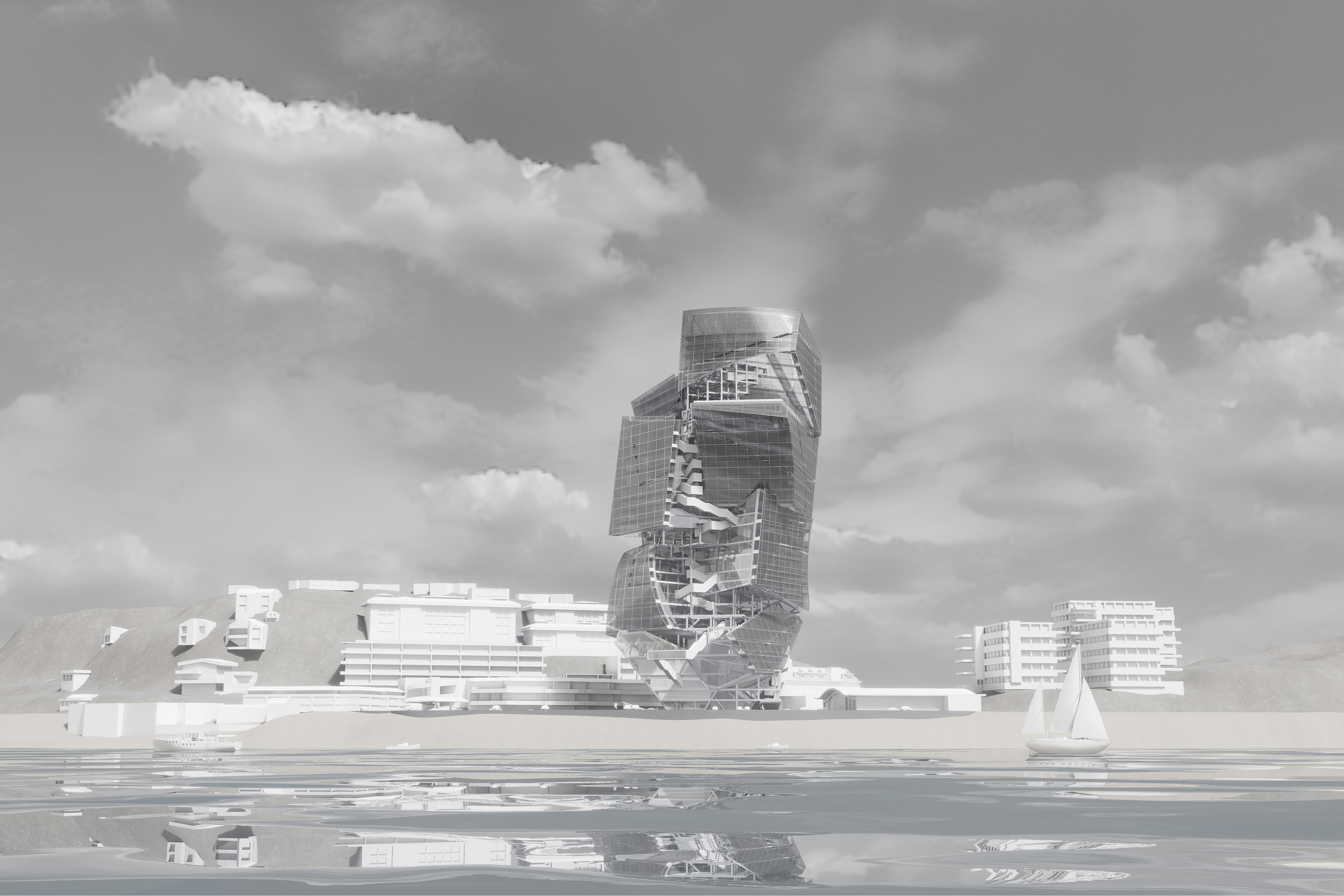
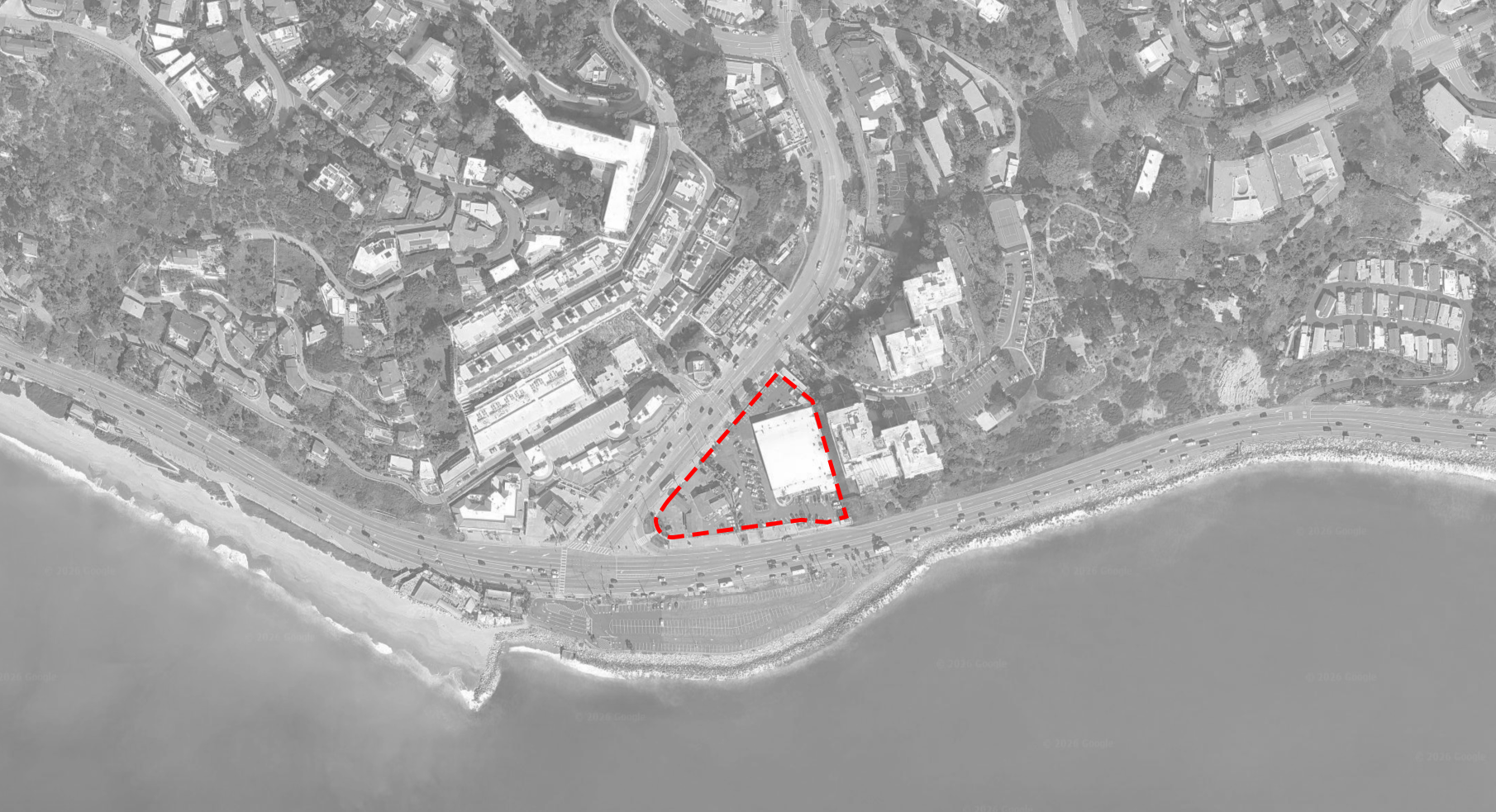
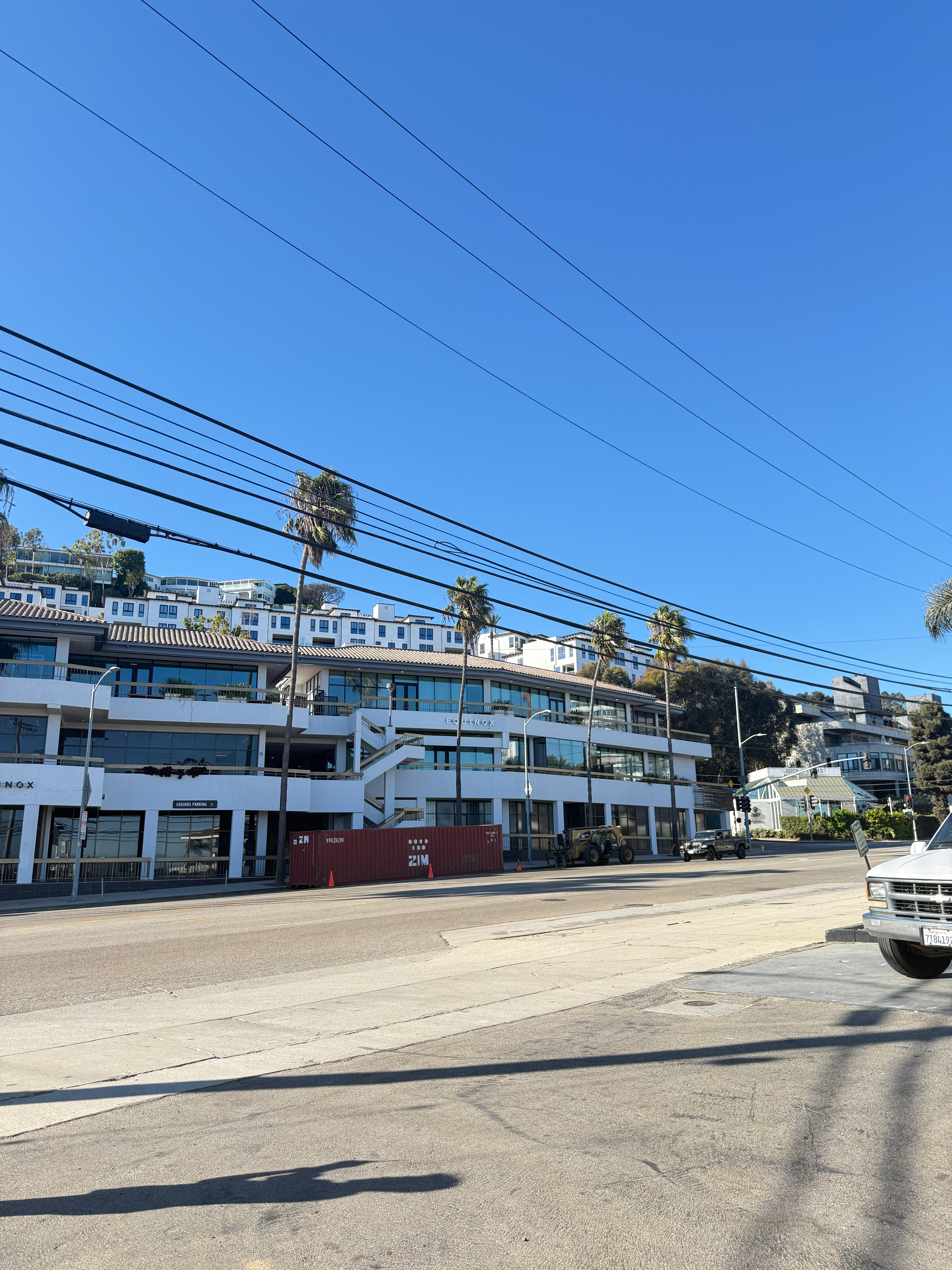
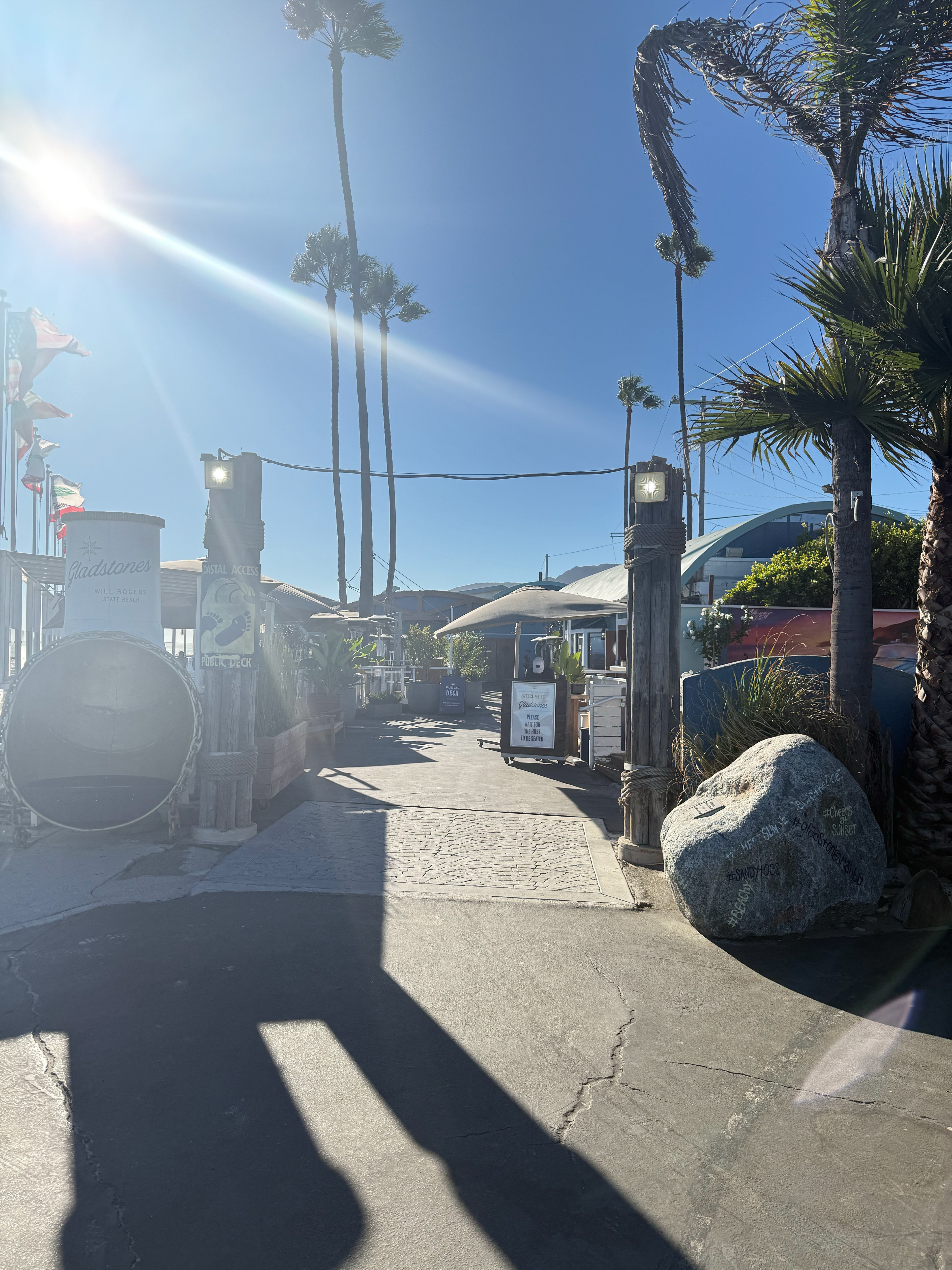
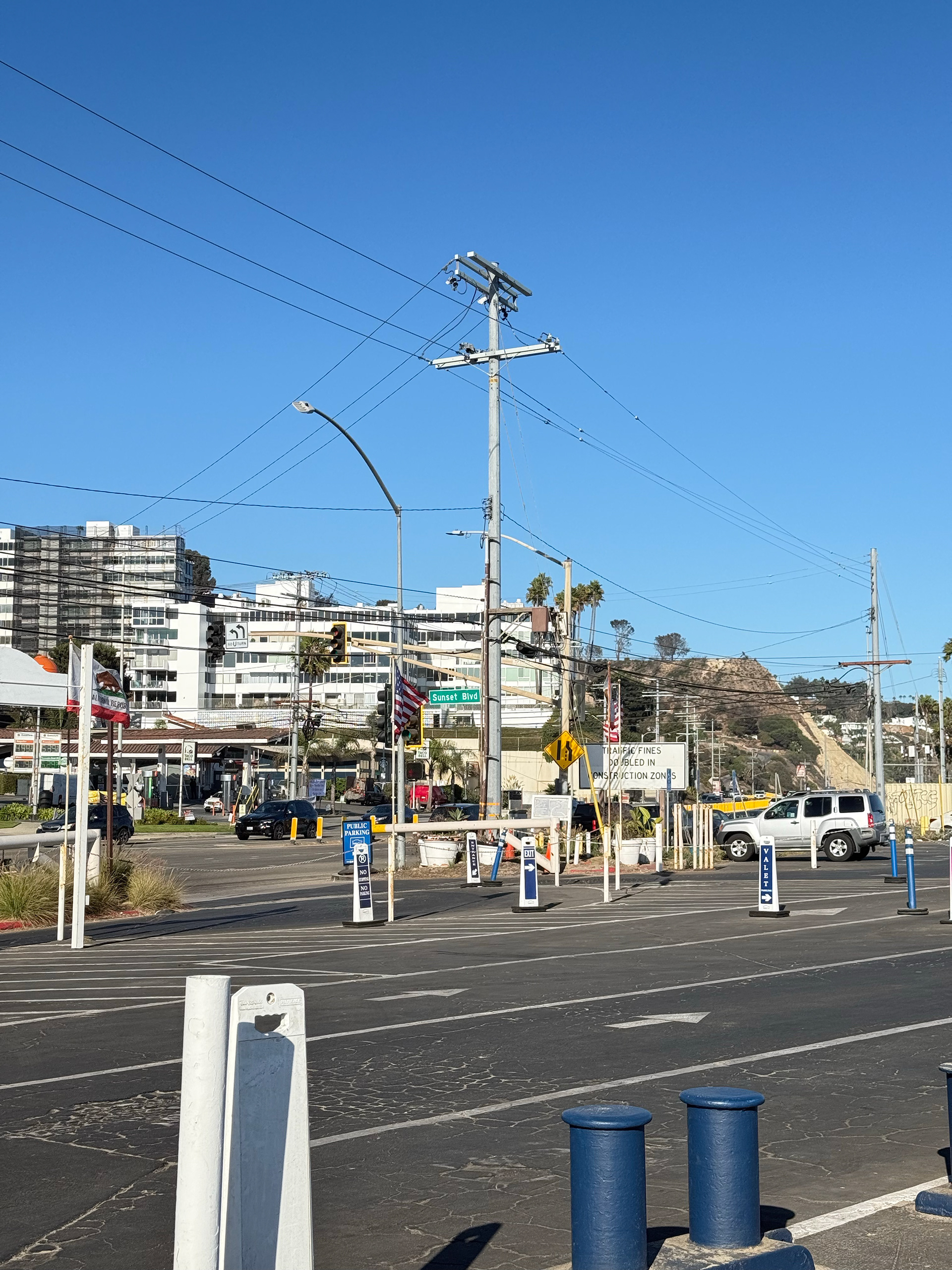
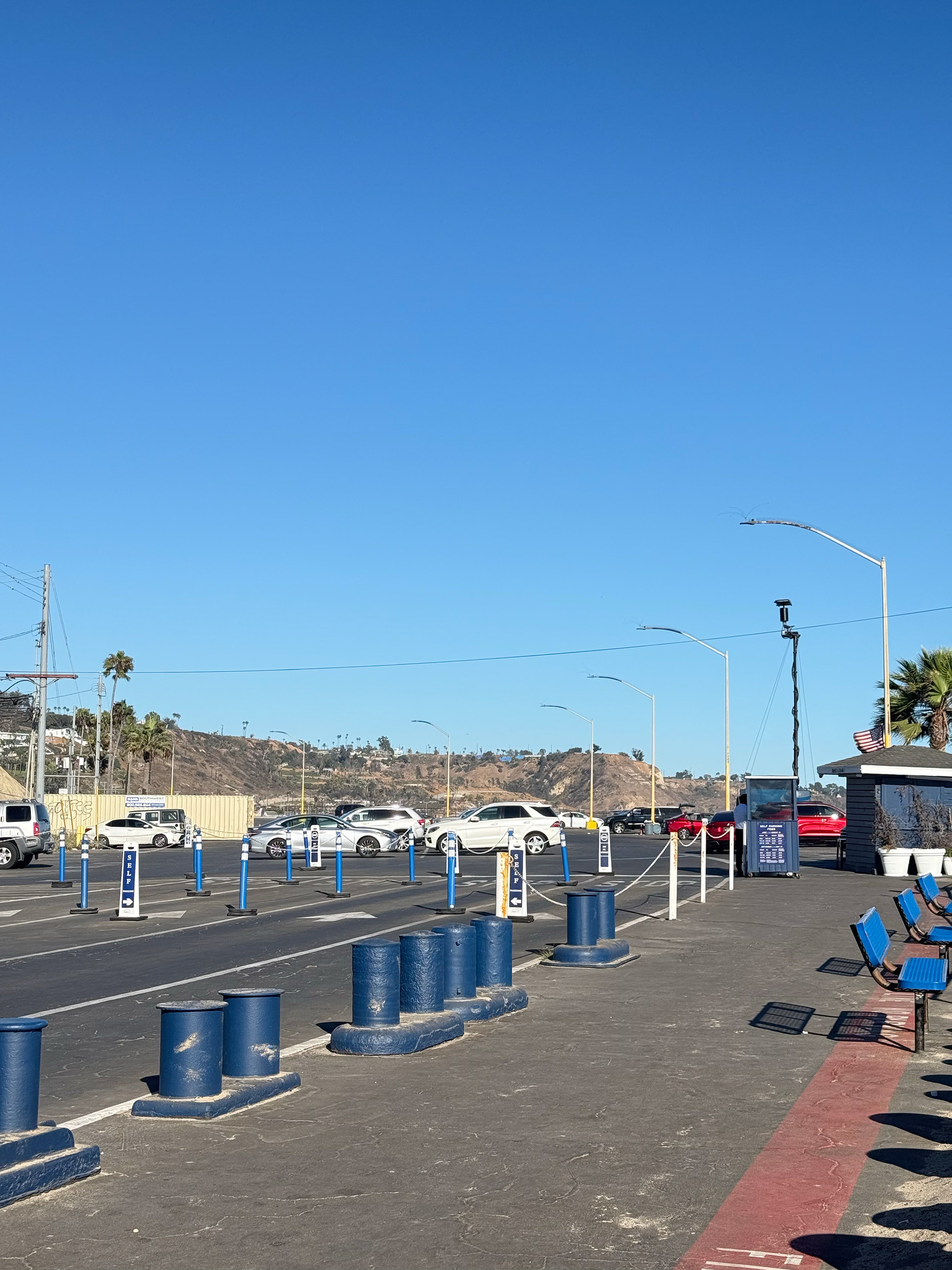
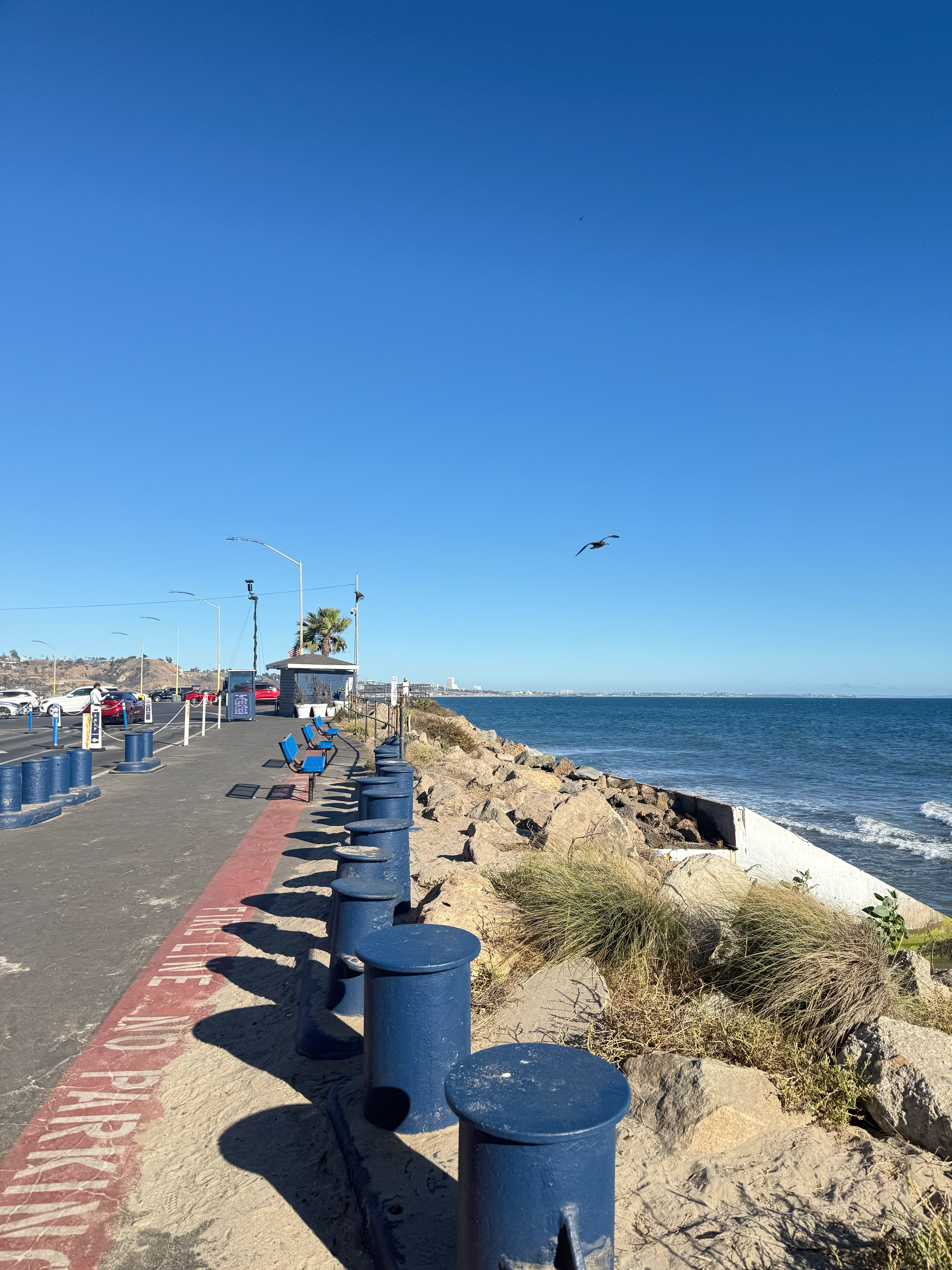
PILING investigates vertical architecture as a system of accumulation rather than a singular tower. Located at the intersection of Sunset Boulevard and Pacific Coast Highway, the project responds to a complex coastal site defined by traffic, topography, visibility, and fragmented urban edges.
The project begins with studies of the surrounding roofscape, translating pitched, layered, and irregular roof forms into a piling strategy. Volumes are stacked, shifted, rotated, and displaced to generate a vertical mixed-use building where structure, program, circulation, and facade operate as related but independent systems.
Rather than producing a fixed object, the project develops a rule-based architectural system. A central structural spine supports the accumulation of volumes, while circulation moves through the building as a vertical connector. Through this process, the tower becomes a layered spatial construct—one that holds hotel, residential, public, cultural, and commercial programs within a dynamic system of stacking and displacement.

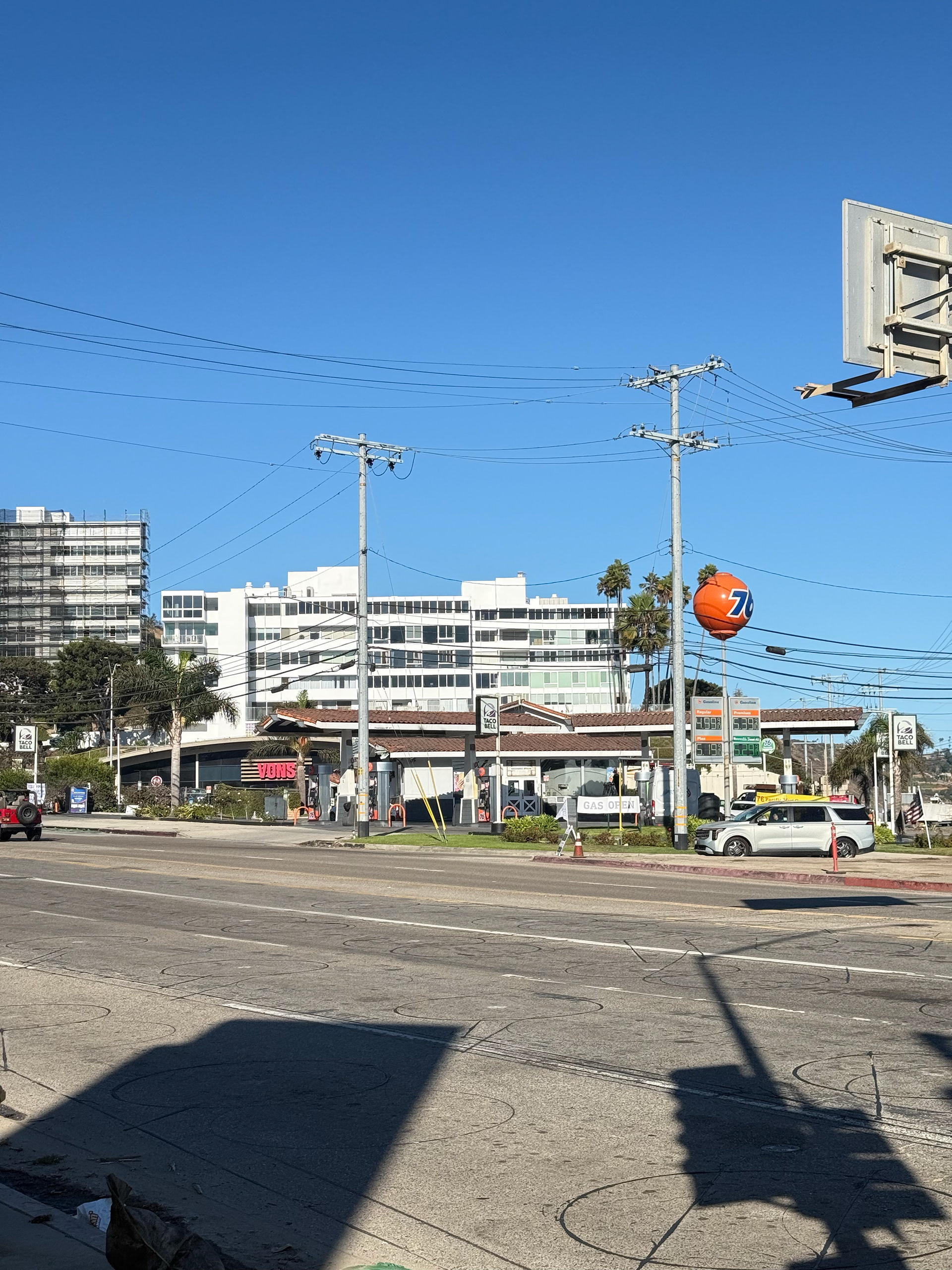
Concept Generation: Roofscape, Piling, and Structural Autonomy
The project originates from an observation of the surrounding roofscape, where fragmented, pitched, and layered roofs form a distinctive visual condition shaped by coastal climate and beach culture. Rather than treating these roofs as isolated objects, the initial collage abstracts their angular geometry and material contrasts into a compositional field.
This collage becomes the basis for a piling strategy, in which architectural volumes are stacked, shifted, and accumulated rather than unified into a singular mass. Through this process, massing is understood as an additive condition—formed through repetition, displacement, and vertical aggregation.
The patterns extracted from the collage are then translated into a structural logic, operating independently from the volumetric organization. As a result, structure and mass are intentionally decoupled: the structure does not merely support the form, nor does the mass simply express the structure. Instead, the two systems coexist as distinct yet interrelated layers.
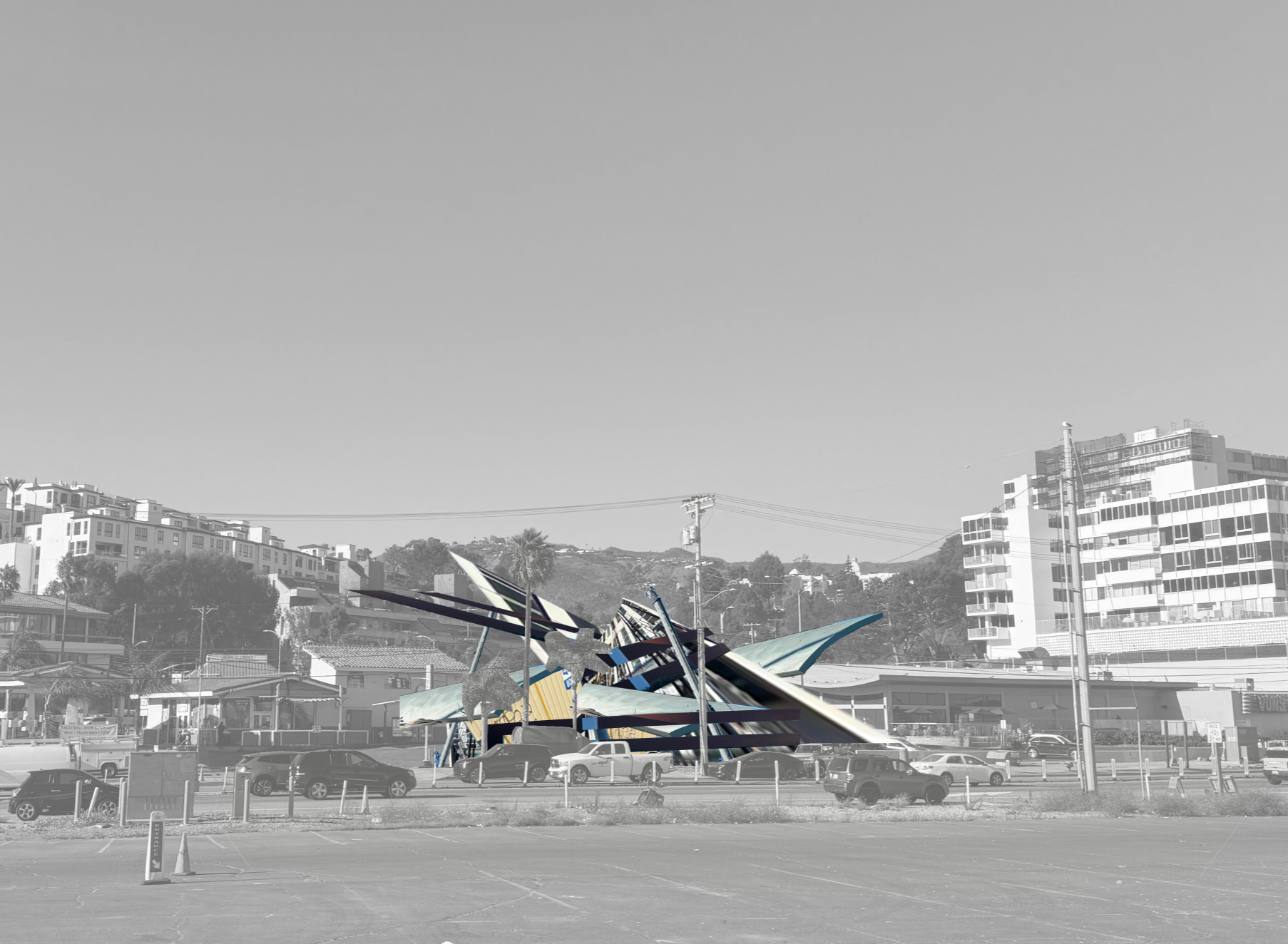
CONCEPT PILING
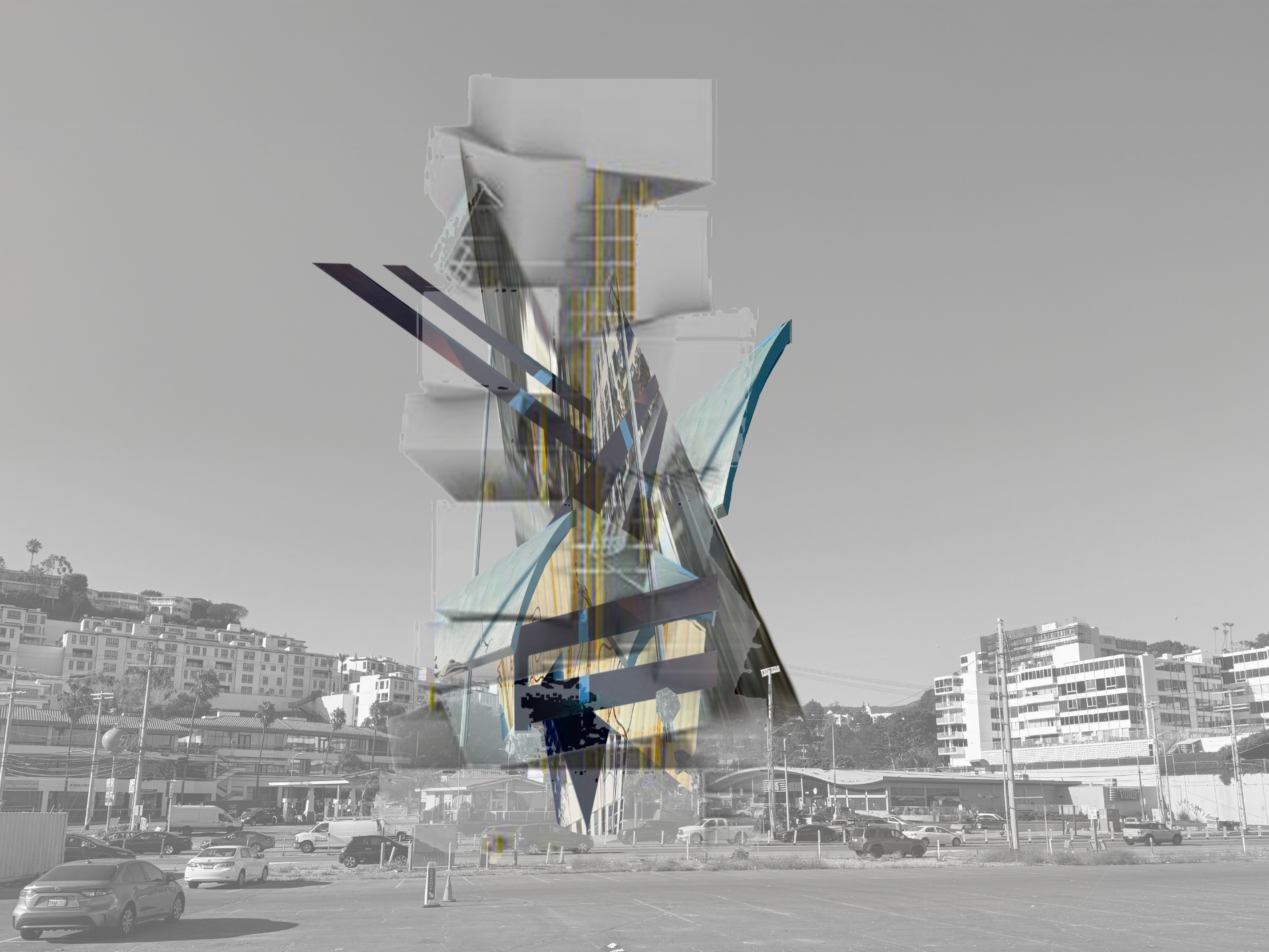
PUT PILING STUFF LIKE STRUCTURE
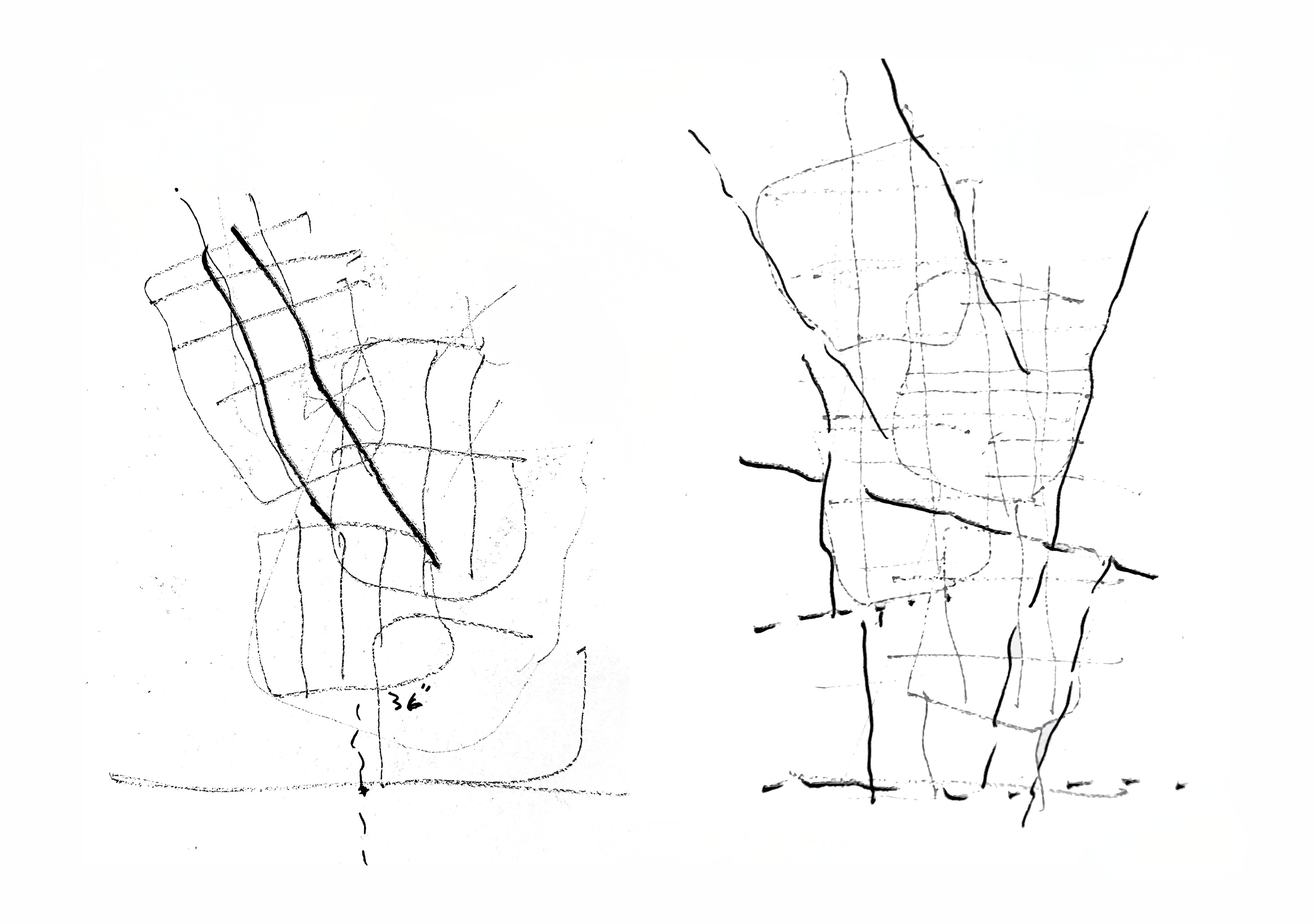
PILING DRAWINGS
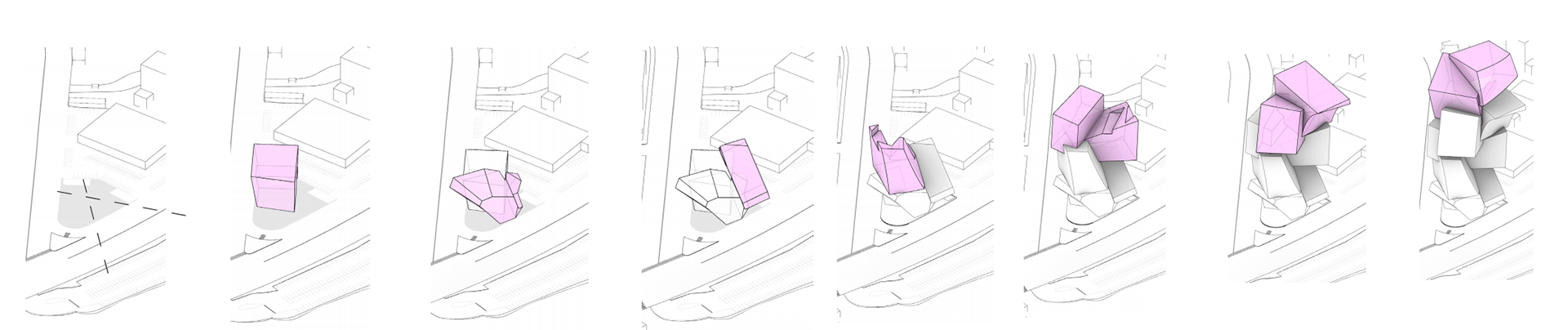
This diagram illustrates the piling process of the project’s massing. Starting from the triangular site, individual volumes are gradually placed, shifted, and stacked in response to the direction of the ocean. Rather than forming a vertical tower through simple repetition, the massing grows as a directional accumulation, with each volume rotating and leaning toward the sea to capture views, light, and coastal exposure.
Through this process, the building becomes a stacked system of oriented fragments. The lower volumes respond to the site boundary and circulation, while the upper volumes continue to pile upward and outward, creating a vertical composition that faces the ocean. The stacking logic transforms the project from a compact site condition into a layered architectural form shaped by view, movement, and coastal orientation.
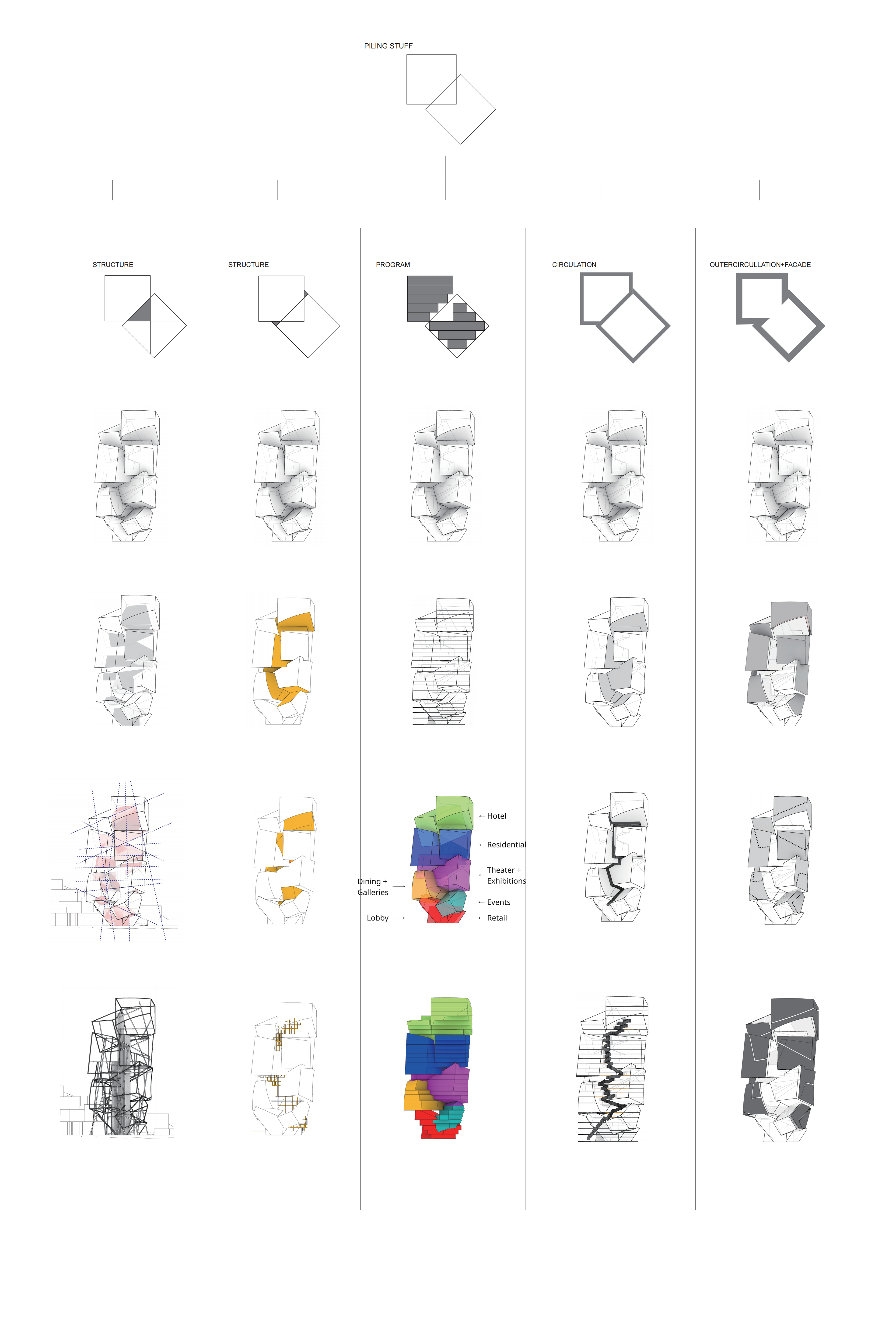
This diagram explains how piling operates as the main generative system of the project. Rather than designing the building as a single fixed tower, the project begins with a simple stacking logic and gradually develops it into multiple architectural systems.
Through piling, the same formal rule is translated into structure, program, circulation, and facade. The structural system becomes an independent vertical framework that supports the stacked volumes. The program is distributed through the piled masses, with public functions placed near the base and more private programs organized above. Circulation threads through the building as a vertical connector, linking separated volumes and creating movement between different levels. The outer circulation and facade respond to the same piling logic, wrapping around the building as a fragmented envelope.
By separating these systems, the diagram shows that the project is not one solid object, but a layered architectural system. Structure, program, circulation, and facade each follow the logic of piling while maintaining their own autonomy.
MIDDLE PLAN
TYPICAL PLAN
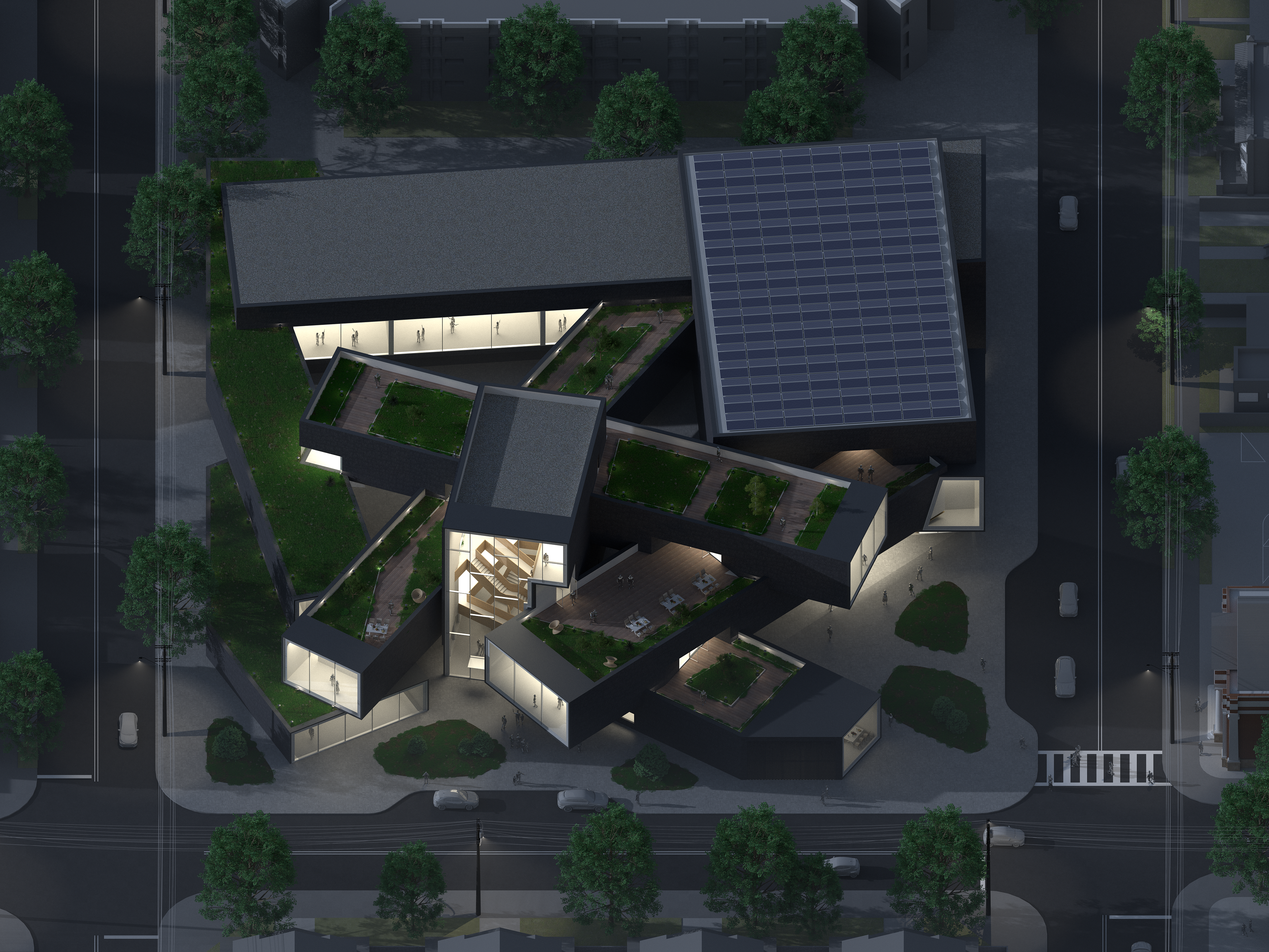
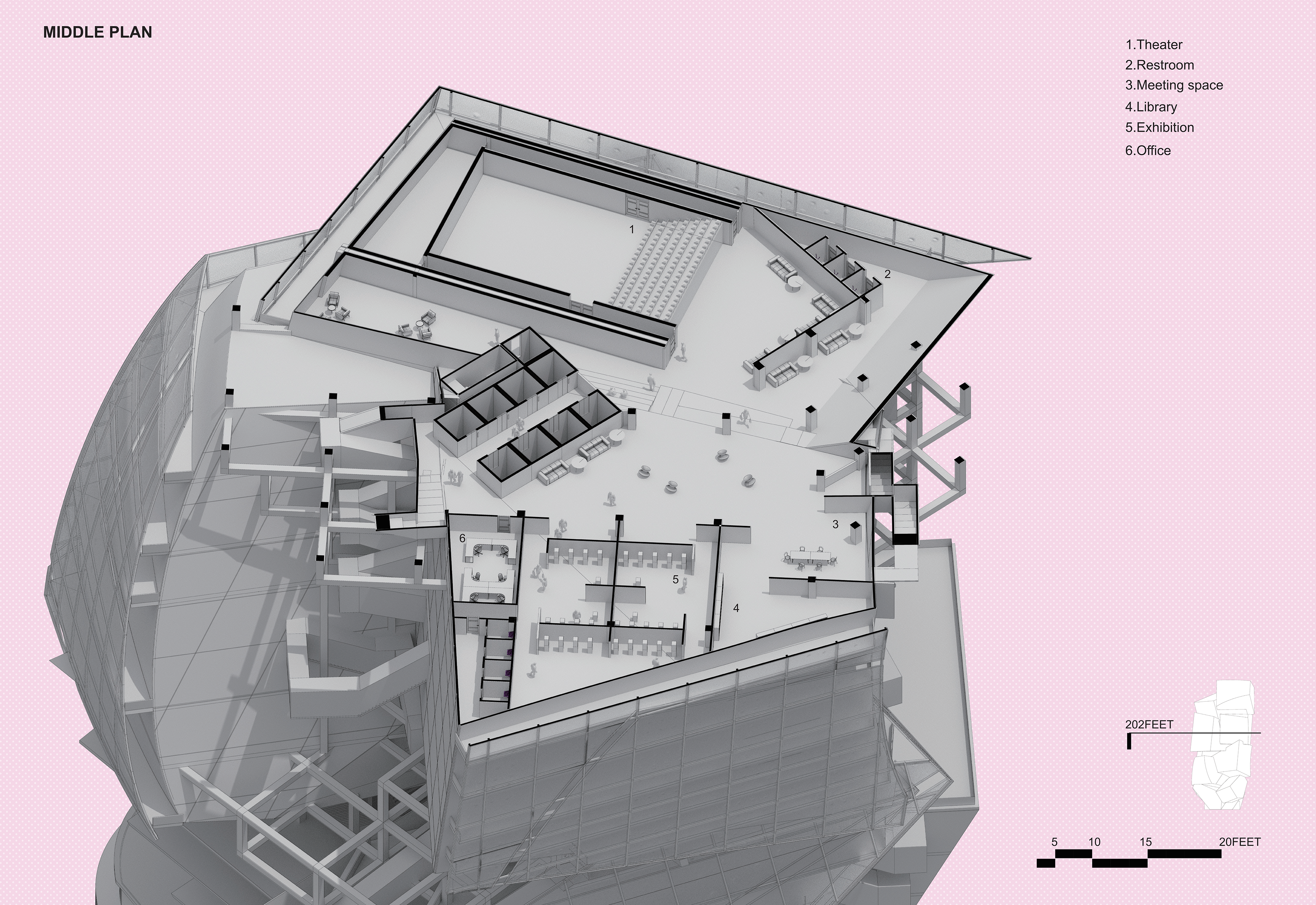
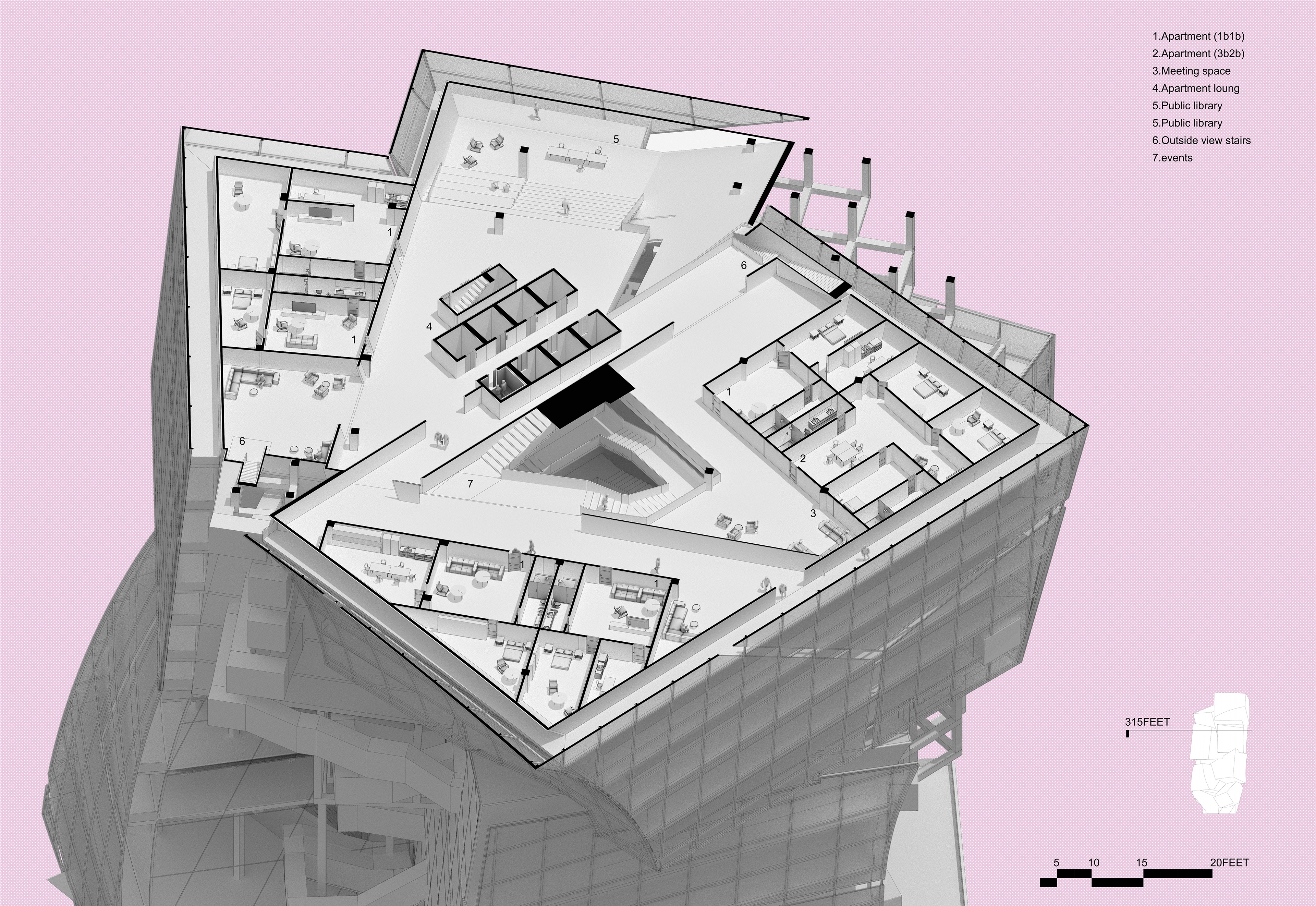
These plans demonstrate how the piling strategy becomes an occupiable architectural system. The middle plan organizes public programs such as theater, exhibition, library, meeting space, and office around a fragmented floor plate. The typical plan develops the upper levels with residential units, lounges, public library, and event spaces.
Rather than following a conventional tower layout, each plan is shaped by stacked and shifted volumes. Circulation connects the different fragments, allowing public, cultural, and residential programs to coexist within one vertical system.
STRUCTURE/CONCEPT MODEL
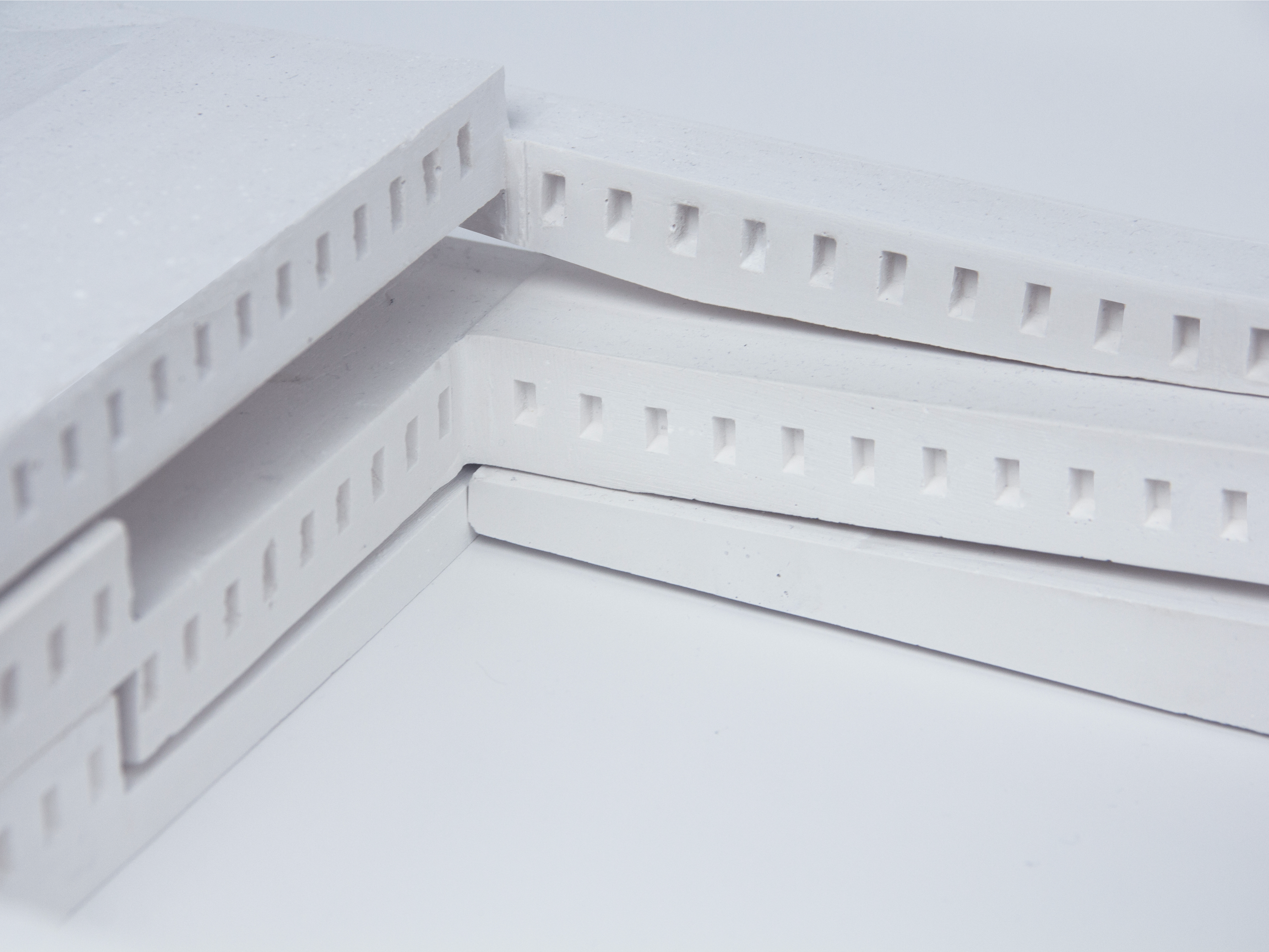
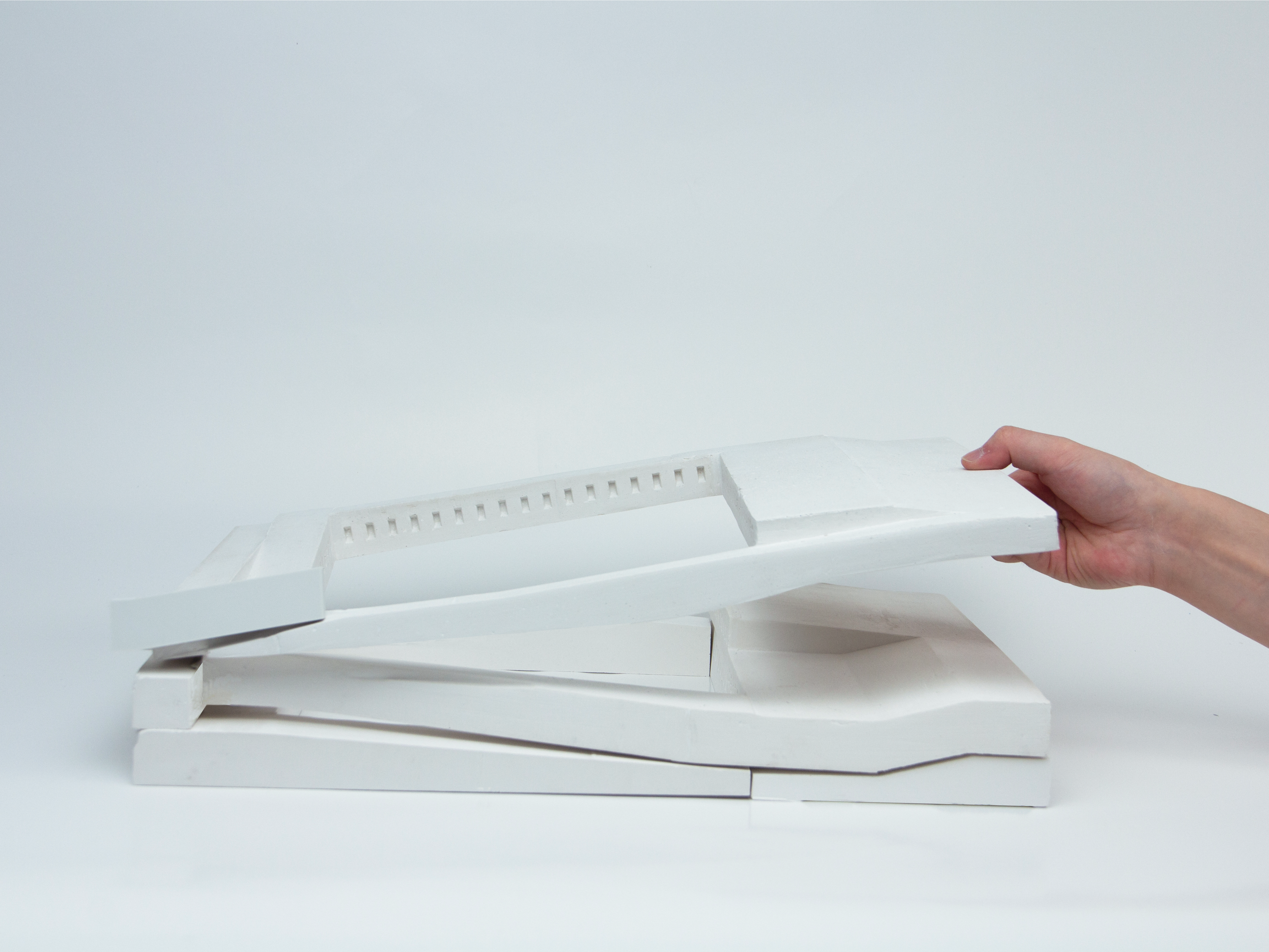
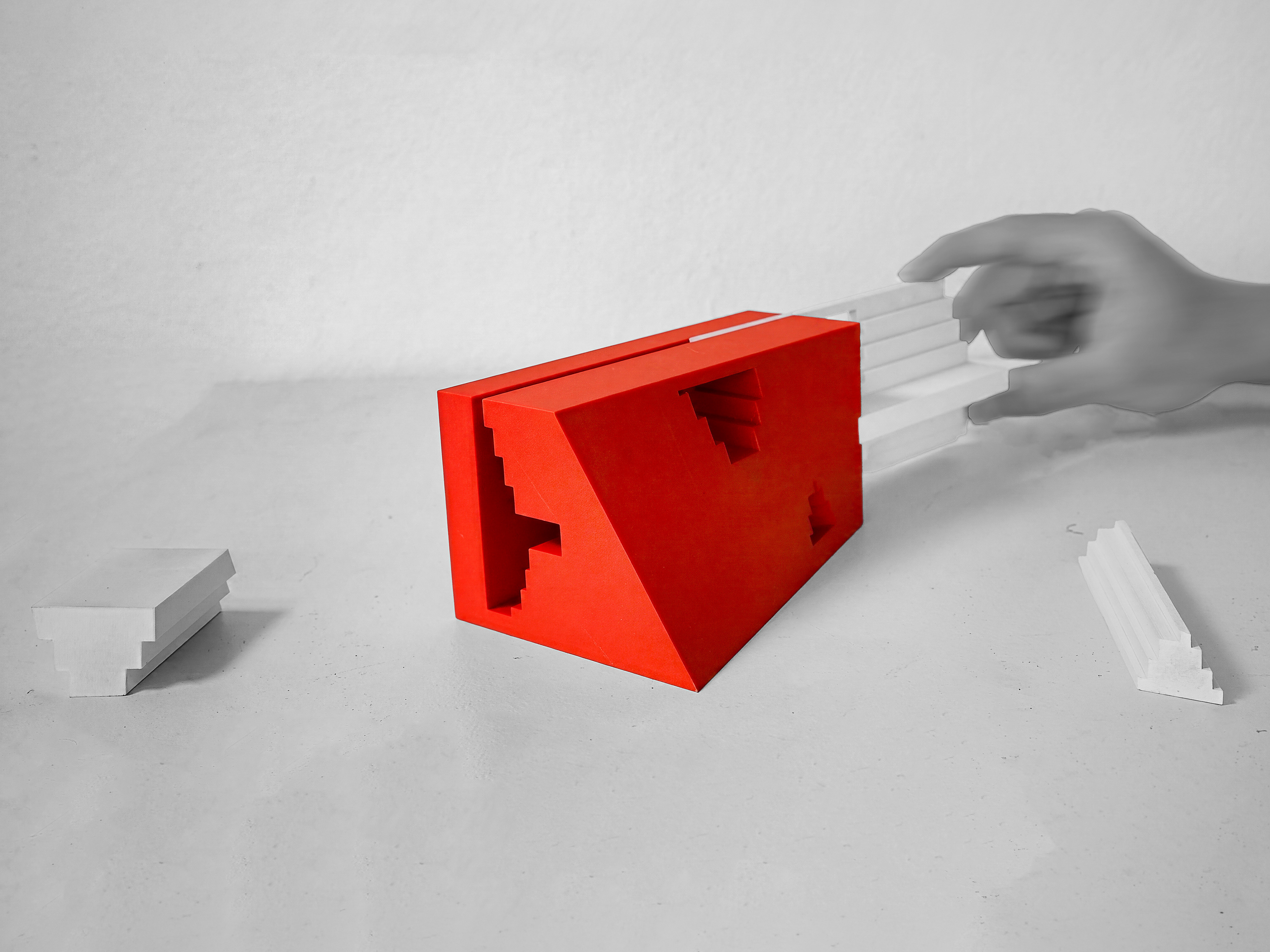
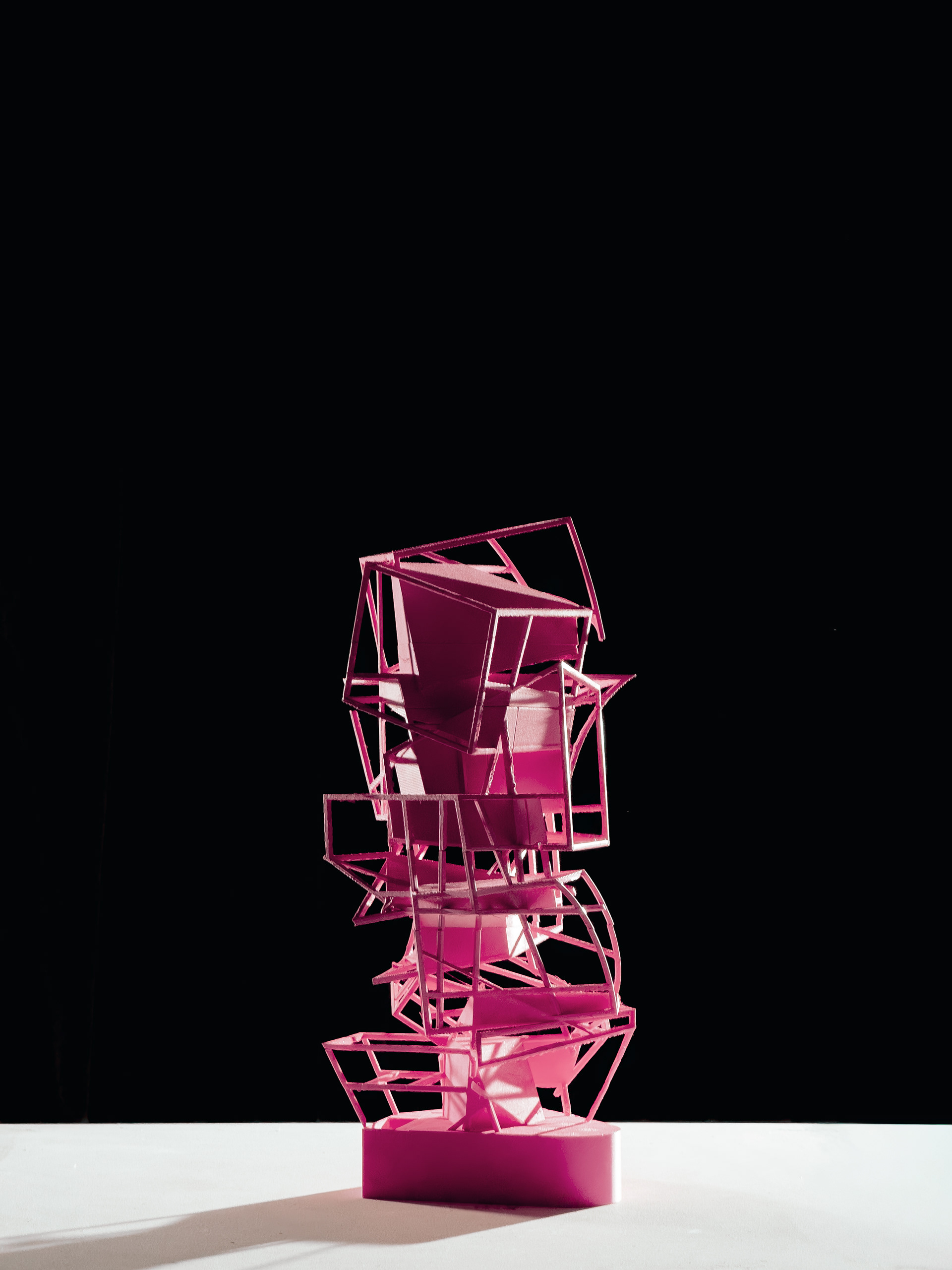
This conceptual structure model explores how the massing can remain independent from the structural system. Instead of merging structure and volume into one unified object, the model separates them into two related layers: the frame acts as a vertical support system, while the stacked masses attach, lean, and shift around it.
Through this separation, the structure is not simply hidden inside the building, but becomes an autonomous framework that holds the piling logic together. The massing remains fragmented and unstable in appearance, while the structural frame provides continuity, support, and spatial order.
Structural–Spatial Translation Model
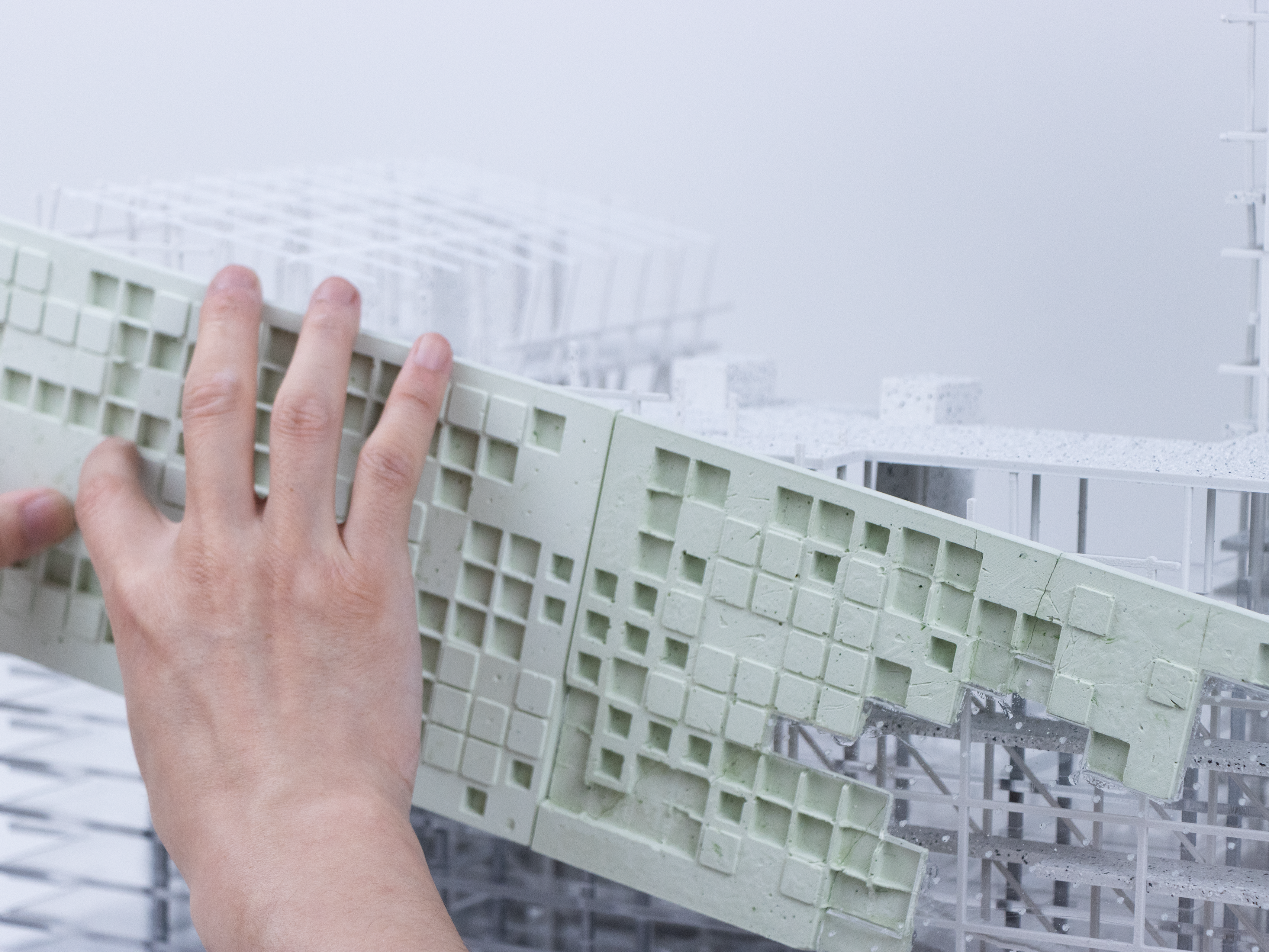
This model investigates the translation from an autonomous structural system to spatial enclosure.
While maintaining the independence between structure and mass, the model introduces planar elements that begin to define inhabitable volumes, testing how stacked masses can be selectively enclosed without collapsing into a unified object.
While maintaining the independence between structure and mass, the model introduces planar elements that begin to define inhabitable volumes, testing how stacked masses can be selectively enclosed without collapsing into a unified object.
The structure operates as a continuous vertical framework, accommodating circulation and load transfer, while the enclosing planes attach, rotate, and fragment in response to the piling logic.
Through this interaction, the model explores moments where structure, circulation, and enclosure intersect, producing localized spatial intensity rather than a singular formal express
Through this interaction, the model explores moments where structure, circulation, and enclosure intersect, producing localized spatial intensity rather than a singular formal express
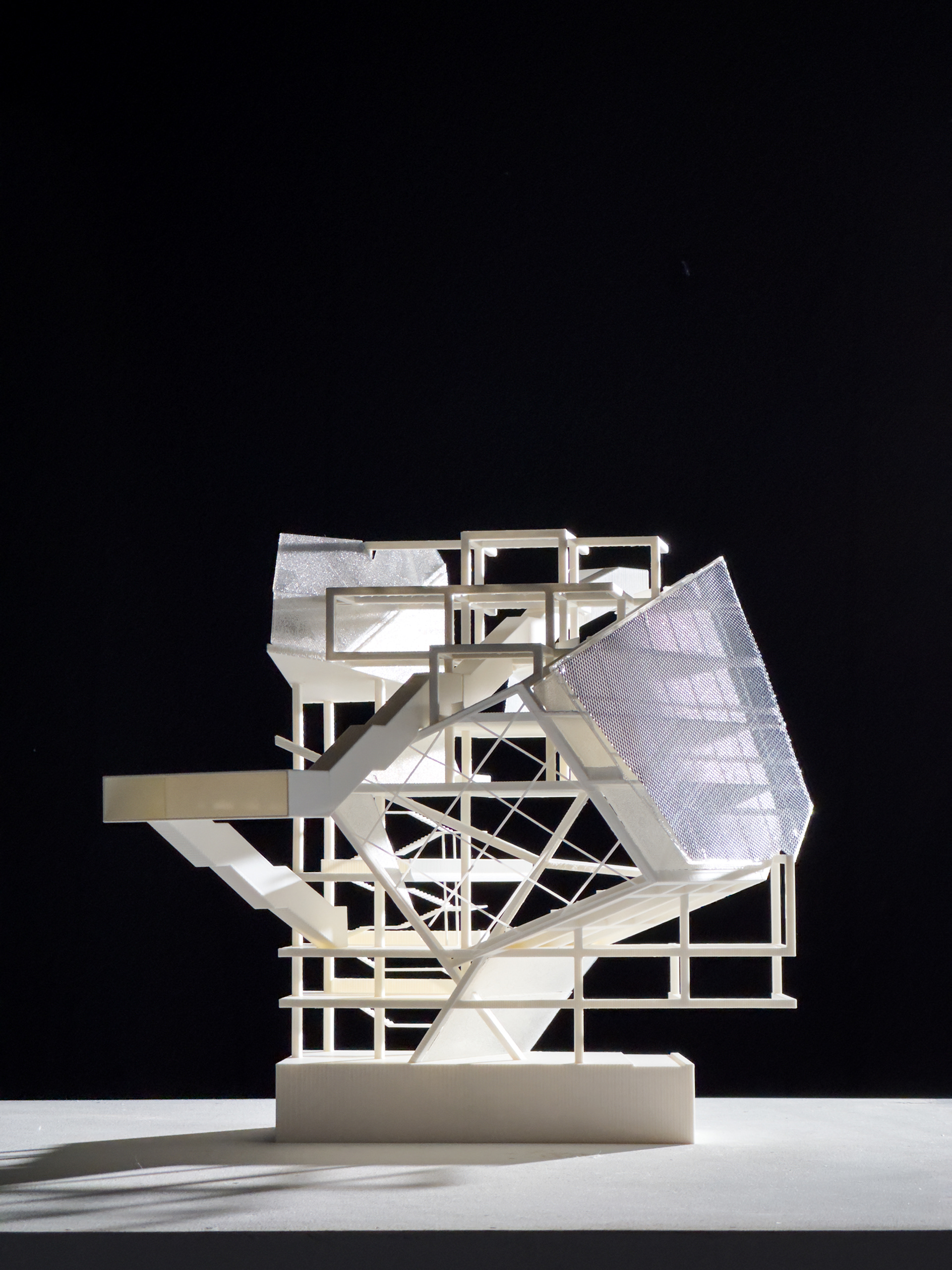
CHUNCK MODEL
CHUNCK MODEL
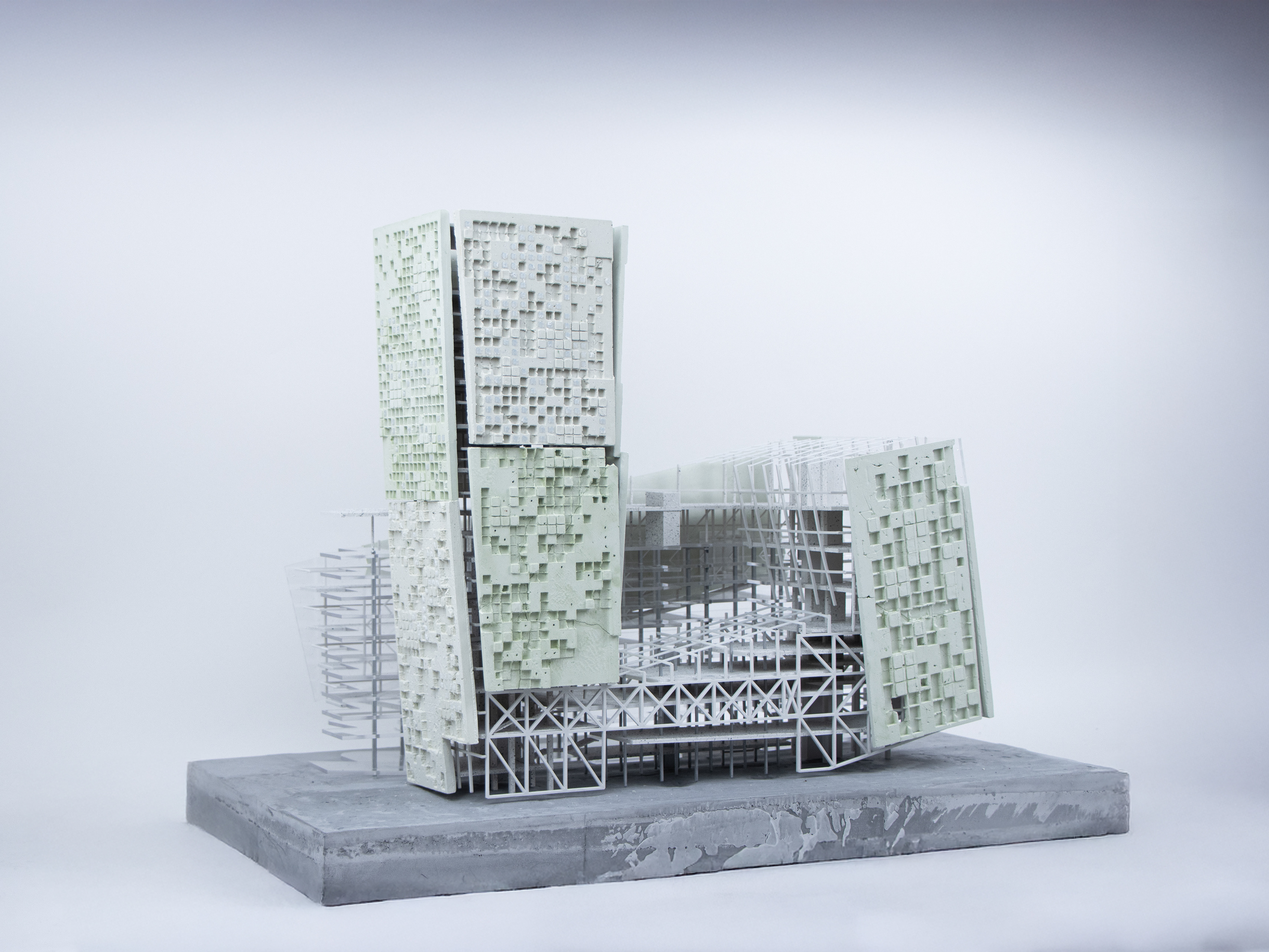
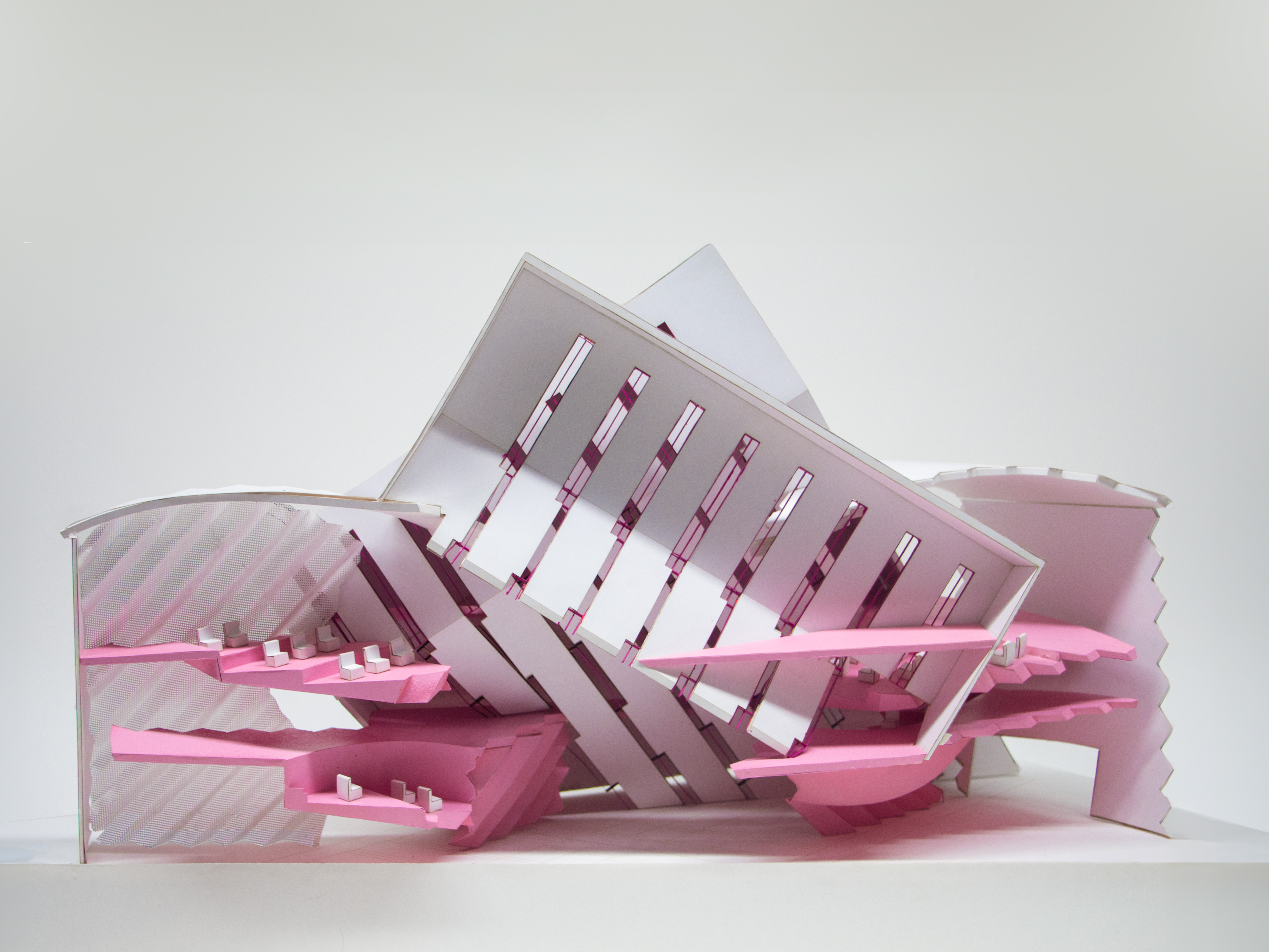
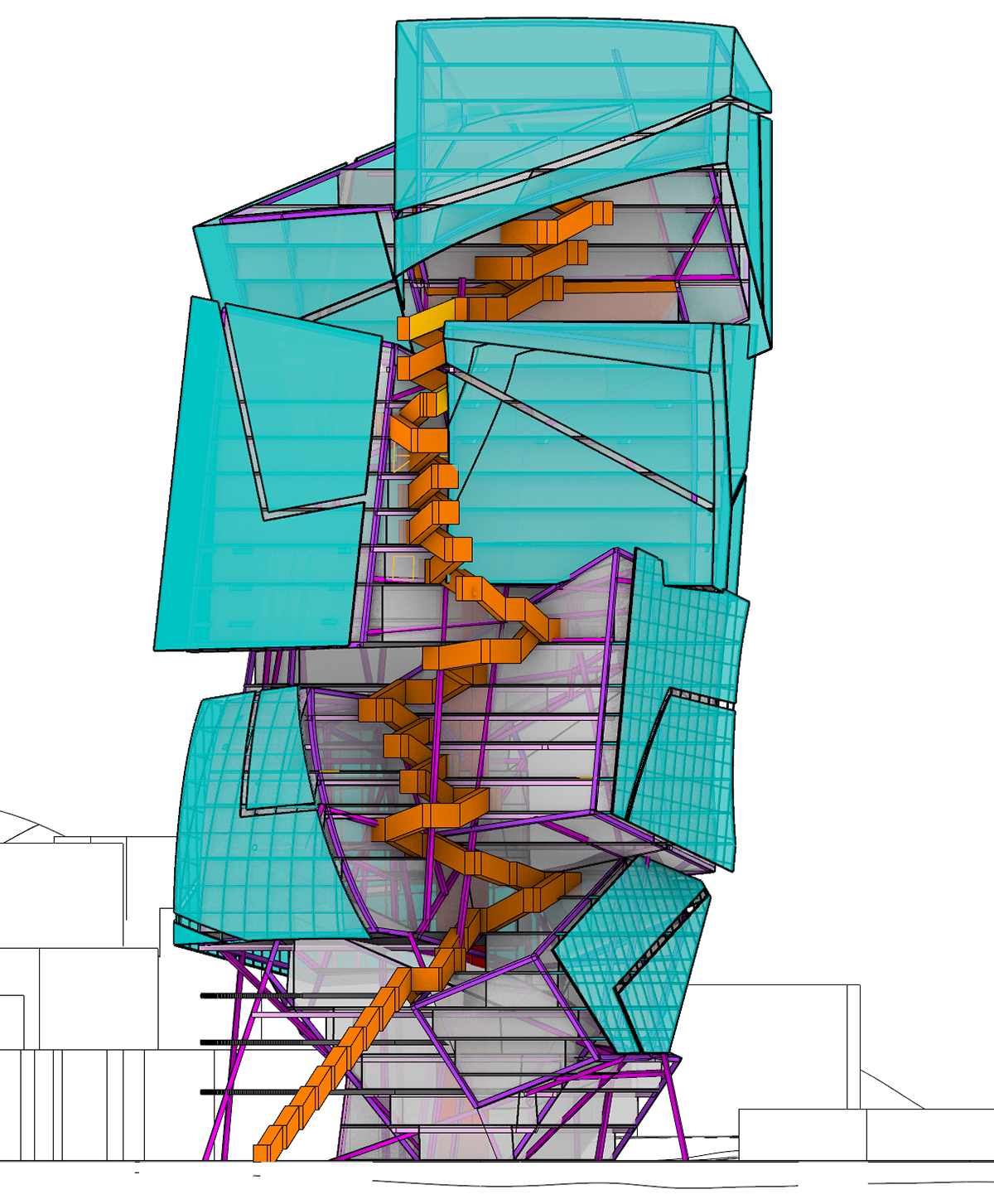
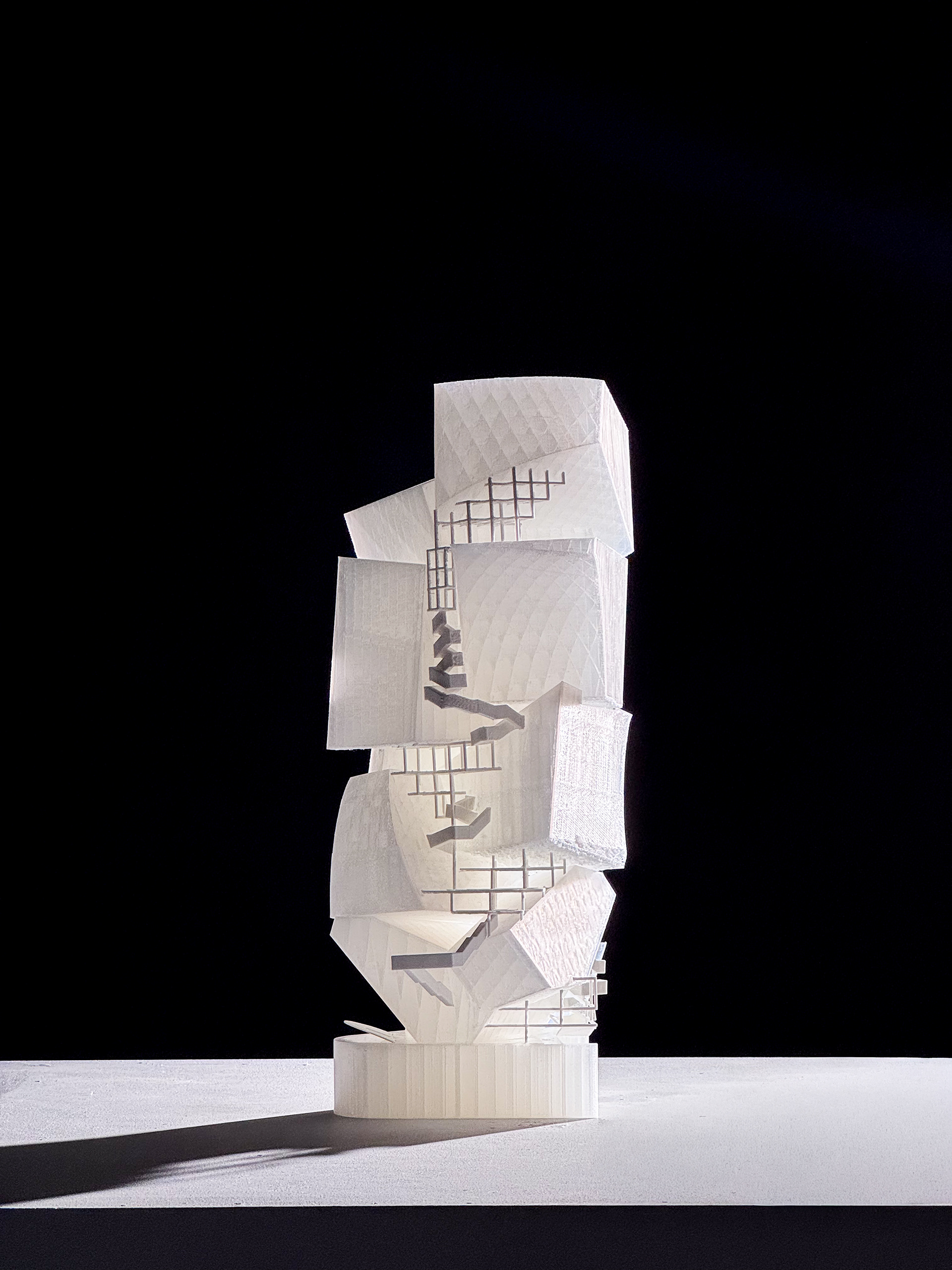
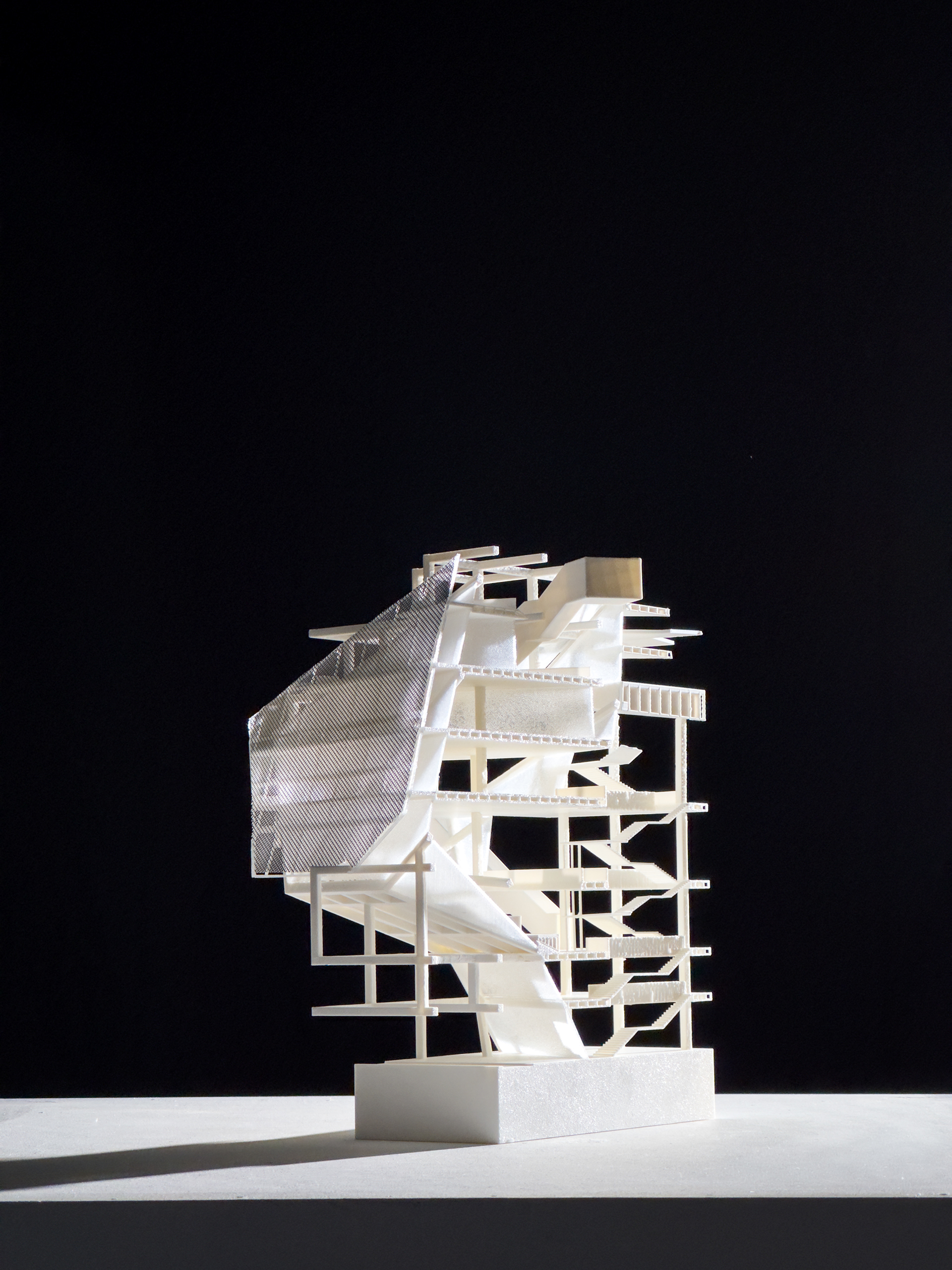
This model demonstrates the relationship between structure, massing, and enclosure. The building is not conceived as a single solid tower, but as a layered system in which piled volumes are supported by an independent structural framework.
The exposed frame, diagonal bracing, floor plates, and translucent facade panels reveal how the project separates structure from mass. Rather than hiding the support system, the model makes structure visible as an active spatial organizer. The piled volumes attach, shift, and project from the frame, creating a dynamic relationship between stability, movement, and enclosure.
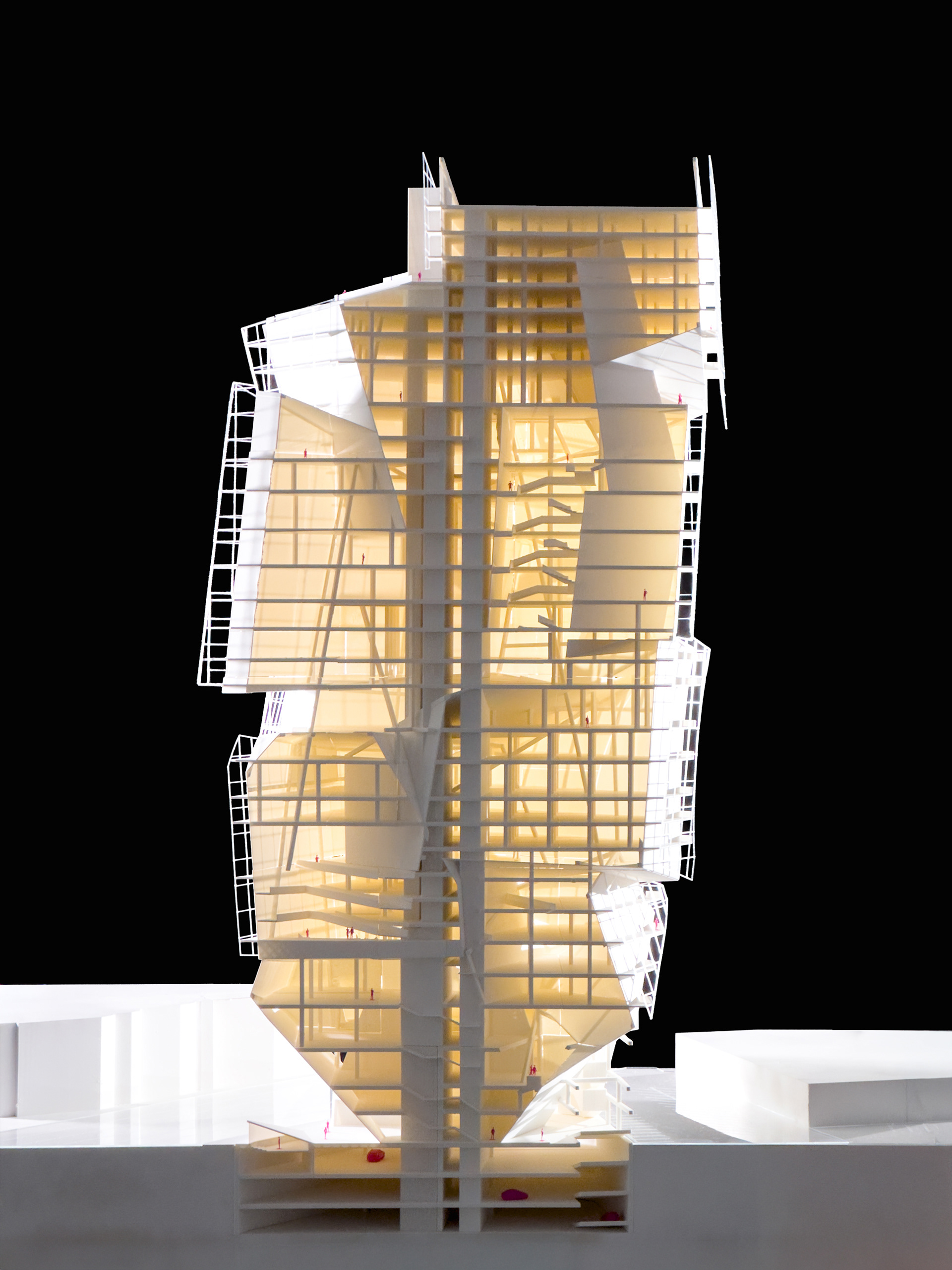
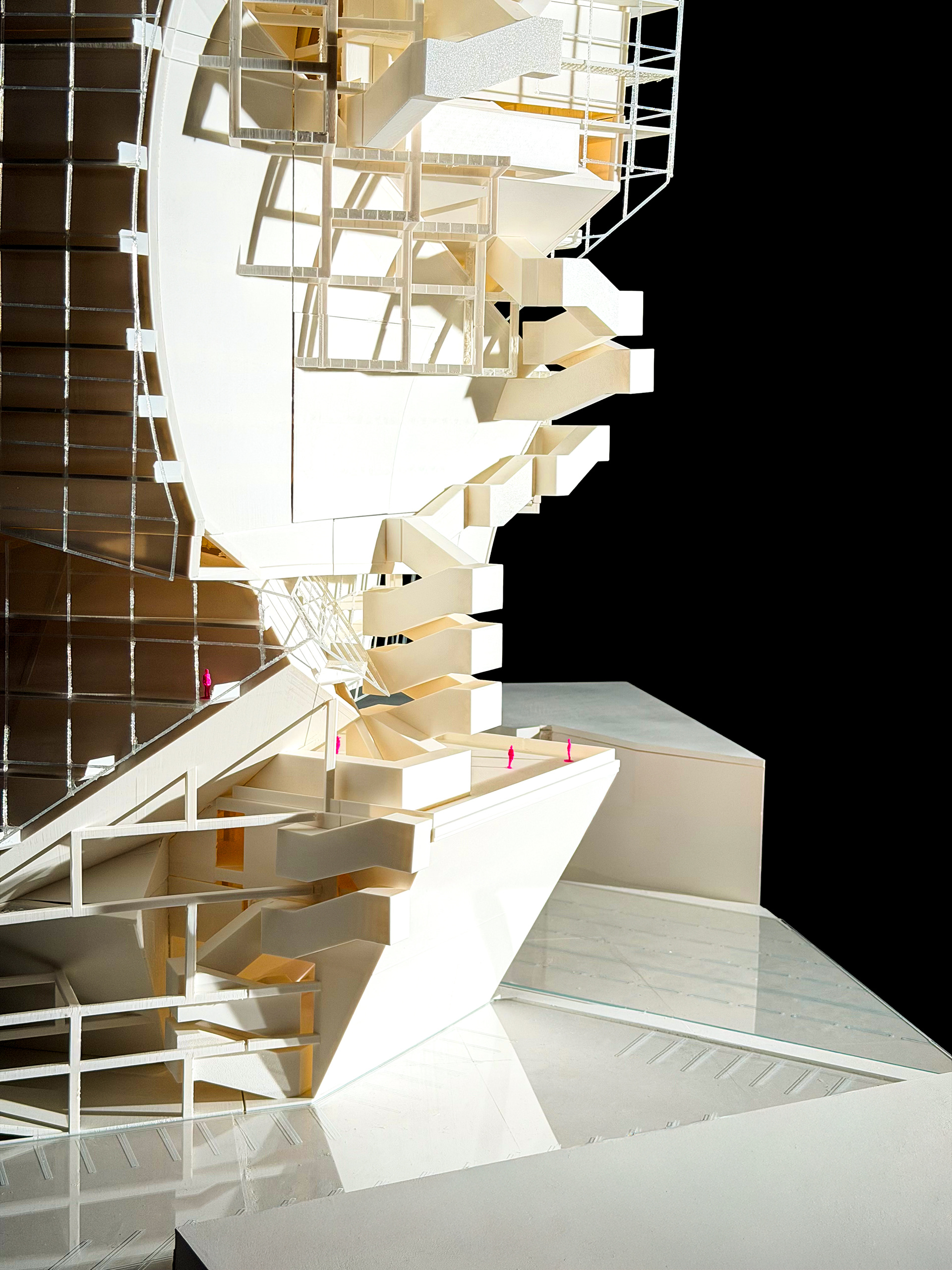
This model shows the overall organization of the project as a piled vertical system. Stacked volumes, structural frames, circulation, and facade elements work together to form a layered mixed-use tower. Rather than a single solid object, the building is composed as an accumulation of interconnected parts.